
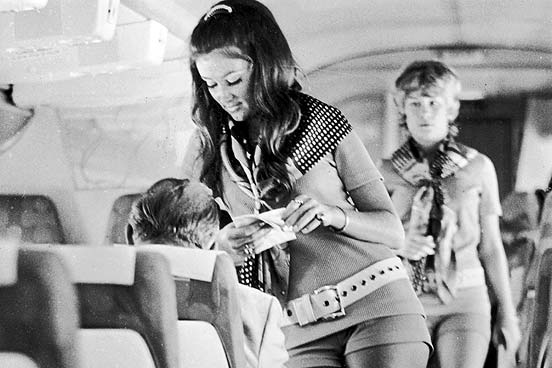
To those of an old-world persuasion a coach is form of transportation for large groups, different from a bus in not having two floors nor having a conductor. Conductors having gone the way of ostlers and lamplighters, now all we think of is a man and his baton but there was a time when they were ubiquitous. Coach is an American word and a role iconically embroidered into the fabric of life, from childhood through to highly paid role models wearing expensive headsets being drenched in buckets of Gatorade.
Coach was a nickname bestowed upon Carl Newgarden by Wriggles and the rest of his young staff amongst themselves, if never one they used to his face. In his later life he actually became a business coach, so the unwelcome hat did fit after all. Carl was one of those men who are naturally gifted, a college basketball player, a good golfer, he was ridiculously good at horseshoes, not something you get to show off too often. His Dad had coached him to be a baseball star but becoming 6’ by the age of 14 cast his fate away from the diamond and onto the parquet floor of the gym.
His dad was Karl Newgarden and his grandfather was Karl Neugarten. Nuegarten senior grew up in Marburg in the Rhineland and joined the Imperial Army in 1914 in the 30th Division as an infantryman. Like most if his generation he expected a short bloody fight and a repeat of the victory of 1879, he thought he might get to see Paris and meet pretty French women. The French army did its best to repeat the errors of its predecessors but marginally managed to stop the German advance, once its supply routes broke down, a victim of their own success. So instead of strolling along the banks of the Seine, Karl senior found himself spending a large part of the next 4 years underground in a former quarry called the Elephant Hölle on the elegantly named Chemin des Dames front. Karl senior decided then or sometime soon after that maybe there had to be a better life away from Europe and its war obsession. Demobbed, he worked in a slaughterhouse, scrimped and saved and with a loan from his older brother bought a ticket on a steamer to Philadelphia where the Italian American immigration clerk changed his name to Newgarden.
He found work at a slaughterhouse in an industrial suburb, Bridesburg, and lived in a community of German immigrants all trying to not be seen to be too German and never let on that he had actually been fighting for the other side. He married a tall bluff woman whose family had come from the Saarland in the 1890s, she rarely smiled and was fiercely Catholic, every trial in their life together was always due to some small failing of Karl in the eyes of her god that she would have to go and confess for. They had one son, Karl and he also always seemed to fail somehow, in the eyes of his mother. It was no surprise that as soon as Karl reached 18, he announced he was joining the US Navy and he never returned to Pennsylvania.
Karl loved the Navy and the Navy loved Karl. He travelled the Pacific on several different grey shiny aircraft carriers, the floating behemoths which brought American technology and power into a head on collision with Japanese imperial ambitions. He survived those ambitions slamming fully loaded aircraft into the deck of his ship, he survived those ambitions sending torpedoes into his ship and testing his swimming skills. He was promoted for his daring-do and his unflappability. After all, if he survived 18 years of his mother’s acerbic tongue so a little fire and high explosives seemed very manageable. The navy was an equal opportunity employer and Karl grabbed the opportunities that came his way and he had what they would call a “good war”. When he came back to San Diego on leave in 1943 he met and fell in love with Ingrid, a dark haired, green eyed girl from Carlsbad whose family were originally from Denmark and had a small dairy farm. She was working in a factory making uniforms for the war effort so she appreciated the tall blond Lieutenant’s dress whites. They danced, they dated, they had a few drinks, they messed around, they danced more and with only two days of his shore leave left he went to Carlsbad and asked the sunburnt Dane for his daughter’s hand. They got married at City Hall the day before he left for the campaign to recapture the Philippines. They spent the wedding night in a mainly pink motel called Shangri-La Sunset.
Three months later he received a letter from Ingrid letting him know that they were to become a family sooner than he had planned. A little boy duly arrived in early 1945 and the family moved into Officers’ Married Quarters in San Diego and then the family moved to Moffett Field in Northern California and the war ended with another Little Boy and Fat Man visiting Japan. Karl finished his navy career at Moffett as an instructor and the very day his 30 years were up, he retired, at the ripe old age of 48 and spent the next 15 years being a full-time father to young Carl. Grandpa Karl came and visited a couple of times, without his pious and ever mirthless wife. He talked to young Carl in German, a language his own father had abandoned along with his ties to that heritage. Karl Senior regaled him with stories of his young years in Marburg and during the trenches of the First World War, which seemed a lifetime and a world away from California to Carl. His Opa never skimped on details or treated his young grandson as anything other than an adult, Carl would be astounded by the tales and adventures, all he could say was “Is that right?” as a casual constant punctuation to their conversations. Sadly, a lifetime in the slaughterhouse had taken its toll and Opa died when Carl was 10.
Carl was taught by Karl the instructor to do everything precisely, patiently, and punctiliously, even baseball. His father made him bat with his left hand, so he could switch hit. He was made to catch and throw with left hand as well as his right. His Dad took him to see the local minor league team, the San Francisco Seals, and taught him how to scorecard the game properly in his scorekeeping book using the Chadwick codes. Carl did well in school and was popular with teachers and the other kids, he was great to boast or tell tall tales to as he could be relied on for a positive and encouraging rejoinder of “Is that right?”, while nodding his head along to the rhythm of the tale. Then the growth spirt happened and all Karl’s hard work went out the window as Carl discovered basketball, and became the school standout athlete and when he graduated he got a full scholarship to play basketball at Santa Clara University and for once being catholic had a value. In deference to his grandfather Carl studied German and enjoyed the ability to communicate in another language, it was a verbal switch-hitting and he loved the sound of the long guttural vowels. As part of the German course, he had the opportunity to go and study in Germany and so Carl closed the circle and being careful to emphasize his protestant grandfather’s Marburg roots was accepted for a year at the Philip’s University in Marburg. Back in San Francisco the summer of love happened and while young people from all over the world flocked to the city to turn on, tune in, drop out Carl went to the deeply conservative hub of Hesse to absorb Germany, its limitless varieties of beer and sausage and its culture.
Whether the sense of patriarchal pride or German notions of duty were at the forefront of his mind or whether it was as a grandiose gesture to the military career of his own father I never knew. However, upon his return from Marburg and his graduation 6 months later, Carl signed up for the Navy. The Vietnam war was now in full swing, and while the draft was a reality for most men Carl could have avoided it and deferred by signing up for a Master’s Degree, he didn’t need the heel splints or other machinations used by the less academically gifted off-spring of the rich. Carl volunteered and Karl and Ingrid were proud if slightly worried what this war held for their son. But like his father the Navy loved Carl and Carl loved the Navy. They found out he was fluent in German, so they had the perfect job, for him. Naval attaché in Berlin? They decided to send him to language school to learn Vietnamese. 6 months later Carl found himself in Vietnam at a base in Tan Son Nhut and part of the Big Ear program. The young now-fluent in Vietnamese crew of an EC-131, basically a military version of the Constellation airliner with a big radar dome on the roof, flew up and down the coast listening to North Vietnamese air-defense controllers talking to the MIG fighters defending the North from US bombing missions. Big Ear’s job was to listen in and relaying their movements to the Navy and Air Force aircraft bringing death from above. This was the analog version of today’s spy satellites. Just to add a little frisson to the mundanity they would sometimes hear the MiGs being targeted to go and attack their plane and they would, quickly as they could, try and get out of range.
Carl played a round in Okinawa on r’and r, but being a pretty straight forward kind of guy who had to hang out with his Dad way more than normal adolescents and therefore missed out on the normal teen smut, sniggers and sneaking illicit kisses, Carl played lots of rounds of golf. He avoided the massages and bath house fun and avidly read the briefings on STDs. Then, just as they were about to move to Thailand due to the encroaching Viet Cong his 3 years was up and he was sent back to the World. With his navy background the merchant shipping world was a natural next step and it beckoned him. All of that materiel that the US was raining down on South East Asia needed to get to Vietnam, as did all the food, magazines and Budweiser to fill all the PX stores across Asia. The USA at this point had a thriving shipping industry using the new container technology and fat contracts from the military machine and its outriders and the US carriers like SeaLand, SeaTrain and the eponymous US Lines all made bank.
Carl got a job as a Sales Manager for US Lines and decked out in his 2 fitted Brooks Brothers blue suits and his white button shirts and somber dark ties, as provided by the company and stipulated via their Dress For Success handbook, he started knocking on doors in his new territory, Orange County. Carl loved order so he took meticulous notes in his small lilting script, using a silver and gold Cross propelling pencil that his parents bought him for Christmas when he returned home. It seemed almost a reward for not fucking up, for not getting maimed or getting strung out, it was in a case with a ball point but he never used the ballpoint as he wanted to ensure his notes were accurate. He asked good questions and encouraged people to share their secrets, or at least how much they were paying his competitors for their shipments, he would listen and confirm with his relaxed and friendly, “Is that right?’. He took good notes in his large DayPlanner, another gift from US Lines to help him get his three lunches and two dinners planned and landed. This was the glory days of expense account living and 3 cocktail lunches. Carl worked out a system, he would drink vodka and soda with a dash of bitters, he would get the second drink direct for him and his guest at the bar on the way back from “the head” and his second would be just soda and bitters but the guest thought he was a go-to-guy getting that swift second drink in and he would leave most of the third as he had to dash to his next appointment. The guys at the LA Sales Office would give him shit every Friday afternoon as his expense account spending was always at the bottom of the league table, but he got the freight bookings and he also got the District Sales Manager promotion.
Carl fell in love with a TWA stewardess on a Friday night red eye flight from Newark back to LA in December 1979. It was cold and the flight was held up twice for deicing and for once Tom had got the upgrade into First. It was the week before the holiday and he was looking forward to spending it yet again, alone with his ageing parents in San Diego. It was a work trip and it had gone well so for once he had a couple of cocktails during the long delay on the ground. “Dubonnet rocks with a twist” was what he drank. It wasn’t super strong, but it sounded sophisticated in a shaken not stirred kind of way. Carrie was from Oil City Pennsylvania, 5’10’ of dark-haired fellow German stock. Her family ran a Budweiser distributorship and did well out of it, so she grew up under the oaks of the local country club in a Caucasian apartheid that is particular to the eastern states and Midwest where the acquisition of money happened earlier and the segregation of the poor had a head start. They spent the flight talking and laughing. Carl was not a natural at chatting up women, he had spent too much of his youth in the male side of the country and in some ways, women were a foreign territory which was probably another reason why he avoided the juke joints in Okinawa on leave. Something about Carrie took away his reserve, ably assisted by the fruity tincture of the French aperitif he was able to talk to her like he had never had the opportunity to do before. “Is that right” worked again like a charm. Carrie had 4 elder brothers and they were all tall and confident like Carl so she felt at ease with the tanned Californian.
She had a 2-day layover before the flight back to Newark and she spent most of it in Carl’s bed. Carl knew what he liked and at times could be decisive and for once he didn’t need more data, he didn’t need to get the full background from Carrie’s friends and family, he was ready to close. He arranged to fly out for the New Year holiday, drove up from Pittsburg through the already rusting valleys north towards Eyrie and the lake. The roads were icey but gritted and salted and the big Buick rental had winter tires and so he floated up to Oil City in GM grandeur and a blazing car heater. He was introduced to the gathered Reutlingen clan by a slightly blushing Carrie. Not only were the men tall but all the women too, all had been high school athletes and so Carl was amongst his people and by the end of the weekend he had charmed them all. He took the initiative and asked her Father for her hand, which in the mores of their 18th century protestant time vault was a critical move. A date was set, and a boisterous German wedding blessed the Wanango Country Club the first weekend in March 1980. Carrie transferred with TWA to be LAX based, and they moved into a new apartment in Culver City. By the summer she was pregnant and happy to be so, as was Carl, who glowed with pride as Carrie glowed with the healthy shine of expectant motherhood.
The 80’s arrived with big hair and big shoulders and ended with mobile phones and computers in every office. Carl and Carrie had a typical 80’s corporate experience, Carl was moved 4 times, each time with bigger job and more pay, their apartment changed into houses that got bigger and fancier with every move. Houston, Nashville, White Plains and finally in 1989 Pleasant Hill in northern California became home to the Newgarden nuclear family. A brand new 4 bedroom home on a country club style development with tennis club and a pool in the back yard surrounded by gas tiki torches. Their son Devon and daughter Melissa were now 7 and 5. Carl was Vice President Rail for that same logistics business, where Wriggles had just arrived and hoped to be making his way, in San Francisco. Button down shirts, dark suits and loafers were still the best way to dress for success.
Carl’s goal had been to replicate his own blissful experience of growing up in the America of Eisenhower’s men. He worked hard to bring home the bacon but he had always found time to coach his kids, like his father had with him. Devon was not Carl, in fact he was like some genetic throwback to an earlier less well nourished version. So from being a fussy feeder at his mother’s adoring and well provisioned breast he grew into a fussy eating toddler, who moved his food around his plate more than he lifted it into his mouth. He did not grow into the typical Californian blue-eyed, tow haired sprouting male. He had poor eyesight and the atrocious hand eye coordination that often follows that, once this was identified and glasses were provided at the age of 5, he became less interested if that was possible, on being in the dirt and running around. He struggled under Carl’s well-intentioned coaching and encouragement at t-ball so the option of baseball slid away into the evening light. He would gamely try getting Devon interested in watching the sports he loved by taking him to the freezer that was Candlestick Park to watch the Giants and the 49ers. As much as football was less of a climate survival challenge Devon struggled with 4 hours plus of his internal life to be put on hold for something resembling ballet by beasts in helmets. As Devon was smaller than most of his class the thought of basketball was even less of an opportunity. Carl suggested soccer, after all even girls could play that but Devon would be seen focused on the grass and what lay within it rather than the marauding scrum of shouting, panting boys gamely encouraged by their effervescent parents on the sideline. Devon got used to being the boy chosen last when teams were assembled. Carl’s final throw of the sporting dice was swim team. The East Bay of north California had thrown up Mark Spitz and his plethora of gold medals and the balmy weather on the other side of the Oakland Hills meant most if not all communities had a pool and a healthy swim team competition. Carl made the sacrifice one summer and spent early mornings hounding Devon wearily out of bed to get to practice and then dedicated his whole weekend to be there and be supportive from 9.00 am on Saturday until 5.00 pm on Sunday to cheer the team on while Devon swam once on Saturday morning and again late Sunday afternoon for a total time in the water of 8 minutes. When Devon suggested at the end of August that maybe he wasn’t getting the most out of it, for once Carl was in solid agreement and that experiment signaled the end of Carl coaching Devon.
Carrie noticed that Devon quite liked music. She was a solid Top 40 housewife and Carl never listened to music as his radio was always tuned to sports or folks talking about sports. So she suggested to Devon when he had retired from organized sports at the ripe old age of 8 years and 2 months to try piano lessons. He was duly sent down the road to Maggy McAlister, the slightly weird religious woman a few blocks away who taught piano with a rigid discipline but also with a sense of her version of fun.

 Anecdotes and Antidotes in Burgundy