Gones for good: Episode 11 Disquaires, drugs and discoveries

Lyon made an unscheduled and unflattering appearance on France 2 a few weeks ago. France 2’s news programming is the most watched, like BBC’s or NBC’s nightly news, it is more generally watched than other populist or entertainment-focused options. They have a serious approach to the news, slightly undercut by the female news anchors still tottering around in 5-inch heels; they may be occasionally allowed to be in jeans to show they are not overly buttoned up, but the jeans are ferociously tailored, and the heels are sharp. The men always and without exception appear in blue suits, white shirts and often with blue ties. The royal blue suit, a fashion item not seen in the anglophone world since the 80’s, regularly makes an appearance. Lyon’s appearance was on a 45-minute special ‘exposé’ featuring an undercover examination of the urban drug trafficking in one of Lyon’s suburbs, the Tonkin public housing complex in Villeurbanne. The hidden cameras were concealed among the efforts of a group of citizens who formed a collective effort called Tonkin-Paix-able, looking to ensure a peaceful Tonkin. The group rock up regularly in the middle of the major drug exchange with white t-shirts, rubber gloves and trash bags and ostensibly remove the detritus of the marketplace, ironically less used needles and more fast food packaging and beer cans thrown down by the dealers as they sit, hoodied and bored, on make-shift cardboard seats on the steps of the large public building opposite the tram stop. The collective tries to engage with the dealers to keep things as civilized as possible for the neighbourhood.

The story is common across France, not just the large banlieues that ring the major cities. Banlieue means suburb in a strictly etymological sense, but in France it is more synonymous with what Americans refer to as ‘the projects’. Public housing is a key part of the French social contract. The majority of French people rent rather than own houses and long term rental contracts, ample legal protections for tenants and local government rent controls mean it’s a simple long term choice for many working class people in the large towns and cities. Much of the rental housing is state owned, usually by the local council, some are private or charity but most is truly public housing. Through a natural process of selection recent immigrants get concentrated into the less well positioned cités, as in the movie images of ‘les banlieues’ in Marseilles or the Paris suburbs, isolated for many years without access to good public transport. In these areas, poverty and lack of opportunity follow declining standards in the schools and those who can do, move away, further concentrating the young poorly educated boys, not really men, into a process of boredom and finally relief through working for drug trading gangs. Selling ‘stups’ as in ‘stupifiants’, is a way and for many the only way for kids to make a living, other than riding scooters and bikes delivering food to the richer areas. The biggest trade is in weed or hash, with coke and crack some way behind. It’s a cash business and profits flow upwards, so at the sharp end the kids are not covered in gold chains, nor driving Mercedes SUVs in some wannabe rap video lifestyle. They all wear the same drab outfit, black Adidas jog pants, black Nike ‘baskets’, black zip hoodie, black baseball-cap and the one sign of affected affluence, a faux Gucci man-bag strapped across the chest.

France still gets shocked when the turf wars escalate into deadly violence, and even a single death will usually make the nightly news. Macron, in one of his studied efforts to deprive the far right of its rallying points, recently dropped into one of the major banlieues of Marseilles, La Castellane. On camera, he told residents that his newly announced campaign will “try to destroy the networks and the traffickers.” Macron said 82 people have already been detained, with 60 of them remanded in custody for further questioning. “Drug trafficking is a growing scourge” and “the situation is very difficult” in Marseille and other cities, he said, adding France was in the throes of a “battle” against the dealers. One of the ‘difficulties’ is that if the dealers are under 16, and most are, they cannot usually be arrested. The other glaring problem is the obvious demand for weed and an almost blind denial of the simplest thing to do would be to regulate the sale and take the clandestine market public. The wine lobby is dead set against legalizing weed as it watches Gen Z drink more IPA than vin de table. The French are happy to regulate the crap out of tobacco and vapes, but not marijuana. Go in a tabac today, and you are confronted by pack after pack of cigarettes with no visible branding and statutory stipulated 2.3rds of the packaging displaying pictures of cancers and post-mortem lungs. There was a story this week, continuing the theme of the “national effort” to save the tabacs. With some 23,300 shops across France, 41 percent of which are located in towns with fewer than 3,500 inhabitants, tabacs are an important part of French life, even for non-smokers. We regularly get parcels delivered to our local tabac as it’s often the free or cheaper option. This week’s new effort was paying the expanding no-touch automatic freeway toll charging. Last Fall, it was them selling ammunition for hunters. Why not allow them to sell weed? Solve all the small town angst and big city crime in one joint.

Saturday was the saint’s day of independent record stores, Disquaire Day or Record Store Day. Fuelled by special one off releases or collector’s items in the making, April 20th is a celebration of small and large record shops and Lyon is blessed with lots of them, most within walking distance spread around the narrow streets at the foot of les Pentes de Croix Rousse, a short walk from the Hotel De Ville. We made our way through the weekly pro-Palestine rally and the now regularly red stained fountains symbolizing the daily death in Gaza to my favorite, Sofa Records. They have an insane collection of West African and Hi-Life music and always something intriguing playing. They have good rock and pop stocks as well, and the shelves are well organized and easy to browse. Maybe it is completely unlikely that I would find a real gem of a discovery as those are now only found in charity shops, but it’s still a pleasurable way to while away some time. There was an interesting article in last Friday’s Grauniad about record collecting, ahead of RSD. In the UK even the charity shops have worked out that a quick look on Discogs will turn a €4 bargain into a €25 special display.
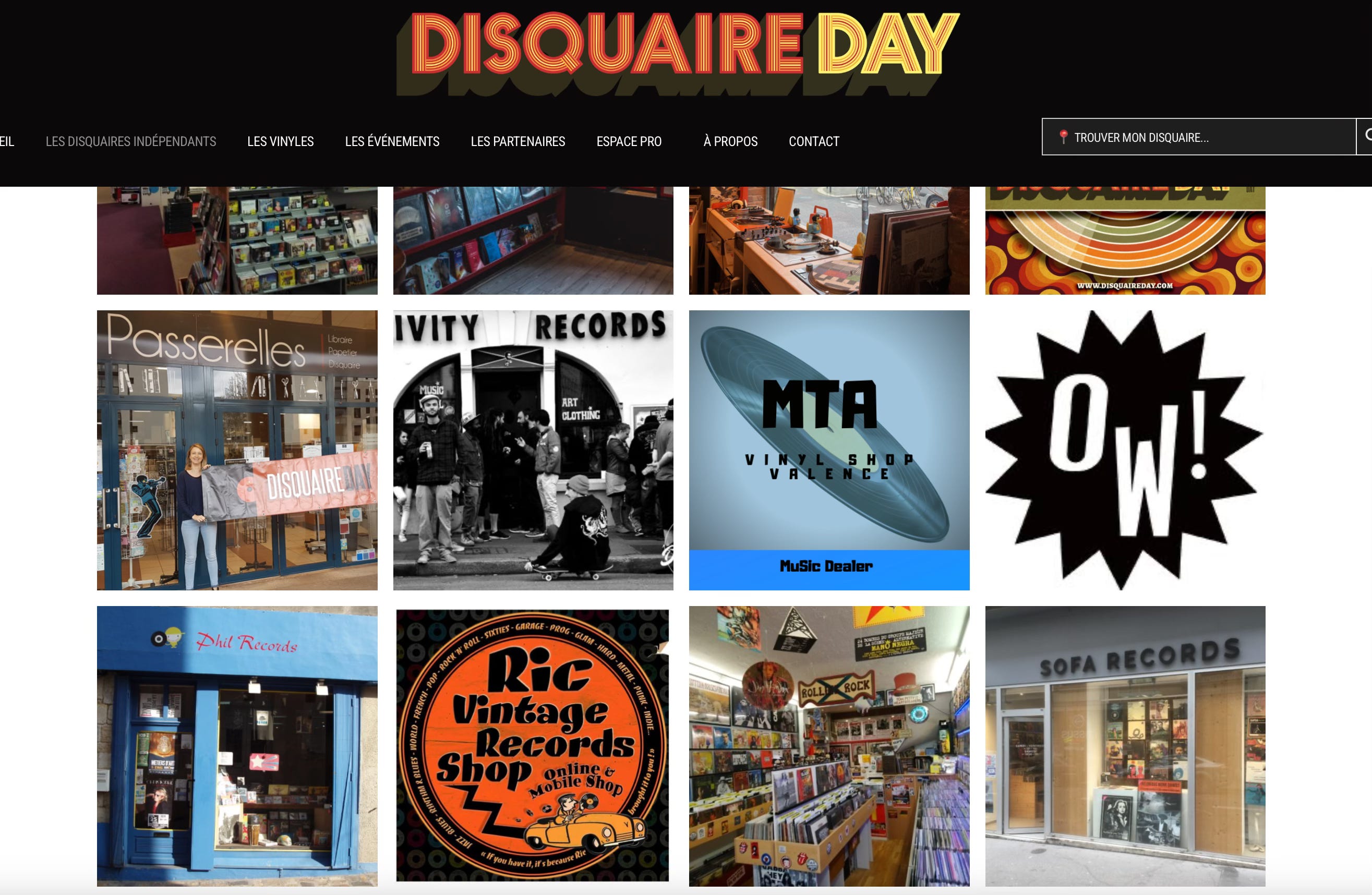
I didn’t need a Rumours picture disk or a “réédition splatter” of Sabbath’s ‘Paranoid’, so my shopping was less focused on the ‘special RSD releases’. I found the following treats: 

“Lets Make Up and Be Friends” – The Bonzo Dog Band’s last album before Stanshall’s death (but featuring the first appearance of Sir Henry Rawlinson).

“TANGK” – Idles – independent record store version, new album from the best men in dresses.

“Desolation Boulevard” – The Sweet. The vainglorious effort by the Ballroom Blitzers to shake off their Glam-Pop reputation with a hard rock record.

“Flock” – Jane Weaver – a bargain pink vinyl version of her 2021 album which features vibes and who can resist a good vibraphone sound.

“Actual Life” – fred again – The first of the ‘Life’ trilogy, silver vinyl.

“Pretty Hate Machine” – Nine Inch Nails. A gift for Rachel, who is currently inspired by Reznor and tough to find on vinyl.

“Live Montreal 1971” – Frank Zappa. A semi-official bootleg from a radio broadcast. Its the ‘vaudeville’ band with Flo and Eddie on vocals, so all Fillmore 71 favorites plus one of the songs from the eponymous Phlorescent Leach and Eddie album from 72, which I have never seen on any official release.

If you would like to sample these treats, listen here.

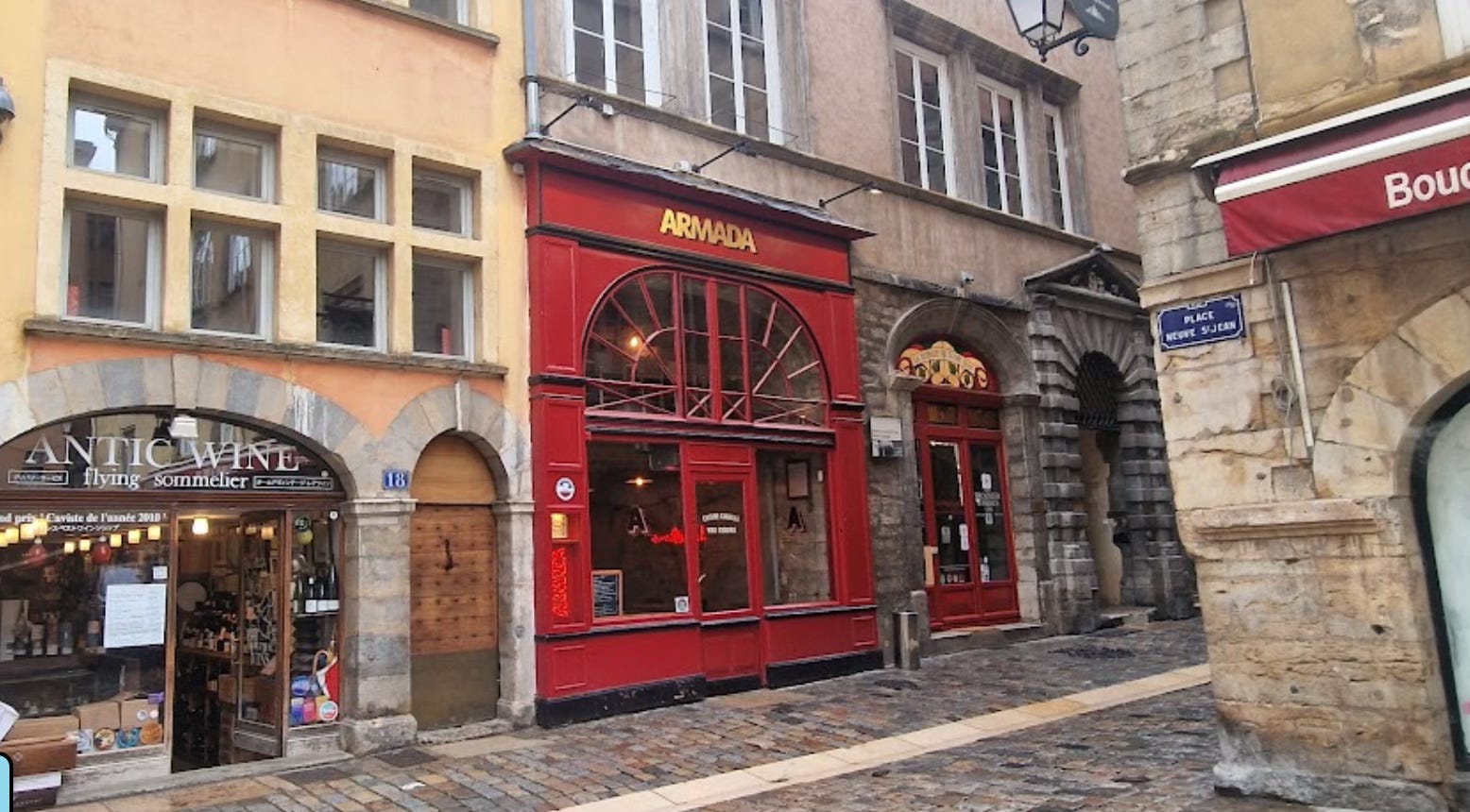
After a week in the mountains living on cheese and ham, it was good to get back to proper nosh. Friday night we went back to Armada on Rue de Boeuf in the old town. The first time we went there was by coincidence when they publicly made Le Fooding Guide, so it was interesting to see how they had adapted to their new fame in the intervening couple of months. They are still super friendly and faithful to the original vision of fun food. A modest space, sharing plates but not twee, tiny portions that you end up ordering 3–4 dishes a head. All very very good, the veggie driven starters were spring encapsulated, which was welcome after the winter of Tuesday and Wednesday in the shadow of Mont Blanc. Next door is Antic Wine, so they occasionally have specials from the neighboring cellar, and we had an amazing 2013 Montlouis followed by a 2011 St Amour. Some Loire whites are known to age and Chenin is a good grape to do that but a 13-year-old Cru Beaujolais is not common outside of Morgon, so we were blown away how good this was. The best dish of the evening was a lamb spring festival on a server, lamb from the Ardeche 3 ways, the fatty belly end grilled, the main rump chop served ruddy and the sweet breads done quickly on the griddle. All served over peas, pea pods and asparagus. The chef proudly delivered the two deserts and happy to chat about what made them special to him and ultimately to us. Among a ton of tourist traps, the modern Francis Drake would be happy to stumble into this Armada.
If you would prefer to receive this via Substack stroll over here: https://open.substack.com/pub/anecdotesandantidotes/p/gones-for-good-465?r=tnn6j&utm_campaign=post&utm_medium=web
Gones for good: Episode 10 – Fishheads and tales

Salmon is great to eat, but less impressive as a color for pants. You can farm salmon in large lakes, lochs and open sea-pens, so from the perspective of sustainability you would think it would get a hefty thumbs up. Especially as we are supposed to eat oily fish, reduce meat consumption and support a sustainable protein source with no methane emissions. In the US, partly thanks to the ubiquity of farmed salmon in sushi, the annual consumption per head is over 3 pounds of salmon. That sounds a tiny amount from a European perspective, but you have to remember vast swathes of the US eat zero fish, ever. European per capita consumption of just farmed fish production was 6.7 kilos in 2021, the last year data was available. Farmed salmon divides opinion sharply, in fact in some quarters it is demonized. When I lived in California I could choose to only eat wild salmon and its depth of flavor and color is like night and day, but in France we get one choice of Salmon, farmed. There are by contrast a plethora of options of other fish even in supermarkets and my fish guy on the market (a long-suffering PSG fan), has 2-3 whole different types of fish, 6-8 filleted fish plus shellfish of various hue, seafood preparations like quenelles, fish moussaka and preserved fish like herrings, smoked salmon and kippers. But salmon he does not sell, as he cannot compete with supermarkets and their farmed Norwegian salmon. The concern with the farmed salmon, particularly that emanating from Norway, Scotland and Chile, is that it’s raised in poor conditions of health and hygiene for the fish. The fish meal used to feed them together with insufficient water filtration means that the farms cause real destruction around them and have effectively killed off the wild varieties of salmon that gave the original reputation to those fish origins. There are efforts to identify those sources that do play by the rules, but it’s not always that easy on markets or where wet fish is sold to identify whether you are buying good or evil salmon. Being marked as Organic is also a false friend, as that can refer to the food on which they are raised rather than the overall farming regime.

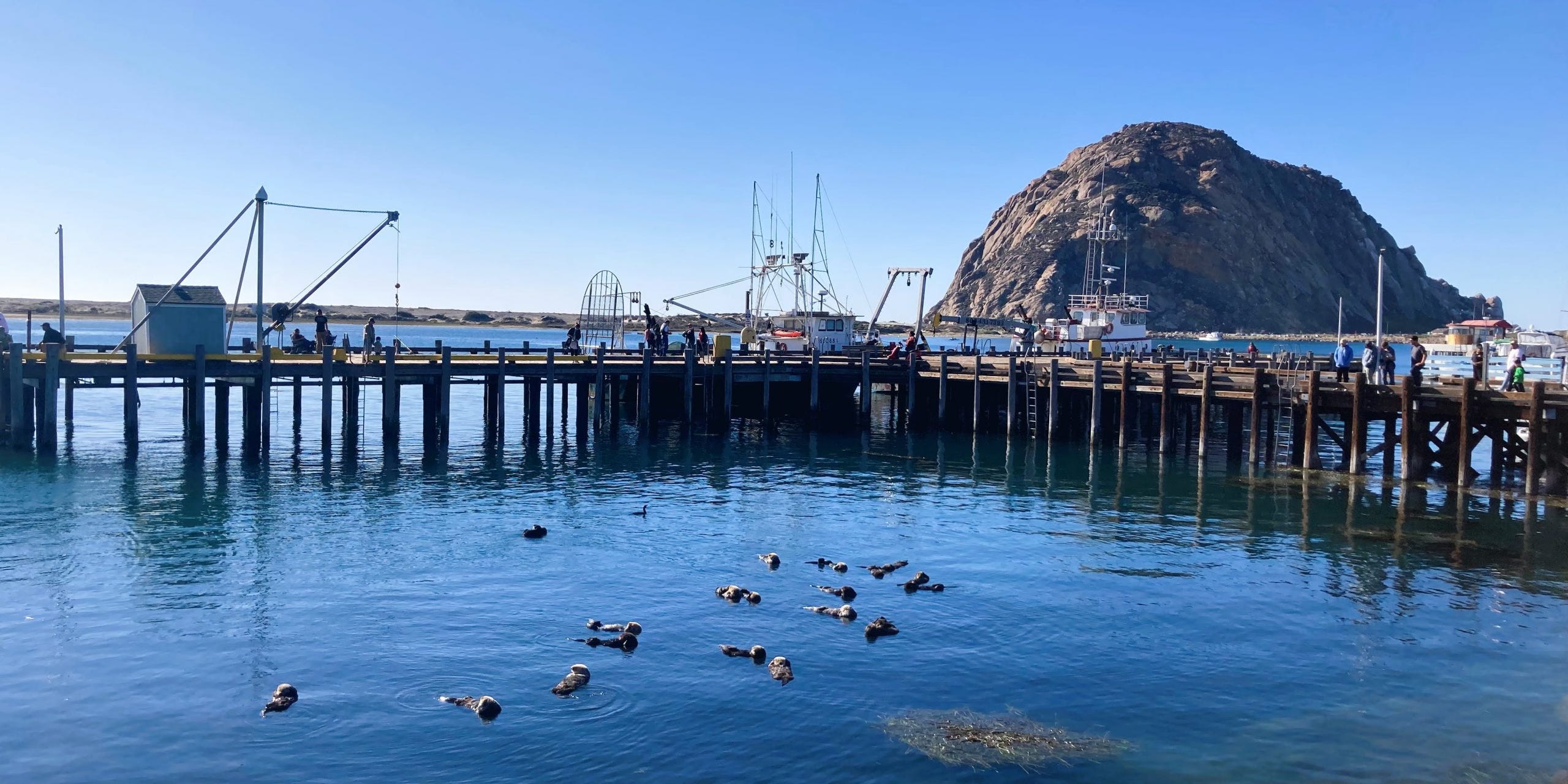
I once went wild salmon fishing off Morro Bay on the Central Coast of California. A friend won a prize at a private school fund-raiser that his kid went to. Another parent was a salmon fisherman, so he, and a plus one, got to go out on his commercial fishing boat. I was roped into being the plus one and at 6.00 am one Saturday morning was picked up to go and fish. My friend forced down me some disgusting anti-seasickness med with coffee, despite my protestations that as a semi-experienced sailor, it didn’t bother me. Off we sailed on a small fishing boat on a pretty flat, sunny morning sea while the Dramamine fucked with me. I felt like death for the first 45 minutes as we headed out to sea, finally the mate cooked us a fried breakfast – part of the prize thank god – and finally the nausea disappeared. We were using sonar to find the shoal of King Salmon the captain was in search of. This was definitely not Ahab and the beast, this was technology provided mastery of our domain. The visual clues were dolphins and seabirds, the dolphins smash into the shoal, which for safety swim in giant spherical shapes. The dolphin impact stuns and breaks off the salmon swimming on the perimeter of the ball, and they float up, stunned, to be gobbled up by the dolphins or the diving seabirds. The ball shape shows up clearly on the sonar, and we let out the fishing lines. Again, no romance here, just large hooks with shiny reflective aluminum lures on lines 800 yards long get trailed off the back of the boat as we slowly drift over the battered ball below us. We haul the lines back in and every 6-8 feet there is a large king salmon flailing on a hook, some of these are immense, the size of small sheep, 30-40 pounds in weight. Friend and I help with the hauling-in of the lines but the Mate and the skipper do the execution work, the gift to the school ensures we don’t have to bludgeon our way to our prize. An hour or so later we putt-putted back into Morro Bay, the catch nicely snuggled in the chiller hold covered in ice. We were each given one cleaned King Salmon as our bounty-come souvenir of our morning’s adventure on the high sea.

I am, as the regular reader will have spotted, quite fascinated by the daily saint’s days that the baker’s shop writes on the chalk board each day. So last Tuesday the 9th of April was in honor of St Gaultier. He should be the patron saint of reluctant labors, like my salmon fishing, and is in fact I was delighted to discover invoked in case of work related stress. He is also patron saint of Vintners, which is a good cause. St Gaultier was a professor of philosophy and rhetoric which was so exciting he became a Benedictine monk near Meaux, of mustard fame. He was appointed by the king, Philip 1st, abbot of a new foundation at Pontoise. The discipline at this new Abbey was lax, and he ran away several times to avoid the responsibility of making it less lax. He gave up completely and went to Cluny, which is actually not far from us at Charolles and was at the time the biggest and richest abbey in Eastern France. They sent him back to Pontoise. He tried to escape to Tourraine and hid himself on an island in the Loire, before yet again being led back to the abbey. He also escaped to an oratory near Tours before being recognized by a fellow pilgrim, who grassed him up. 

After being forced to return yet again to Pontoise, this time he decided to go to Rome to appeal directly to Pope Gregory and gave him his written resignation. Gregory instead ordered him to resume his responsibilities as abbot and never leave again. Accepting his fate, he campaigned against the abuses and corruptions of his fellow Benedictines, and was beaten and imprisoned for his troubles, which may have been why he was not so keen on the job in the first place. He resumed his work after being released and died in 1099.

St Gaultier or St Walter as he is known in English, was buried in the abbey at Pontoise, the place he had strived so hard to avoid. He was canonized by Hugh, Archbishop of Rouen in 1153, and was the last saint in Western Europe to have been canonized by an authority other than the pope. He did finally escape Pontoise, as they managed to lose his body during the Revolution.

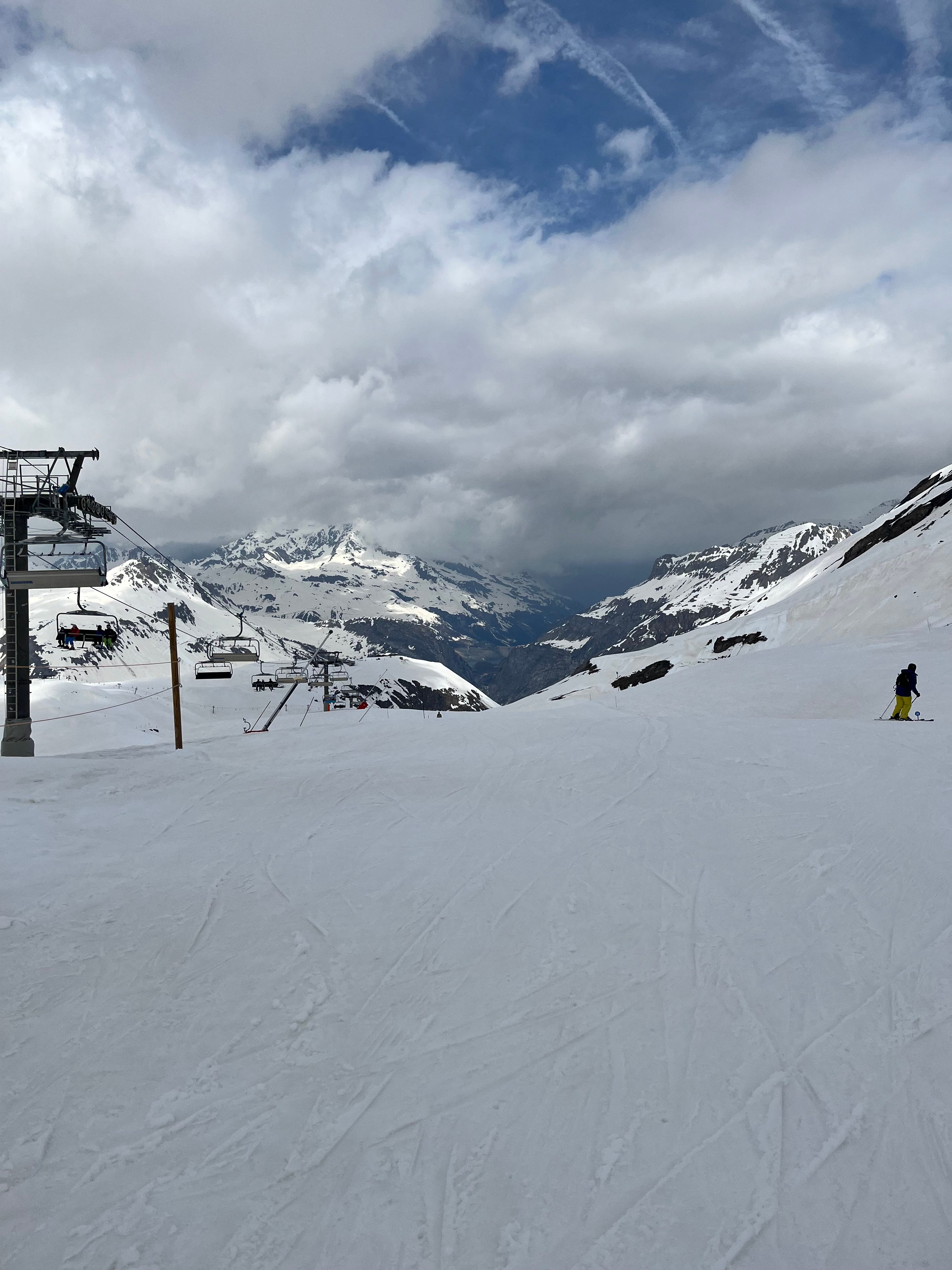
I have escaped the city life of Lyon this week by taking a late break to ski with Dan in the Val D’Iseres, staying with a friend in Tignes 1800. It’s typical spring skiing so today we had sun, sleet, snow and rain. It is by coincidence the last week of the Easter school break for Paris so the resorts, although not full as it is late, are awash in Parisians. Some are gloriously old school in terms of spring skiing means one thing and one thing only, working on your tan. There are great examples of people at each bar and restaurant with pine yellow tans, working hard to get them to the full dark oak tan that some of the older French ski-instructors sport. It was a sunny day yesterday and there were folks laying out in deck chairs at 10.30 in the morning at 2500 meters above sea level. If I hadn’t watched him play badly against Villa later that day, I would not have been surprised to spot Ben White of Arsenal fame laying out there too. He is a young man who seems to have taken upon himself the curation of a serious tan all winter and with his odd goatee, looks more and more like a pantomime Captain Hook, grease paint and all. 

We are this week in the former land of Savoy, Italy is just over the mountain to our East, and so much cheese, ham and pasta is consumed. They have basically exhausted any way of cooking cheese, ham and potatoes and all combinations are sold for lunch and dinner. Tartiflette, raclette, baked whole Mont D’or and Rebluchon. Pasta with cheese, pasta with ham and cheese, pasta with cheese, ham and potatoes dominate the menus. The good news is that the local wines from Savoie are good accompaniments and great value, we had a Chignin Bergeron last night which was a bright pretty white without being floral. If you are spring skiing, you oscillate between being cold, wind swept and needing staunch hearty food and being hot and sun burned and wanting salads and bottles of rosé at lunch. Happily, the quality of food at French ski resorts puts to shame the rarefied efforts, at what is basically fast food, that masquerades as $45 lunches at any US ski resort. We are surrounded by valleys that in summer provide pasture for cows that deliver the milk for the Beaufort, the Abondance, the Raclette and the various Tomme de Savoies that enrich the local dishes. The other local drink owes much to St Gaultier’s fellow Benedictines, Chartreuse. In both Green and Yellow forms, the bottles are behind every bar, in every restaurant, in every shop. Here in the Alps they also have local Jenepé liqueurs which compete taste wise with Chartreuse and both the original and the local versions turn up in ice-cream and deserts. Lyon celebrates its affinity to Chartreuse like San Francisco does to Fernet, but for some reason our local wine shop on Felix Faure cannot seem to secure regular supplies. I am going to have a Chartreuse with a coffee one morning this week, just because it seems to be the done thing, and maybe I bring a bottle home.

Gones for Good: Episode 9 – Cheese coursing

April the first passed with several striving consumer brands demonstrating their hip edginess by self-knowingly winking at the April Fool’s tradition with hot dog flavor soda drinks, stoner-speak decoding apps and Korean BBQ scented deodorant sticks. It does not really translate in France, as their tradition for April 1st is a unique and esoteric take on pranking someone by attaching to their back a paper cut-out of a fish. So the worst that can happen to you is that you are the Poisson d’Avril for a period of time until you work out why everyone is sniggering and yes, it’s you, you have a paper fish stuck to you! 

The origin of this odd little tradition is that until the 16th century the new year was celebrated at different times, in different regions of France; the first day of spring in some places, Easter in other, 1st of April in others. Charles the IX decided to standardize the calendar, and the new year officially started in 1564 on January 1st. The word didn’t get distributed that well in pre-industrial days, but when the King’s Messengers finally spread the word, there were still some folks celebrating the turn of the year in April and giving the traditional gifts of fish – partially tied to the ending of Lent. The sophisticated and well-informed took the piss out of the rural rubes by giving them pretend fish gifts. So if you end up the butt of the office joke and everyone is sniggering behind your back as you discover a paper fish sellotaped to your designer hoodie, then blame King Charles.

What the French do take seriously is the overall quality of life, more as something to debate about rather than boast about. As much as arriviste foreigners we look at France and revel in its positive contrast with the tattered putrefying carcass of our homeland that once was England, or the political dumpster fire of a gerontocracy in thrall of big business that the US has sunk to, the French always find something to complain about. This week, the French woman’s magazine ‘Femme Actuelle’ published its list of top 50 places to live in France as a woman. They used data from the Ministries of the Interior and Health but also from numerous agencies known intimately to the French but who remain to me just one of many confusing collections of initials, including INSEE and CAF. They evaluated the quality of life for women through the comparisons of factors such as health, access to housing, public transport, security, juvenile delinquency and even pollution. For each, they gathered the most relevant indicators, but Femme Actuelle admitted that this was not always easy. The data had to be available, reliable and comparable for all the competing cities. As an example, they could find no reliable publicly available measures of the share of green spaces or pedestrian zones available in a municipality, although, under certain conditions, women favor them. They finally selected twenty-one indicators, to which a weighting coefficient was applied, according to the importance the magazine attached to them, focused around 4 key axis to derive the final ranking: the provision of specific care, security, the living environment and the action of the municipal authorities. Lyon was happy to receive the fourth place in the ranking behind Strasbourg, Rennes and Bordeaux. Paris was 7th and in last place Perpignan, just behind monied Antibes in 49th. Lyon takes the green space and pedestrianization super seriously, so might probably have scored higher if that was one of the measurable common factors.

The French also take cheese seriously. As part of Charolles’ inaugural Gourmet Festival, “Les Rendez-vous Gourmands” there was an event hosted by our local L’atelier des fromages, the cheese workshop, which being out of Lyon for the week we took advantage of. This was in contrast to Maître Doucet, who hosted 3 four-handed dinners at his Michelin starred Maison Doucet, each one featuring a guest pair of hands from another 1 or 2-star chef. Those little beanfeasts were €250 a head, each one; so I would be intrigued to find out how many locals ponied up for more than one of these. Doucet is a relentless self-promoter, appearing on the French equivalent of Good Morning America, cooking Charolais beef during the recent Agricultural Foire in Paris. That was the one that Macron spent an unprecedented 14 hours at, to prove his ‘man of the people’ standing. I am sure Doucet has a well-heeled fan base who made the journey up from Lyon or down from Paris for the rendez-vous. He was there as the event was kicked off on the Wednesday morning, which coincided with the weekly market, so the town was bustling, even in the incessant rain. They had drinks and folk music and the local folk culture society, Les Gâs du Tsarollais turned out in their peasant costumes of yore, which for some reason seem to include fur coats.

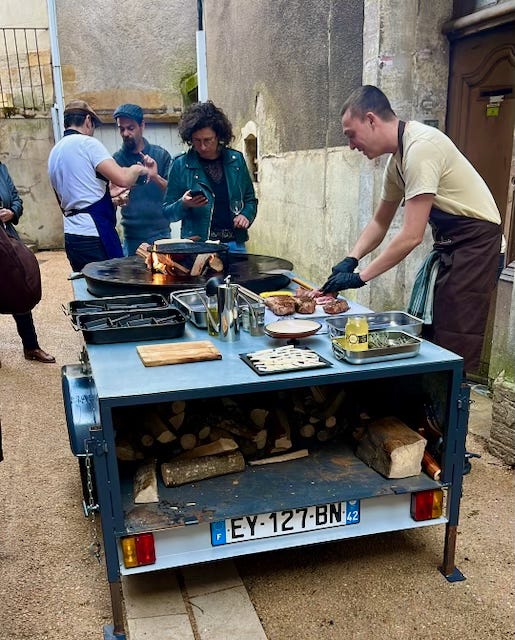
He is a good chap, our cheese guy, literally as his name is Bonhomme. He provided an “Atelier Brasero Autour Du Fromage” of 5 courses with drinks included for €30 a head. The rain and wind fortuitously decided to bugger off that Thursday morning, and so we had a warm spring evening around the Brasero, tucked away in the alley between the cheese shop and Place Baudinot. The Brasero for the unitiated, (myself included before the evening) is a large circular wood-fired grill with cast iron cooking surfaces above and surrounding the vented fire box.

We were welcomed to start the evening with a selection of cheese appetizers with a local Blonde beer. Each of the cheeses was given a formal introduction by Pierre Bonhomme, all examples were Fromage Fermier, which is a subtle but critical distinction. This means it is made on a farm and not in a large dairy, it brings a link directly from the animals raised to provide the milk, the land they graze on and the hands that work the cheese. We had a winter’s milk Beaufort, a fruity Comté (16 month old), a local Charolles AOP goat cheese and a mild sheep’s milk blue cheese.

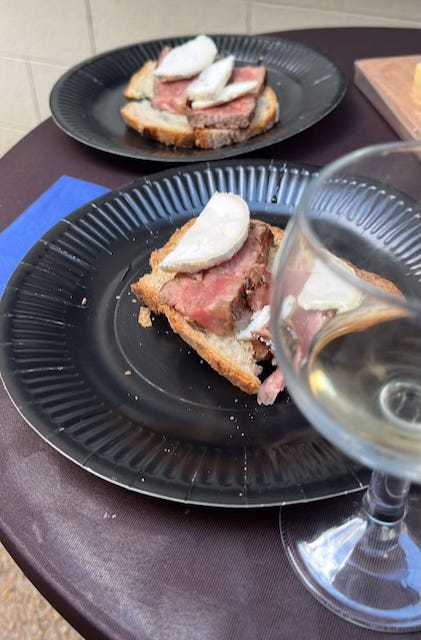
The Brasero kicked into action and we had local beef grilled then bathed in an oil-based dressing of garlic, wild thyme and local honey. It was served with a slice of another Charolles goat-cheese and drizzled with honey and served with a White organic St Veran, which is the closest quality white wine to us. Pierre explained that Charolles as a AOP, appelation d’origine protégée, has one of the highest proportion of fermier producers, with each hustling to make the little towers of cheese, supposedly inspired by the Tour De Charles le Temeraire; it takes 3 liters of milk to make 1 Kg of cheese.

This was followed by a take on the traditional raclette, with a chilli infused raclette cheese, heated to bubbling hot served on bread with generous options of charcuterie to accompany it. This was served with a Fleurie.

For the traditional cheese course, we then had two contrasting but stand-out strong cheeses. There was a lively discussion about which are the ‘strongest’ tasting cheeses and Montgomery Cheddar, which he sells, got an honorable mention alongside Maroilles and Munster. He served Epoisses, which was made originally by a religious order but has been made in Burgundy for over 500 years, its orange rind a result of the regular brushing with Marc de Bourgogne, an eau de vie. There remains only one fermier producer still producing it today. This was accompanied by another strongly flavored rich cow’s milk cheese, Chaource, from 2 hours north-east of us on the way to Champagne. This was another farmer produced and refined cheese, Fermier AOP. We washed this glorious pairing down with Hautes Cotes De Beaune and had a serving of whole grain Dijon mustard on the side. 

On the subject of strong cheese, we then had a tasting of Pierre’s ‘Fromage Fort’. This is a typical poor man’s food that takes leftovers and recreates something new. Generally it’s the odd pieces and leftovers of cheese that remain, shredded finely and mixed with cream or yoghurt, some alcohol (white wine or marc) and some also mix in leek or other vegetable stock. The beaten, smoothed version of a cream cheese is then eaten on toast. It’s an acquired taste and depends ultimately on the recipe as it is very sharp, pungent and acidic. Pierre makes one with only goats milk cheese or only cows milk cheese, never with sheep and never with blue cheese. If you like those acidic Danish blue cheeses, you will like Fromage Fort. I think you could also use it to revive olden wooden furniture or polish tarnished jewelry, not a great fan; although Dan, who was with me, loved it.

We finished the cheese exploration with Salers on whisky-flamed toast and the same Irish single malt whisky on the side. By this time most of the social awkwardness in throwing 16 people together had melted around the now-cooling brasero, so we had a rambling discussion on salted butter, whisky and whiskey, Brexit and walked away full, satisfied and happy into the dark evening streets, no fish stuck on our backs.

Gones for Good – Episode 8 Nelson’s bells

When does the constant climactic chaos convince the conservative pols that this shit is real? I was reading an interesting post by the Ruffian Ian Leslie where he made the following point using an old quote from G.K Chesterton: “…the world was dividing into Conservatives and Progressives: “The business of Progressives is to go on making mistakes. The business of Conservatives is to prevent mistakes from being corrected.” The divide I think that is most apparent now is those who accept that the climate is fucked, and we need to do something about it, and those who don’t think we need to change anything. Either you think it’s an ongoing catastrophe, and we must do something, everything, to stop it getting worse, or you think it’s just more liberal, woke, green garbage, and you are not going to do a thing to change your gas guzzling, methane spewing lifestyle. That we continue to pump oil, burn coal and let methane vent into the atmosphere without limit is a mistake. There is no debate on the science of the climate crisis, outside of certain tin-hat wearing conspiracy groups. There have been and continue to be massive misinformation campaigns on behalf of the fossil fuel-committed, but you would think at some point even the hard core petrol heads have to accept that the consequences of extreme weather are getting in the way of them having fun.

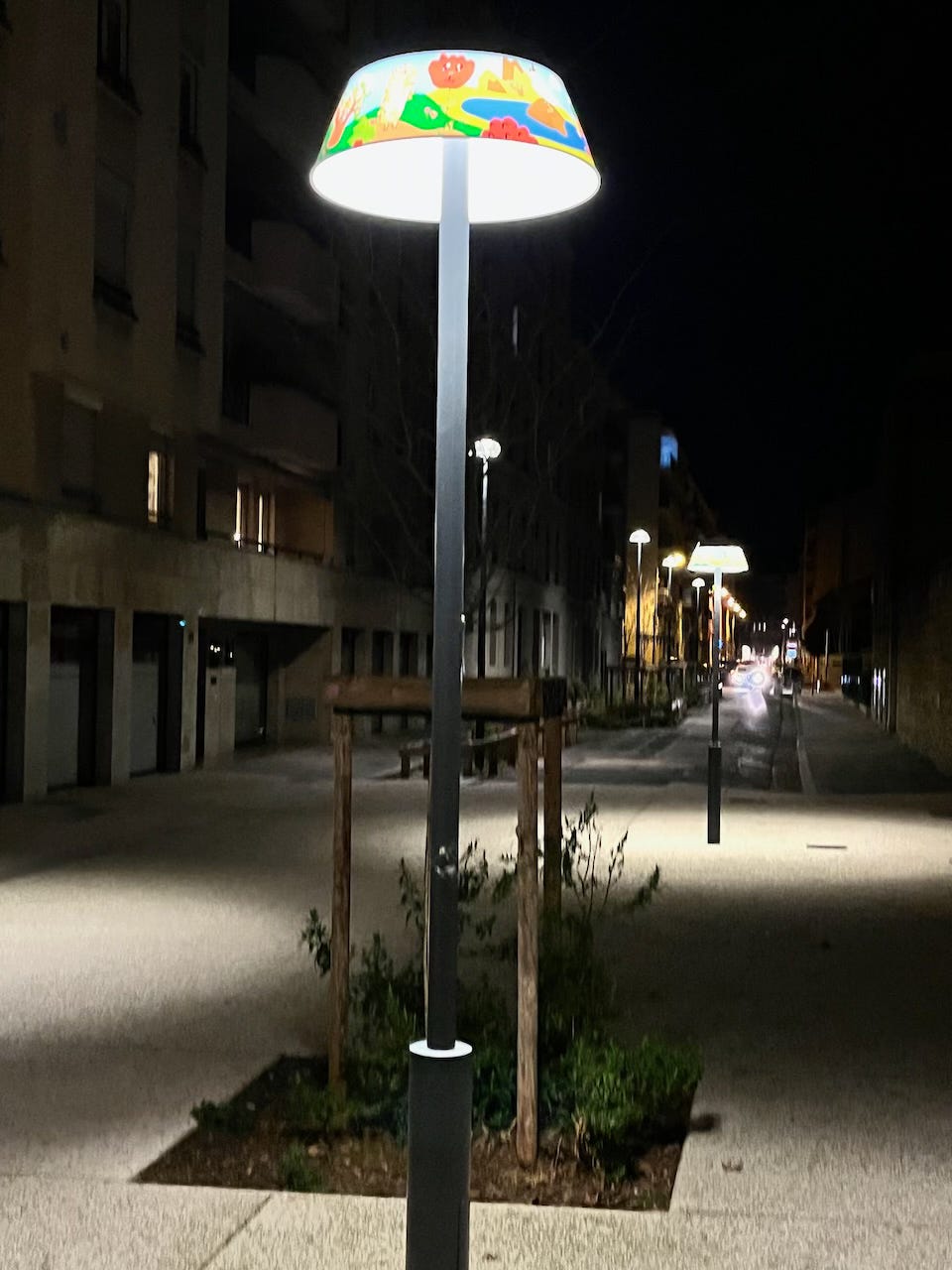
The French endured their worst nightmares this week with the return of Nelson. Not happy with the mass destruction of Bonaparte’s navy over 200 years ago this week, Tempête Nelson ravaged the French coast. Record wind speeds of 187 kmh hit the Finisterre peninsula, followed by flooding and rain across most of the rest of France other than the very south. To the east of Lyon in the Alps 150kmh winds kept resorts closed for two days and on the peak of Chamrousse near Grenoble 200kmh gusts were recorded. This is not normal. Lyon was an odd twilight world on Friday night, t-shirt warm with crazy cold intermittent gusts and lit up by pre-thunderstorm yellow tones. The streets around the apartment are more Kiev-chic than France suburban as they are torn up, piles of concrete, pipes and barriers everywhere. The sewers and electrical conduits are all being replaced around Rue Garibaldi. This is a superb piece of joined up thinking that the French excel at; the reason they are doing this upgrade all at once is that they are taking half of the roadways on Garibaldi, Felix Faure and other major routes and planting trees. Lyon is planting 56,000 trees this winter, part of the national ‘Canopy Plan’ which targets 30% of urban surface areas to be tree covered by planting 3 million trees. They will create major gardens and tree lined pedestrian and bike paths completely separated from the cars. Having done all that work, they want to avoid then disturbing the roots and digging them up to upgrade someone’s fiber, so first steps, get the pipework done. The city has its own incredible Tree Charter which covers every aspect of the incorporation of trees as a critical element of the city’s landscape from choosing the right trees, diversity of trees for various uses, pollen issues, creating tree surgeon and maintenance skilled jobs, it’s here in French but just skim it to get a sense of how thoroughly thought through this approach is. The key benefit is that the trees reduce the temperature by 4-5 degrees C and have been shown in some situations in Lyon to drop it by 10C in mid-summer. So instead of causing more carbon by allowing A/C systems to proliferate, the window-mounted A/C typical of a New York apartment block are banned and Lyon is instead going to use trees, and lots of terraces and cold beer.

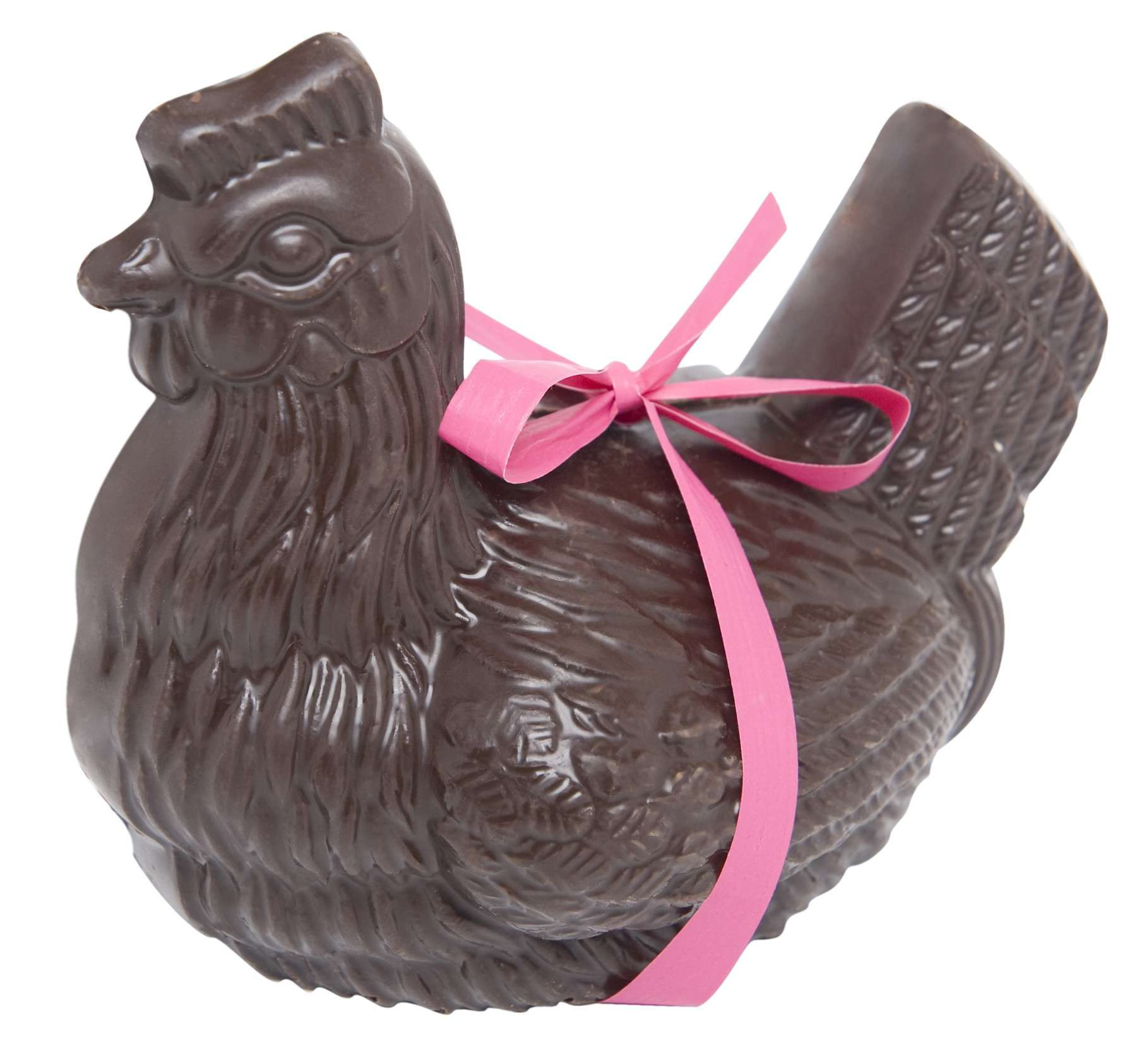
Today is Easter Sunday, so I thought I would give you a break from yet another pious rich woman getting a sainthood and would share some French Easter traditions. Every pâtisserie and chocolatier is chockablock with chocolate Easter baskets and chocolate animals full of treats and little eggs. Unlike in the UK or the US, the animal of choice is not the rabbit. The French quite correctly from a physiological perspective prefer the Chicken as the animal to bear the chocolate eggs. So chocolate chickens, chocolate frogs, chocolate shrimp, chocolate hippos, even lots of chocolate fish but not many bunnykins in sight. So if the Easter Rabbit is not delivering the Easter eggs, who is? Well of course here in France the Bells are. Bells? This is a deeply Catholic tradition. From Maundy Thursday until Easter Sunday, the church bells are stilled. To explain the absence of the bells ringing, they decided to tell the children the bells were going to Rome and the Pope would bless them before their return. Then Easter Saturday night and Sunday morning the bells ring again, bringing treats back from Rome and hey presto chocolate fish, eggs, chickens, hippos are strewn around. In eastern France, to replace the bells “gone to Rome” during Holy Week, children rang rattles in the streets to announce services. The altar boys got a starring role in those 3 days too, as they would announce the services several times during the day. The first time they shouted: ‘Réveillez-vous’ “Wake up”. The second time: ‘Préparez vous!’ “Get ready.” The third: “Hurry up”, ‘Dépêchez-vous’. We woke up, got ourselves ready, and then hurried over to La Garibaldine to line up in the rain and secure a chocolate chicken. 

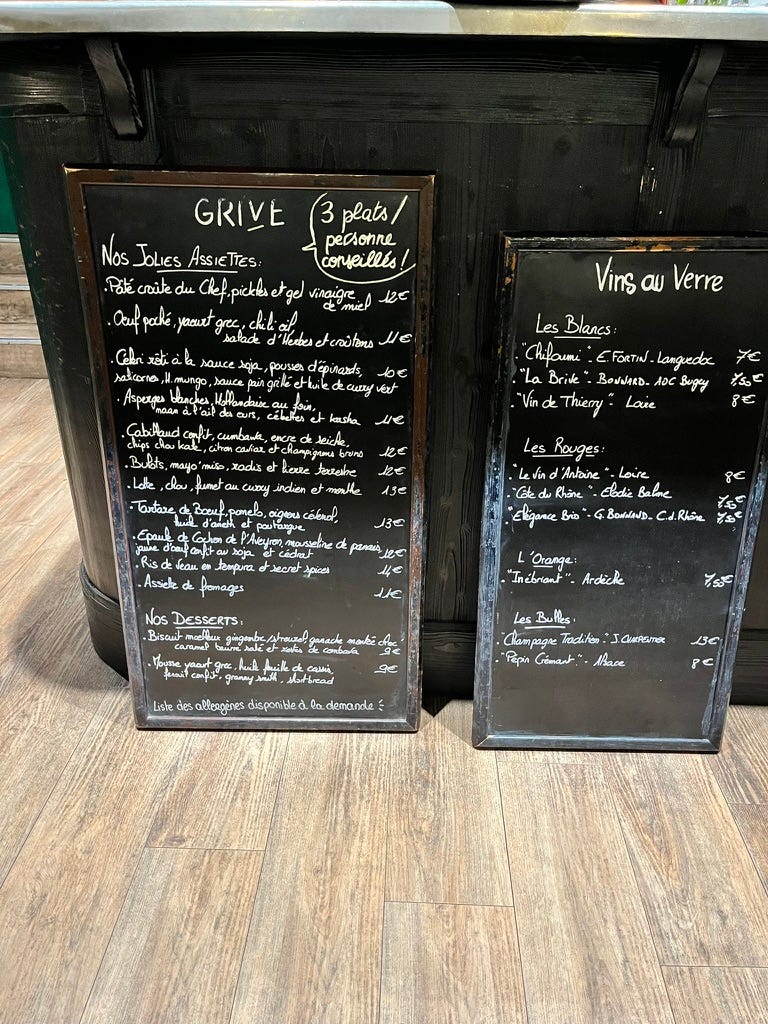
We also celebrated Easter on Friday night over on the banks of the Saone in the old town at Grive. The narrow streets gave us some protection from the gusts, and the chalk board menu of small dishes never disappoints. We had not been for a while, so every dish was new to us. Small plates work great for a couple or as we were 3, but for 4 they can be a pain as no dish comes with more than 3 items and if you order 2 plates it’s still odd with 6 items for 4 people. The veggie dishes were superb, white asparagus is just in season, and you cannot go wrong with roast celeriac. The pulled pork on a bed of roast mashed parsnip was a winner too. There were 3 fish dishes, monk fish wrapped in cabbage and confit of cod on a squid ink sauce as well as bulots with miso mayo. Bulots are sea snails, they are rarely seen on a menu in England and never in the US but the French rightly love them, as do I. Less chewy than clams but more substantial than mussels they are often served as part of a large seafood platter, the ‘Sélection de Fruits De Mer’ served up on a stand at coastal sea-food places in Province and the Cote L’Atlantique. For the squeamish, pulling them from the shell can be off-putting, but they were served here already shelled. Monday is Poisson d’Avril but that is a fish tale for another day. 

If you would prefer to receive this via Substack you can subscribe here 🙂

Gones for good: Episode 7 – Bread Heads

There was a recent article in the storied business journal, the Harvard Business Review, on the tactical genius of the French Boulanger. Through a study of the bakers in Lyon, the three learned professors “analyzed the location strategies of 177 bakeries within the city of Lyon, from the beginning of 1998 to the end of 2017”. They were surprised that Traditionalist bakeries (in the food capital of France) had survived. Bread making in France is a relatively simple business and is regulated in part. The ‘baguette traditionnelle’ specifically by law, can contain only flour, water, salt, and yeast. By their name, the Traditionalists don’t use a variety of “time- and cost-saving practices (such as the use of mixes and frozen dough), which are more or less invisible to consumers”. My emphasis in bold. What does not appear once in the research paper is the word or even the concept of taste. I could be snarky and make the case that as 2 of the three researchers are Dutch and the third Swiss that we should not be surprised. But really? The authors of the article were shocked, that despite these disadvantages, the Traditionalists have maintained a strong majority share of the French bread market despite modernist competitors using the cheaper efficient production tricks. They came to the mystifying conclusion that there was a logic defying trick by the Traditionalists, who instead of shunning being next to or nearby a modernist bakery, actually more often than not, set up right under their modernist competitors noses. So you make something you love making, in a time honored traditional way using natural ingredients and as sure as shit, tastes better than the bland cheaper option, and you are in business in a country that loves bread, in a city that worships at the altar of nourriture every day. Unsurprisingly, you are successful. In other news, wine is wet.

Other bread loving nations include the English and the Irish. Ireland has one of the highest natural incidences of celiac disease, yet you will not find a lot of gluten-free options. It seems the Irish have made a conscious decision that if they are to suffer, it will not be for a lack of bread. Nor for a lack of Guinness, although I was surprised to see the UK drinks more of the foamy browny-black stuff than its country of origin, closely behind Ireland is Nigeria. In a hot, sticky, equatorial humid climate the last thing I would be craving is Guinness, but that’s why I am not running a global drinks business like Diageo. Where you will not find cans of Guinness for sale publicly is the Kingdom of Saudi Arabia. The Kingdom is dry and has been since 1952 when King Abdulaziz banned it after one of his sons got drunk at a diplomatic function and killed the British Consul with his sword.

This Thursday, continuing our own swordless tradition, we celebrated the saint’s day of Sainte Clemence. Yet another German widow of nobility who when her hubbie, Menginard I, Count of Sponhiem (a minor kingdom yet again in the Holy Roman Empire) went toes up, goes into a convent, does some good work and then mysteriously ends up beatified. If you are born on this day, the French refer to you as a Clementine, which could be confusing if you became so ridiculously successful in business to the point you are dubbed a mandarin.

Good weather, good times

Wednesday through this weekend was the “Le Temps Est Bon” (Good Weather) food festival which, although it’s the third week of March, was prophetic in its timing. It was 22 yesterday, and everyone is behaving like it’s spring. We went to one of the events, a dinner with the Mich 1 starred chef Vivien Durand from Lormont, near Bordeaux was invited to take over the kitchen by Florian Remont of the Bistrot du Potager, which is in the 7th, the Gerland area. Remont’s place is known for his South Western Pays-Basque style cuisine, so it was obviously a meeting of the minds. In a small world coincidence, we drove so many times across the Pont d’Aquitaine to and from Bordeaux airport to the cottage in Duras. On the headland to the south of the bridge’s entrance was a ruined château that in its day, i.e. before they built a 6 lane suspension bridge at the bottom of the garden, it must have had great views over the Garronne estuary. For all those years it was a graffitied husk of its former greatness, but in the latter few years of our journeys it was being refurbished, and it just so happens that Durand’s Black Prince restaurant is situated in the château’s former stable block.

The menu was a 5 course tour de force. Brussels, young and fried whole like a flower with a syrupy dressing of shitaki mushrooms kicked it off. Followed by sea-bass carpaccio, then a glorious sous-vide prepared monkfish dish. I think sous-vide is generally preposterous, but this was ‘melt in the mouth’ so I get it was worth the faff.

You are kidding me

The main event was kid goat from the Basque Country, spit roasted and served in an unctuous sauce with girolles and perfect roast potato. It was then followed with a selection of spring veggies – roast baby leeks and roast white asparagus on a bed of fried kale and spinach with pea-shoots garnish. It would have pleased Popeye and my Olive Oyl thought it the best dish of the night. Dessert was a bit of a mess with some crispy chocolatey sticks that were nearly inedible, on top of hazelnut cream and a bread flavored sorbet that just didn’t work together. Otherwise, pretty great food in quite a cool space.

The other oddity of the night was the total fail on the music. As well as the French do food, they do music as badly sometimes. We dined with a soundtrack of electronic disco at a volume that was just annoying enough that you noticed it, yet too low so all you really heard was the tinny repetitive beat. The music that if played loud while the young bucks were doing prep in the open kitchen would have been fine, but not dining music, never, ever. In the loos downstairs they seemed to have replaced the ceiling speakers with former earpiece speakers from old telephones so the tinny beat was something otherworldly, laughable even. It’s a shame as the French can do dance music – Justice, Daft Punk, Cassius, Laurent Garnier but this was just crap. This is what good French dance music sounds like.

Gones for good – Episode 6 blossoms amongst the beef

Green, yellow and pink. The colors of the Charolais countryside are ‘other side of the rainbow’ technicolor contrasts after the cement and tarmac gray of Lyon in March. The green is so lush and bright that it has a hyperreal quality as the sun courses across crisp, clean blue skies and appears to welcome us back to the country. We welcomed visitors from Brooklyn who had spent some fun but rainy days in Paris, before the TGV delivered them into the underappreciated former industrial belly of Burgundy at Le Creusot. We had plans for an indulgent culinary tour of our part of France, a bit of a blow out, a ‘bonne bouffe’. 

Les vaches Charolaises

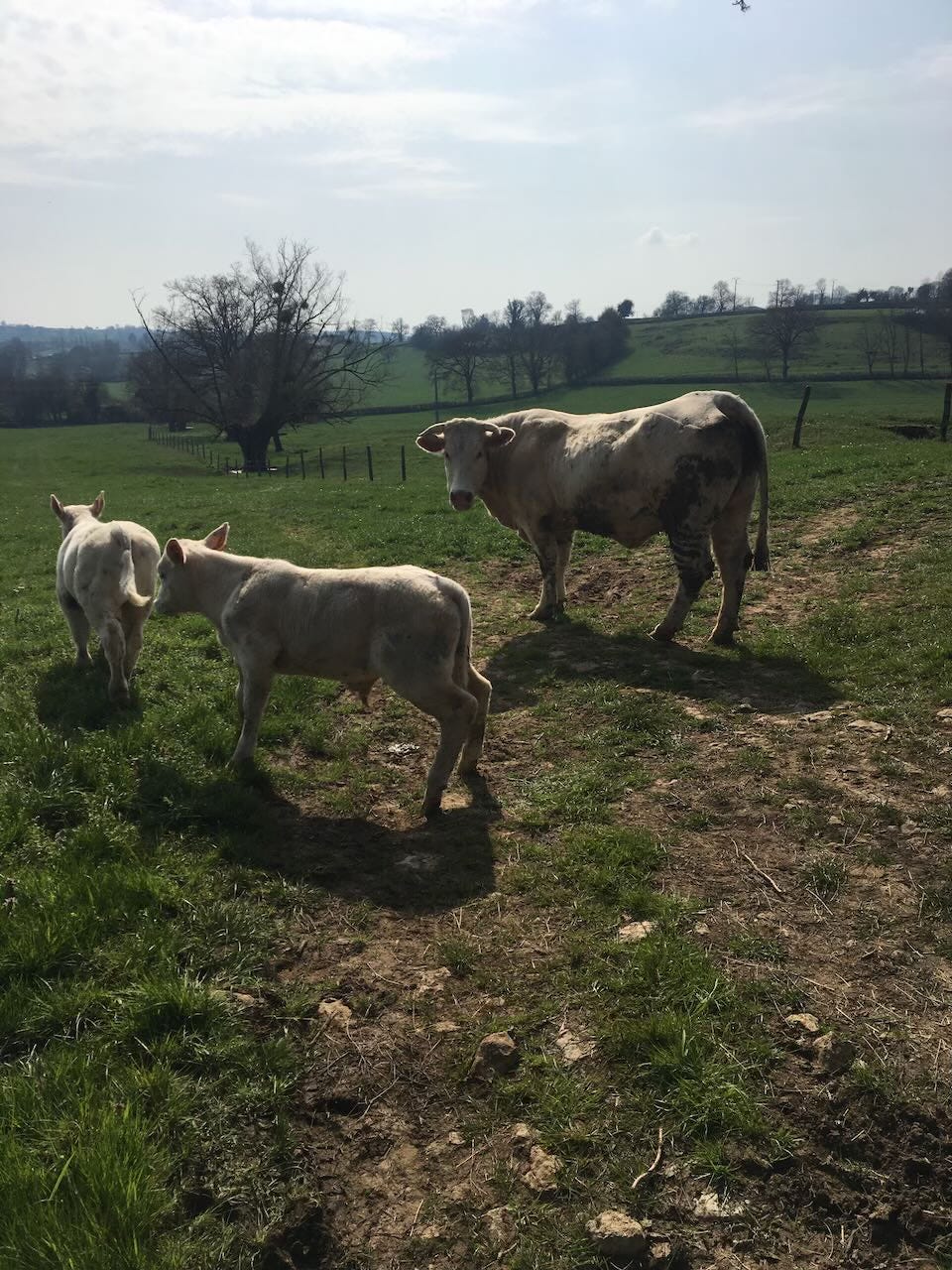
As we headed south into the Charolais the weather smiled on us, and we were greeted on either side by the white cows of the local breed, nuzzling their way through the pasture in their small hedge rowed fields. As you get further south into the more hilly and higher elevations of the Brionnais, its sister breeding ground of the Charolais beef cattle, the fields are edged by dry stone walls that are familiar to anyone from rural England. The fields are small to allow simple rotation, avoiding over grazing, the walls provide shelter from the wind in winter. They are too small and uneven to be used for arable crops at scale, so we are spared the pesticide induced monocultures of the north of France. We benefit instead from lots of butterflies, bugs and crawling things and all the birds and small animals that feed on them, and the larger birds of prey and larger animals that feed on them in turn. The forested parts are full of large wild boar and to a lesser extent deer, which keep the local hunters busy every winter weekend and provide a steady supply of ‘saucisson de sanglier’, dried wild boar sausage, to the local shops. They -reintroduced wolves to the Morvan, a forested mountainous plateau 45 kilometers to the north of us, Romanian wild wolves. Much to the annoyance of the local sheep farmers, the wolves will do their wolf-thing regardless of man-designated borders and fancy lamb in their diet from time to time. The protests of the farmers are smoothed away with cash payments for lost livestock at market pricing, quietly and quickly, like a wolf in the night the problem comes, and the problem goes away.

Our grand bouffe took place on March 14th which was the feast day of St Mathilda. Unlike many of the saints who followed a path of denial and simple life, our Mathilda was a Saxon Queen and was used to feasts and wine. She was the first of what are referred to as the Ottonian Queens, she gave birth to the first King Otto, who then had more descendants all named Otto. Her lad Otto is ‘important’ as he restored the Holy Roman Empire. Charolles ended up being an island of the Holy Roman Empire, part of the Dukes of Burgundy’s lands and the seat of Charles Le Temeraire. Charles’ father Philip the Good was the most powerful of the Dukes of Burgundy and responsible for the creation of the united low countries of what is today Holland and Belgium. His troops captured Joan of Arc at Compiegne, and he handed her over to the English, who with the help of Burgundian judges burnt her for heresy. Phil was a bit of a player, he married three times and had three legitimate sons, all from his third marriage; only one, Charles the Bold, reached adulthood. Philip had 24 documented mistresses and fathered at least 18 illegitimate children, who are bluntly called things like “Anthony, bastard of Burgundy, Count of la Roche” or “Philip, bastard of Burgundy, Bishop of Utrecht”. Anyway, Mathilda was a good wife herself and gave birth to two other boys and 2 girls, as well as Otto. When her hubbie, Henry of Saxony, shuffled off from his mortal coil, she used her not insignificant wealth to set up convents. Not a great number, just 3 and they tended to be finishing schools for the daughters of powerful families, so once again hardly a path to beatitude through pain and suffering. It seems it was easier to become sainted in 968, when Mathilda died, than later, or they tightened up the rules to make it a more exclusive club.

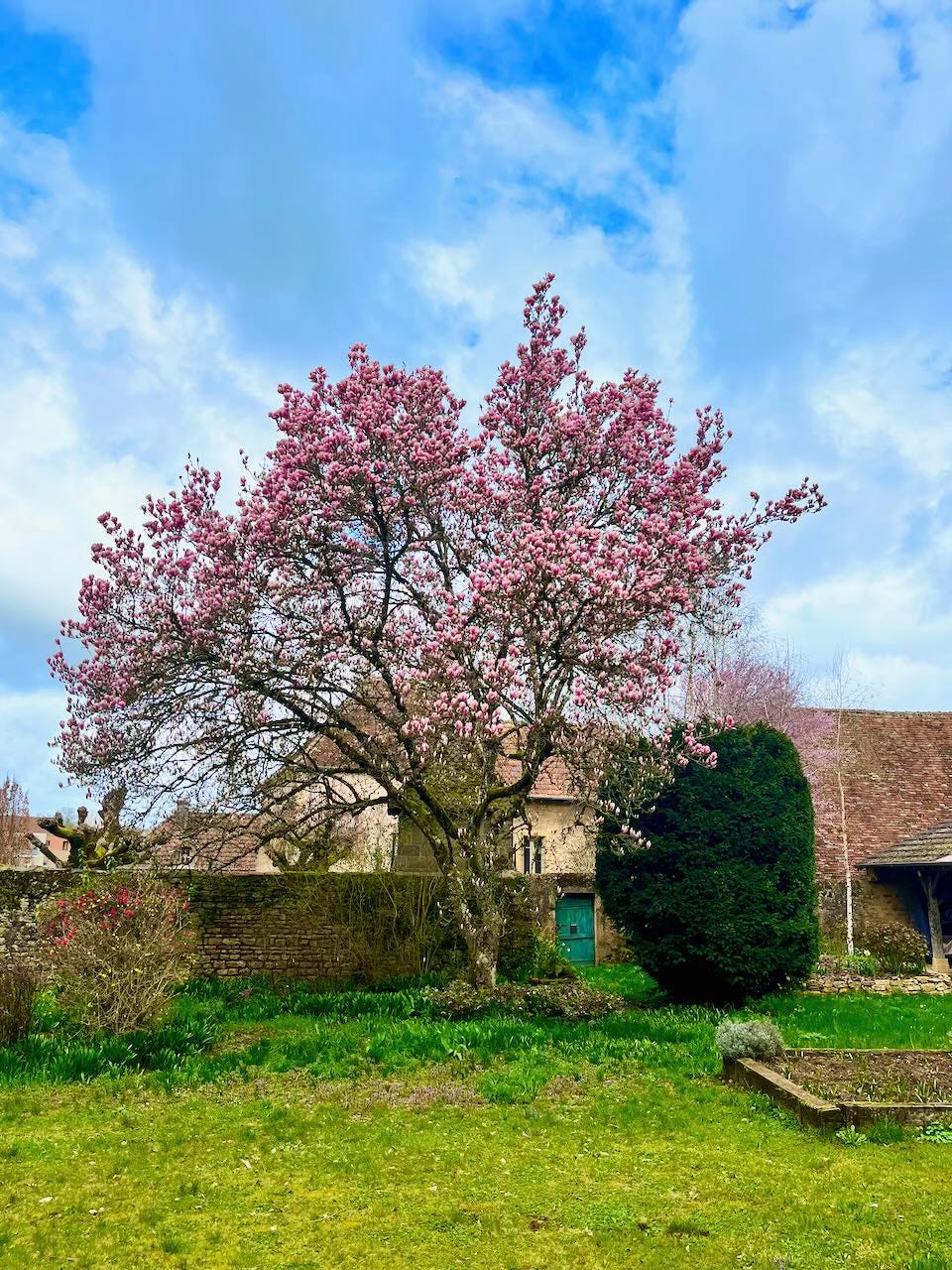
The daffodils are out, as is the forsythia, bright shards of yellow catching the eye as you walk the lanes. We have a grand old magnolia tree in the garden, and it was just breaking into its pinkness when our visitors were here, but today it’s barbie-ing out. In two days it completely opened up, partly as those two days were warm and bright in a way that they should not be, in mid-March. 

As it mentally to me was still winter, we planned the local delicacy, Boeuf Bourguinon. It’s an easy dish to cook in advance, so I would not be faffing around while we were all chatting and enjoying drinks. In such a beef area you simply ask the butcher for ‘Bourguignon’, he then asks how many people and whether you want it ‘gelatinous’ or not? That would not translate well into English, as we have terrible memories of gristly meat, especially from school dinners. I asked for ‘half-and-half’, M. Jardin, the butcher, then cut the chunks off the piece of beef in the right size. If the beef is well browned, and you cook it in the wine for a long slow time, the gelatin dissolves completely to help make the liquor with the onions and mushrooms gloriously unctuous. I had the luxury of cooking it slowly most of the day, then letting it sit for a couple of hours before rewarming to serve. It was to be served with a simple Baker’s Potatoes, ‘Pomme de Terre Boulangère’, another easy comfort food dish that cooks quietly while you do more fun things, like snacking on foie gras on brioche and a glass of 2012 Monbazillac. I did manage to get distracted enough making the starter that I burned the first few slices of brioche in the toaster, even at a setting of 1 it has so much butter in it that it needs a constant eye and attention, not one of my strong suits, especially if talking. I was all for scraping off the burnt bits with a knife, but that was universally rejected as too English, 1960’s post-rationing thinking. 

Eating salad as a starter rather than an accompaniment or later palate cleanser is a very American habit, but in my defense the local Mich 1* place is now serving ‘Salade Hivernale’ as an Entré, so if it’s good enough for Maitre Frederic Doucet, it’s good enough for me. The pears and walnuts are at the end of their season, but they nuzzled companionably with the mid-winter mâche (or Lamb’s Lettuce, as it’s known in England, although I have never seen it in the US on either coast), pea shoots and a local hard goat cheese, Pyramide d’Argolay. I am a massive fan of Alsace Gewurtztraminer wines, when they are dry and balanced they are the perfect accompaniment to this green mix of flavors and textures, the hint of sweetness within the dry backbone of the wine stands up to the Banyuls vinegar in the dressing. We had a cheering 2019 Wolfberger Gewürztraminer Hatschbourg. It’s not particularly expensive or a ‘grand vin’, Wolfberger is the local cooperative wine making organization for the picture-postcard village of Eguisheim in the Alsace, just outside Colmar. We visited in 2022 and picked up half a case of this Gewurtz and a full case of covid while we were there. 

We washed the beef down with Givry Premier Cru. That is the closest, most serious Burgundy to us. I bought this from the winery of J.P. Berthenet, a friendly family winery tucked away on the hillside of the village of Montagny. You could drink his Montagny as an easy-going weekend burgundy, but his Givry is great and has a bit more elegance. This was a 2018, it had a bit of bottle age but was still relatively fruit forward, perfect for the richness of the Bourguinon. We also had a 2020 Clos de la Servoisine, Givry 1e Cru from Deliance Freres, less mature and tighter, but it helped keep the conversation flowing through to the cheese course. We had some local Charolais ‘mi-fraiche’ goat cheese, a local Palet de Vache, a serious Maroilles from Lille that had the fridge stinking for a week and a big hit with the crowd, Shropshire Blue.

The meal ended with a pear tart from the local bakery Boulangerie L’Éclair-cie. Like many of the bakers in town, his bread is very good if uninspiring in its selection, but that is down to local tastes. Where he does stand out is his pie crust, that crunchy butter texture comes from a really hot oven and great technique. We had a smashing time, as you can probably guess.

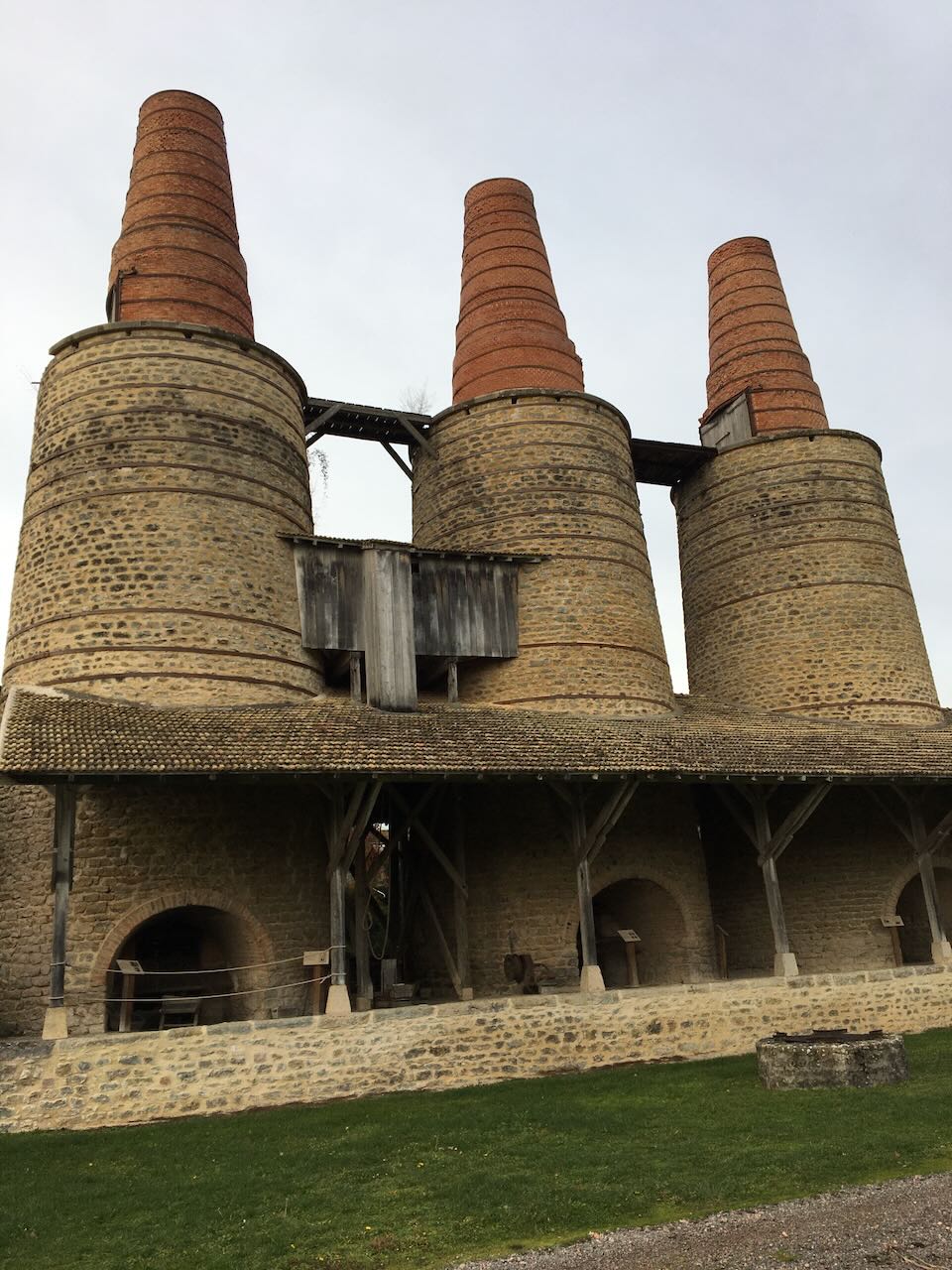
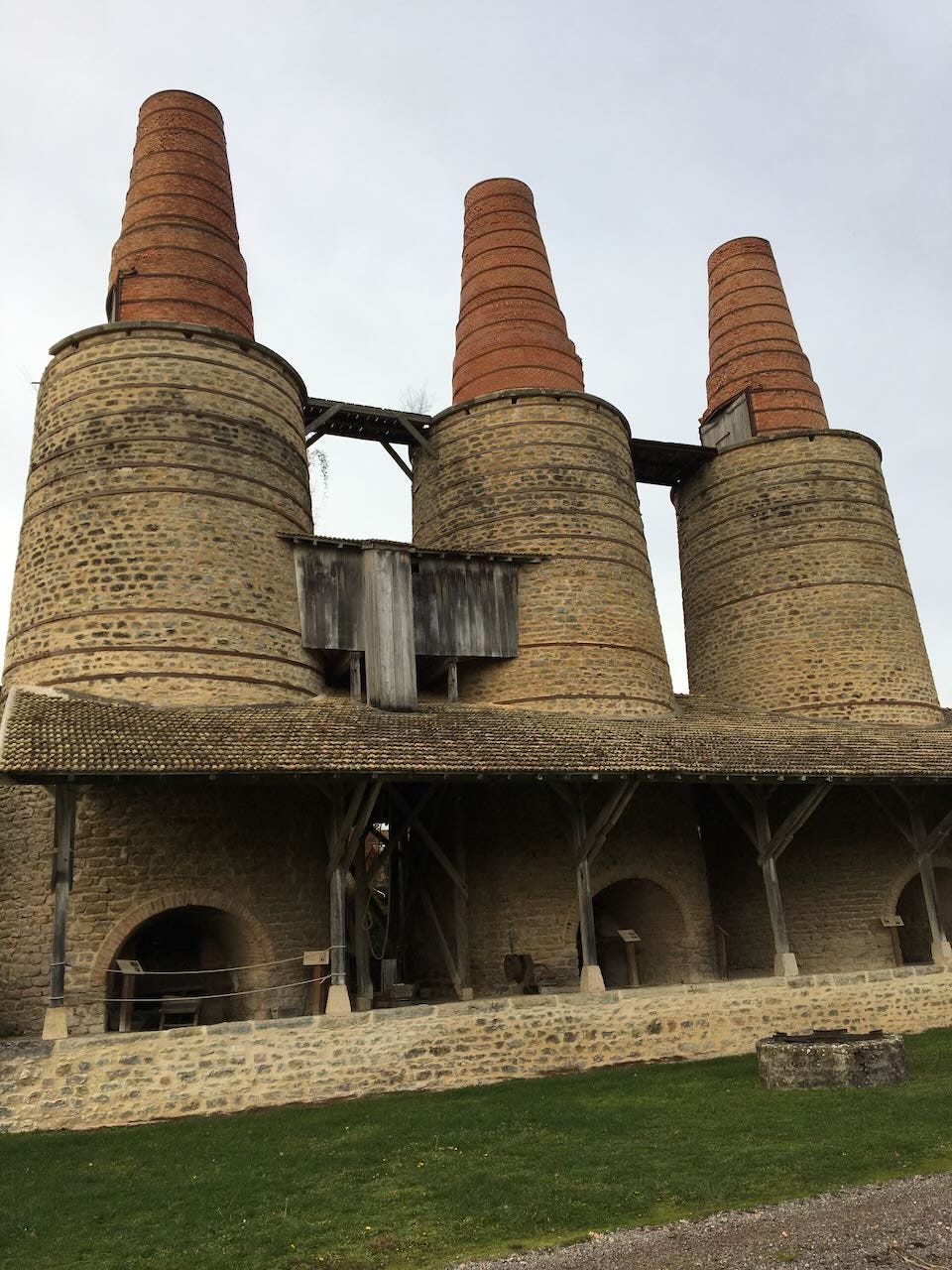
As can be expected, we had a slow, lazy start to the next day and blew out the cobwebs with a walk along the former disused rail line to the local Fours à Chaux, what look like a castle for gnomes but are actually lime kilns. The little white calves of the Charolais which we hoped to find foraging in the fields either side were absent, probably rotated off somewhere else, so the promised close up photo ops were not delivered, but perhaps after indulging in beef the previous evening that was a welcome mental degree of dissociation.

Four à Chaux - Lime Kilns

Gones for good – Episode 5 Running the rules

The French love rules. Love rules. They have a process for everything in public and probably all aspects of private life. They follow the rules, and they really have no respect, time nor affection for those who do not. Everyone is polite, it’s a simple sign of mutual respect. Saying ‘Bonjour’ to every single person in a shop in a small town, saying ‘Bonjour’ before you ask someone a question at the station or on the street, saying ‘Au revoir’ when you leave a place; they all signify that the other people are human like you, and deserve the basic respect. This is the Egalité in action.

The Liberté is limited in so far as one is free to do what you like, say what you want, as long as it hurts no-one and remember that it is but the first word in the Liberte, Egalite, Fraternite trifecta. The liberty, equality and brotherhood of the motto of the Republic are not taken as separate beliefs but in the power of their combination. So no semi-automatic rifles here; religious freedom does not mean one’s beliefs supersedes those of the state or, as of yesterday, the ability to remove a woman’s inalienable right to decide for herself whether she brings another life into the world.

They also take the small rules seriously. We have the recycling picked up three days a week, today the Music School from the Université de Lyon next door had overstuffed their large recycle bin. The binmen or ‘les ébouers’, took offense and taped over the bursting dumpster lid with red tape, declaring it was non-conforming and left it behind. We have a compost bin on most blocks now, in an effort to get the methane creating organic waste out of the landfills. They distributed to every household a little brown compost bin and a 120-day supply of brown paper bags which get thrown into the larger bin out front. Someone obviously didn’t read the rules and threw something they were not supposed to in it, and we had our compost bin taped shut for 2 weeks, as a punishment for depositing “non-conforming waste”.

They shortened this, taking out the death references after the Terror

I think the French approach to rules is refreshing, especially if your reference points like me are either England, where no one gives a shit for the rules or the US where they have a blind obsession for the rules even if they make no sense (pick your own personal amendment). The French had got sick of the hierarchical aristocratic system overseen by the King and the system of privileges for the guilds and the church. They had themselves a revolution in 1789 and threw all that out over a period of 10 years. They decided that the people were better at ruling themselves than having to listen to someone who happened to be born in a certain place to certain other people and so in 1793 cut off the King’s head to prove, amongst many things, that he most certainly was not divine. The practical difficulties of this degree of self-determination and the struggle for political control was demonstrated over the ensuing further 6 years of chaos starting with the Reign of Terror, under the ironically named National Convention to the Committee of Public Safety. It was not safe for the 16,000 members of the public who were executed in about 9 months. They had two further changes of power, and the Republic which had been so proudly and vehemently celebrated in 1792 gave way to the Directory. The French do love a good bureaucracy and two key the things that struck me reading “Citizens!” by Simon Schama (the best single volume history of the Revolution, even if a bit weighty) was that firstly, during all this 10 years of absolute chaos, France was embroiled in near constant wars, Prussia, Spain, Austria and good old Blighty shit-stirring from the sidelines, all had a go at settling scores with France. Secondly, they tried desperately to have an enlightened democracy and formed one after another of various forms of representations, taking lands and trade monopolies from one part of the society to try and give to others to equalize the country. They formed different lower and upper houses, localized representative assemblies, centralized budget forming bodies and one after another failed to unify the country. So they would start again, a few people would be executed and someone else got to try their idea until that failed, and they found themselves facing the guillotine. Finally, the Directory gave way to the Consulate, one of whom was Napoleon Bonaparte, and the rest as they say is history. As much as Boney gets grief now for restoring slavery and his warmongering, the France of today owes much to his administrative changes and rules which settled France into the 19th century power house that it became. 

The French follow the rules religiously as long as they are seen as being applied equally and making sense. When they do not, they burn shit down. The spirit of the Revolution definitely lives on in that aspect of life in France. Since we have lived in France full-time we have had the ‘Gilets Jaune’ movement, ignited by protests against changes to rules around car emissions which punished the rural poor. We have had the concerted efforts by the French Unions to block arguably much needed reform of the sprawling pension system, because it punished the working poor. This became more of a fight about modern capitalism, and we enjoyed hearing the smashing of cars, shop windows and the smell of burning trash cans and bus shelters off and on for 3 months just around the corner. We have had the farmers blockading the major freeways and donating supplies of old tires and manure to local government offices. In each case there is a general support for the plight of the victim of the bad rules, the hardworking Everyman, suffering at the hands of an unseen bureaucrat in Paris or Brussels.

Wednesday was the day of St Colette. You may be surprised to read that as much as the French do like the writings of Colette and that she was honored by the state and buried in Père-Lachaise, the Catholic Church found her ‘sulpherous’ and refused her a church burial, so they would be pushed to beatify her. St Colette was a woman born in the late 14th century who found the normal life of a nun in an abbey too comfy and so started a new order that prescribed extreme poverty, going barefoot, and the observance of perpetual fasting and abstinence. The supposed anti-pope at the time in Avignon gave her his blessings and issued papal bulls to support her mission, and she managed to persuade enough other women that this was the life for them that she opened up 18 monasteries under her regime. This probably tells you more about how much fun normal life for women was in the late 15th century in rural France. As much as you may be being introduced to St Colette just now, she is known more widely than you would think as she is the Catholic version of IVF. Her mother gave birth to her at the age of 60, so not unsurprisingly she is patron saint of women seeking to conceive, expectant mothers, and sick children.

Wednesday’s lunch was postponed to Thursday due to what could best be summarized as a phone panic. When you lose a phone with all those great banking apps, business apps and documents accessible that you would not want anyone having access to, it’s not conducive to a relaxing lunch. When your 2-factor auth is only available on that phone which would normally allow you to change passwords, it pisses you off for the rest of your whole day for sure. If you happen to have your American SIM card as an E-SIM in the same phone, and you realize you would have to fly to the US to restart service, on which all your US banking 2-factor auths depend, it would ruin your week.

Hosanna! The Joy of Relocating Previously Lost Phone!

Gones for good: 4 the bissextile episode

Leap Year babies are defined by their birthdays in a way that trumps even astrology. There is a family in Utah who have three leap year Feb 29th-born children. They do have 7 kids in all and the second was induced, so I tend to think they might have worked out how to avoid it if that had wanted to. The French for Leap Year is bissextile which has nothing to do with gender, it is all due to the Romans. They referred to February 23 as the 6th day before the beginning of March, and the extra day inserted on February 24 was called the “second sixth” day, or “bissextile day” in a “bissextile year”. It does not roll off the tongue like Leap Year so we can be forgiven for having forgotten about its origins.

In France, they publish a newspaper every 4 years on the 29th called ‘La Bougie du Sapeur’, it’s a satirical broadsheet that has been published since 1980, so this year was edition 12. I tried to buy one on the 29th, but our local newspaper stand was closed because it was school holidays and ski-week. If you want an illustration of how serious the French take their vacations there it is, the newspaper stand closes, so the guy can have his holiday too.

Who does not get the 29th off is St Auguste. Yes, ‘le jour bissextile’ has a saint and like every other day is a Saint’s Day, so even if you are fated to be born on the 29th you still have your own patron saint; who says the Catholic Church is uncaring for its flock? St Auguste was a priest who was part of the mission to China in the 19th Century who suffered a horrible death in Guangxi province on February 29th, 1856. “He was locked into a small iron cage, which was hung at the gate of the jail. The planks he stood on were gradually removed, placing a strain in the muscles of the neck, and leading to a slow and painful death from suffocation. He had already died when he was decapitated. His head was hung from a tree by his hair. Children were said to have thrown stones at the head until Chapdelaine’s head fell to the ground and was devoured by street dogs and hogs.” The French responded by joining the British in what is unflatteringly called the Second Opium War, as in we and the French, with help from the US, went to war on China to force the Emperor and his government to let us sell opium to the people of China. We used real gun boats in our diplomacy and were successful in our aims, we also took Kowloon and added it to our Hong Kong territories and also insisted upon the legal right to proselytize Christianity, negotiated in the name of Auguste Chapeldain, who had been ‘martyred’ in doing just that. China today looks back on this period with great disdain if not shame, and Xi often mentions the Western efforts to get involved between them and Taiwan as being similarly colonial.

In Guangxi today you can enjoy a life-size diorama showing Saint Auguste kneeling before the magistrate who sentenced him to death. A six-metre bronze mural shows the cage in which he suffocated to death. A poetry contest gives prize money to those who praise “iron-willed” magistrate Zhang. So definitely not a popular figure in China is our Saint Auguste.

Lyon is back to normal today, the kids are in school and Reymond the baker is back in action. While he was off skiing, we were unfaithful in our bread breaking and went to Mado on Rue de la Thibuadiere. Mado made it into the latest edition of the foodie bible, the annual magazine “Fooding”. They do a fabulous Panettone at Christmas and their breads are hearty grained, organic beauties. However, it is their baked goods that have an opium-like hold on our taste buds. Their current offerings include a small brioche stuffed with apple sauce, a pastry-like crusted cake with preserved plums that is probably Italian in origin too called a Pasticcioto, scones, the most glorious lemon flavored brioche bun that has an almost hot-cross-bun like top crust, and a large what I can only describe badly as a large Jammy Dodger with two heart shape openings for the jam which is called Une Spectacles. Leap Year’s Day breakfast comprised of a selection of these, and we were still suffering a sugar coma about 2 hours later.

We have been watching ‘Bear’, the TV show. For those who have not yet had the pleasure, it starts unsettlingly with various Chicagoans shouting at each other in the shitty kitchen of a sandwich shop, while loud 1980s hair metal plays at a volume only just below that of the hammering dialog. It also features as a leading character, Ritchie, one of the shoutiest, and played by the actor who first came to attention as Desi, part of the Desi and Marnie sickly sweet folk duo in Lena Dunham’s ‘Girls’, as played by Ebon Moss-Bachrach. I almost stopped watching the show because Ritchie was so crushingly annoying. However, with affirmation from Holly that it was worth the perseverance I did continue to watch it, and grew to enjoy its unadulterated food porn, its exterior shots which are a love-letter to Chicago and its odd soundscape of a mix of great and grating 80s and 90s songs. Ritchie’s character arc does actually move towards a positive epiphany, and even I started to root for him at the end of the second season. The tension and pressure in delivering such high-end serious cuisine, as portrayed in the show, strikes a balance that just about tilts towards earnest craft and excellence and away from pretentious tosh, but only just.

Little Entrements with the coffee

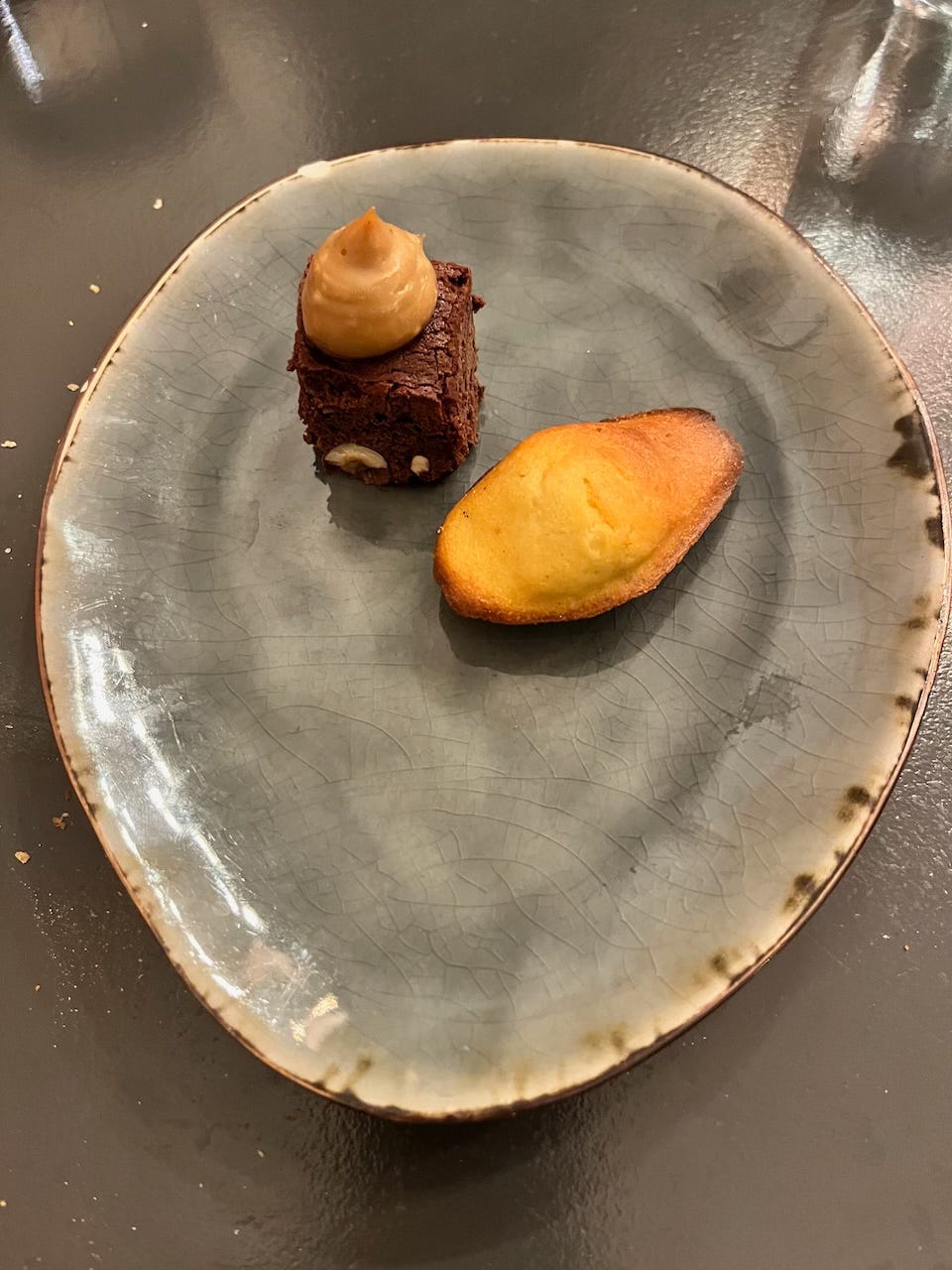
A million miles away from the restaurant experience at the 3-star place that Ritchie learns to polish forks for 3 days is Bistro B on Rue Dugesclun. A small front room downstairs with yet another Canut-style mezzanine above, holding a combined total of 30 covers decorated with a natural-wood pretend garden fence along the walls. The host/ sommelier/ cocktail maker/ waiter/ table-busser greets you in a long server’s apron with almost too intricate an arrangement of straps on the back. It is relaxed, as is he. The menu is accessed through a QR card, we get waters and a ‘pot’ of Chardonay from the Rhone Valley. They just received their Michelin Guide entry under Bib Gourmand, the great food for under €40 rating, but the food is as serious as it is affordable. I had the Duck main course, which was two ruddy steaks cut across the breast on a bed of celery purée and some assorted small select veggies and bloody delightful: “Magret de canard au vinaigre de poire, sauce gastrique, poire rôtie, pommes grenailles et mousseline de céleri”. Everything was well executed, service was good, amazing really, seeing it was one guy and a small kitchen. Two hours flew by, concluded with perfect little brownies and memorable madeleines with the coffee. 3 courses and wine for just over a hundred Euros, and we meandered our way home, happy bunnies.

Pedestrianized streets in the 3rd


Gones for good: Episode 3- Farm to table

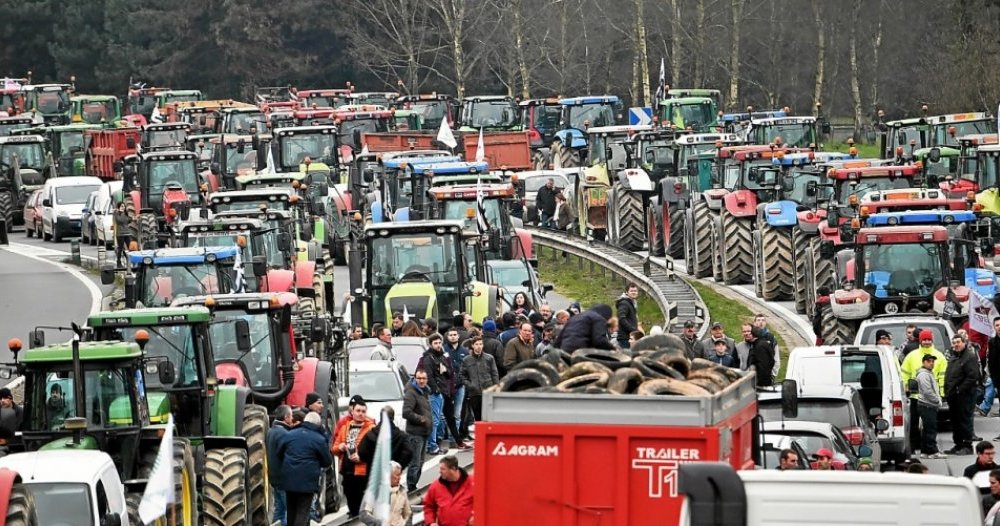
Spraying shit on the town hall has to be the best performative protest against bureaucratic bullshit ever conceived. The French farmers are in round 3 against the government of Gabriel Atal and the bright young thing PM is scrambling to defuse the situation ahead of Macron, never a popular figure in the countryside, making his cow-admiring, cheese tasting appearance at the annual Agricultural Salon in Paris this weekend. France loves a good protest and also love their farmers. The food and wine of France are at the heart of its self-image of being paradise on earth, the very essence of the good life. They parade their local produce as part of the ‘patrimoine’ and have been fierce in the protection of the various ‘pays’ and ‘produits’. There are 114 different protected types of agricultural produce under the AOP scheme in France, plus 363 registered protected wine designations. The obvious problem is that all of the protections mean nothing if the supermarkets are doing their best to drive price down and the incredible concentration of their purchasing power – the top 6 supermarkets are French owned and have revenues of €180 billion. Milk is bought at a marginal price that keeps farmer’s in penury and forced to use whatever production enhancers they can to keep alive, regardless of the long term damage to the cows. Several publicized suicides of farmers has reinforced the public support for the farmers and even with their protests blocking roads with what the Spanish are calling ‘tractorados’, as the protests spread to Spain, Czechia and Greece against what are seen as overly bureaucratic and complicated oversight and rules emanating from Brussels. 

What is putting a hair up the ass of the farmers is that these rules which are costly and frustrating do not apply elsewhere. So the target for their ire is the import of foods from outside of EU, milk from New Zealand seems a ridiculous example yet finds its way into European dairy products. French farmers did an inspired version of a trolley run this week by going into French major supermarkets, loading up in front of the cameras with products either masquerading as ‘French’ produce, or imported where the local version cannot be made for similar pricing; walking through the doors, without paying, and then donating it to the food banks that are a part of everyday life for many people in the rural farming dominant communities.

Attal and other officials were supposedly surprised by “the scale and fury of the protests” . I was impressed. We had tractors ambling along the major freeways in and out of Paris, Lyon, Bordeaux and most major cities, 3 abreast, at 5km an hour. Dumping of manure, hay bales and that staple of farm equipment, the old car tire, outside local offices of the government that are involved in any way with administering the EU’s farm policy. There is a speed camera on the way to Macon in a rural part of the department, and it often gets spray-painted but it got tired two weeks ago, and they have either not bothered to remove them or they keep them topped up. Surveys in France showed 90% plus support for the farmers, after all in principle they only want French produce as it’s the best and anything that threatens that gets an easy thumbs down.

Speed cameras looking tired

In a familiar routine now this has been going on now for 4 weeks, protests, disruption, and widespread support, Attal and other ministers urgently travel hither and nither meeting with the local Farmer’s Union guys. Every time one is interviewed on TV we get yet another example of regional dialects living on, I can barely understand them and I think the urbane Gabriel struggles too. Having survived his brush with the blue-overalled ‘Bobs’ with tractors and wellies, he dashes back to Paris and prepares another round of concessions. One early give was the repeal of the 16, yes 16, different regimes involved with preserving and controlling hedgerows. This week brought increased checks on food producers claiming their products are made in France and heightened legal action taken against those that did not conform. Attal promised there would be “product by product” checks on foods produced outside the EU containing pesticides banned across the continent to ensure they were stopped. Which is all well and good, but you cannot help but wonder why did it take 4 weeks of mass protest to get that to happen? The original protests were about the byzantine pension rules for Farmers and the pending removal of the agricultural fuel subsidiaries. Those got rolled back, but the issue is less about which little ‘give’ the government acquiesces to next but the ongoing fight underneath across the European Union.

We have an existential threat to European peace and harmony sitting in his bunker under Moscow at the end of a 30’ long table, probably at this very moment lecturing some poor lackey on the history of the Kievan Rus, or at least his own personal take on it. His Ukraine adventure cranked up energy prices to the point that inflation took off. Everyone got squeezed. Everyone was supposed to make sacrifices, but it seems the large corporations, especially the supermarkets, didn’t get that memo. While they record soaring profits, paying dividends and obscene bonuses to each other for ‘job well done’ the farmers and the ordinary person struggles with higher costs for fuel, food and rent. At the same time we have very lofty and admirable goals to right the years of ecological wrongs with rules to reduce loss of hedgerows, biodiversity, over dependence on monocultures and overuse of pesticides. However, no-one wants to price that in and so as the pithy adage goes, the shit flows downhill and the farmer is supposed to deal with the consequences, but the supermarkets can still make their profits and the ordinary person does not want to pay €0.20 more for a liter of milk or butter to keep the farmer from bankruptcy or in extremis, suicide. So yes, I guess I understand why they are spraying shit at government offices.

Lyon this week has been mild again and although the schools are off for ski week the only snow is at high elevations and the smaller, low level elevation places in the Jura and the Alps Maritime are fields of unwelcoming brown rather than glistening pristine white snow. It is the snow season so the restaurants and media are talking up the winter dishes like Choux Croute, Fondu, Tartiflette and other various holy alliances of cheese, pork and potatoes. 

Lenten Roses right on time

Saturday was St Modeste’s feast day but again no special dish in his honor. St Modeste is, it transpires, one of those fortunate chaps who was considered a generally good sort as Bishop of Trier and was rewarded with sainthood for being a best in class confessor. So he actually died in his bed in 489, no miracles, visions of the bleeding pumping heart or public beheading following several days torture for him. He got the honor as more of a local nomination process that people put forward their local martyrs and their very best confessors. After being canonized locally, all it took was some local big wig to persuade the Pope to support it, perhaps while on pilgrimage to Rome, or Avignon. Having a local saint was always good for tourism and trade with people coming to see whatever relics remained at the patron church, so the big-wig would return happy, some fiscal lubrication of the process may have been necessary, but it seemed to work for these what are called Pre-Congregational Saints. All good things come to an end, and Rome and the Pope stopped the local ‘Vote for your local Saint’ efforts in the 11th century. By that point I think they were afraid the title of Saint was being devalued as there were mushrooming cases of miracles, no shortage of martyrs and by that time there were confessors nearly everywhere. So St. Modeste is really an old style saint, and in full Lent no real feasting to be had anyway.

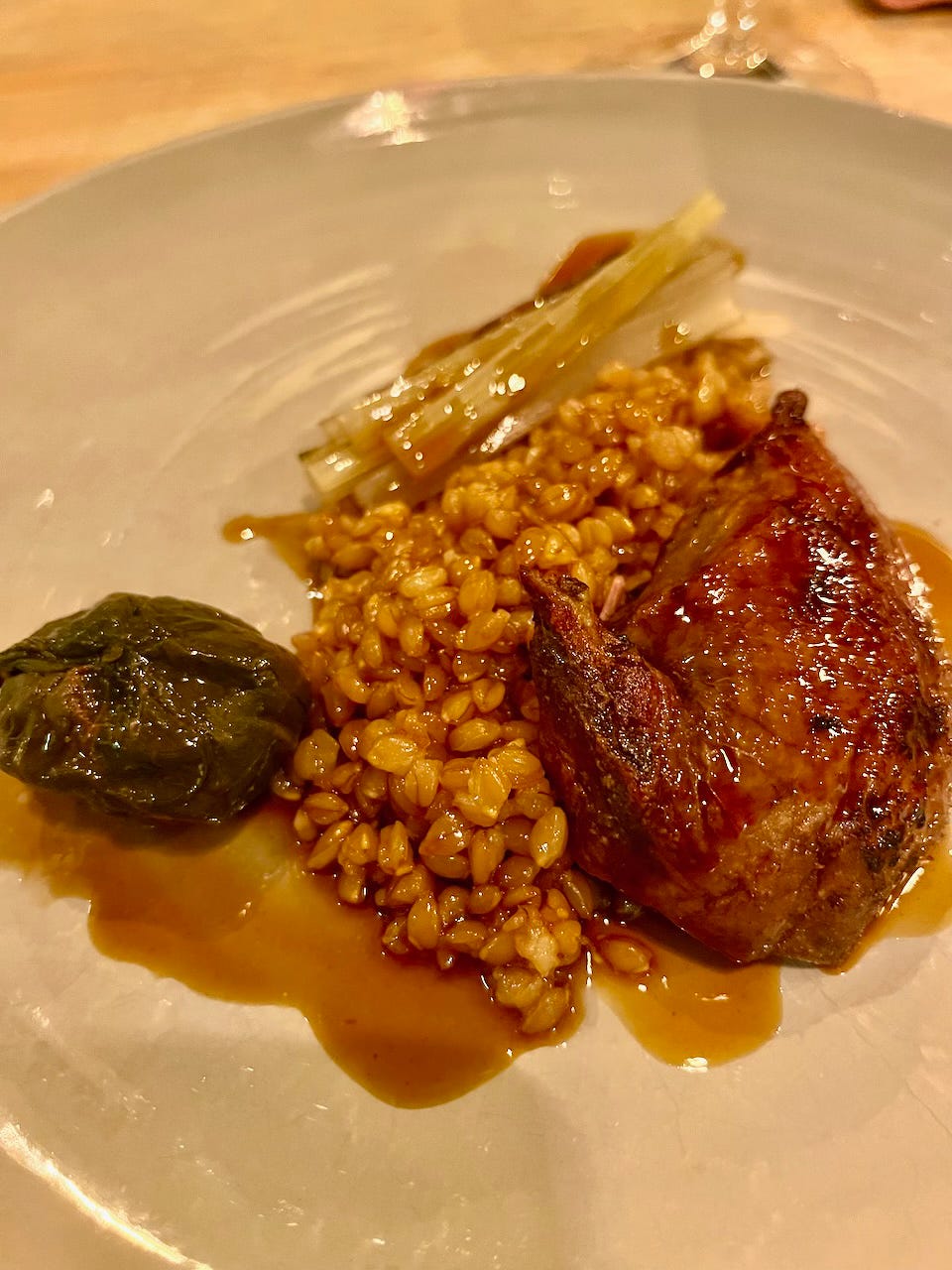
Friday night we went to “Le Cochon Qui Boit” tucked away in the narrow streets between the hillside below Croix-Rousse, ‘Les Pentes’ and the Saone. The Drinking Pig is a bright small space in a typical Lyonnais Canut-style building run by two guys who trained at Tetedoie, the expensive Mich one star up on the hill of Fourviere.  The food was very veggie led, a fabulous Jerusalem Artichoke bisque as an amuse-bouche signalled their intent. The wines are all natural as is the trend now. Natural wines all have labels that are bright-colored, and the names pun their way to taking what was traditionally very cheap wine from non-fashionable appellations into something cool and sells at 3 times the price of their traditional neighbors. The first white I tried was a Gros Plant Nantais which was crisp with a hint of the fruit from the Melon de Bourgogne grape it was partly blended from. More succesful than the Jura white that followed, a grassy yellow Chardonnay which only just made it on to the side of pleasurable. The Carignan from Languedoc was lighter than I expected but a great compliment to the Pigeonneau fermier de Bresse, petit épeautre et blettes. Filleted breast of roast pigeon, served with spelt, chard and a cabbage parcel stuffed with all the inside bits of the bird made into a deep red rich sausage. The dessert was insanely good. Describing it as butternut squash three ways does it a disservice, one caramelized round of roast squash sat in a nutty foam and was topped with a quenelle of butternut ice-cream wrapped in a stripe of chestnut puree. I always feel a bit uneasy taking pictures of plates as it is so clichéd, but here is the pigeon dish. In conclusion, this particular pig was well-fed and did his best to join in the drinking.