Gones for a Song: Now That’s What I Call Music! 21-30

Getting now to the core of this effort to think about and list out my current favorite albums from years of obsessing about music. You can probably spot by now the self-evident obsessions and repetition of styles, there are definitely some sounds that resonate more than others and I have avoided some of the big obvious IMPORTANT albums, partly as they have had the crap played out of them on the radio, soundtracks and have become mundane. No spoilers here but do not be disappointed that your favorite Zep, Beatles, Marvin Gaye, NIN or that not much Rap or modern R&B have made the list. I just did not play that much of any of them to entertain myself over the last couple of decades with the possible exception of the wooden Zeppelin stuff, like ‘Going to California’, “Over the Hills and Far Away” or ‘Tangerine’. There is a real Mix-Tape vibe to this week’s 10 though, all over the shop stylistically and release date too. So let’s get into it “One, two, three, four, tell me that you love me more, Sleepless long nights, that is what my youth was for”https://open.spotify.com/embed/playlist/6TQbkVVdhJJ0Z345UJZYbt

Number 30: Amyl and the Sniffers “Comfort To Me” 2021. Amy Taylor is a pocket sized banshee backed by some of the scuzziest guitar thrash, it is my distinct pleasure to have ever heard. It could be described as punk and has the same ridiculous amount of energy that sometimes just seems so engrossing and elevating when other punk is just noise. She has a foul mouth and most tracks have the ubiquitous E annotation, but in front of a messed up mosh pit of mouth breathers she rules supreme and takes no shit: “What the fuck’s up?” she yells. “If anyone falls down, you help them up. Don’t touch anyone. Let’s get rowdy!”. If you have to drive somewhere late at night and want to drive faster than is legal or recommended, crank this shit up.

Number 29: Underworld “Drift Series 1 Sampler” 2019. Underworld started a long, long time ago with two friends in Cardiff, I have never heard the first couple of albums which they themselves dismiss as Mark 1. The Mark 2 version saw Karl Hyde and Rick Smith start down a path of electronic music innovation not matched by many, certainly not in terms of longevity, diversity of output all of it relevant and upbeat and they are still at it. I got into them with their trio of mid 90’s bangers, “Dubnobasswithmyheadman”, “Second Toughest In the Infants”, and “Beaucoup Fish”. During Covid and confinement they decided to not let the moment pass of having space to just keep creating, so they committed to release something new every week for a year and Drift is the result. That’s a lot of music, so the Drift Series 1 Sampler is the best way into their world. As ever, a mix of slow chillout tunes amongst dance and upbeat workouts. I threw into the playlist an extra, a great thing they did with the marvelous throated friend of parakeets, Iggy Pop.

Number 28: Joni Mitchell “Shadows and Light” 1980. Joni Mitchell is one of those artists whose name gets shortened like Bruce, Elvis or Lennon and generally is known and loved for her archetypical 1970’s singer-songwriter output, an inspiration to Lana Del Ray, Taylor Swift and Prince amongst many vocal fans. I really enjoyed her forays and explorations into jazz in the late 70’s where she single handled brought Weather Report into the mainstream and Charles Mingus from a jazz footnote to be the name to drop by all wannabe ‘hepcats’. This album is a live selection of that period recorded at the Santa Monica Bowl in 1979 and features a stellar band, Pat Metheny, Lisle Mays, Michael Brecker, the ridiculously pretentious Jaco Pastorius and The Persuasions. All at the top of their game and having fun furrily singing the blues.

Number 27: The Groundhogs “Split” 1971. Tony ‘TS’ McPhee had the good taste to be a massive fan of John Lee Hooker and named his band after Hooker’s ‘Ground Hog Blues’. They provided the backing band to the great man on one of his albums and supported him on his 1964 tour of Britain. They were a power trio with bass and drums similar to Cream, jazz rhythm signatures and lead guitar taking its own path with McPhee’s blues growl singing updated blues rock rather than just rehashing the original blues classics while taking the credit – looking at you Messrs Page and Plant and their pathetic ‘traditional’ credit to avoid paying royalties to Muddy Waters or Jimmy Reed. I first got into them with “Thank Christ For The Bomb” and its odd First World War theme, The Fall covered ‘Strange Town’ which shows I was not alone. This album has the first side four parts of the Split suite, inspired by a months long panic attack and then the more standard 4 songs on side 2 which included the belting ‘Cherry Red’. I saw them on this tour and the “Who Will Save the World, The Mighty Groundhogs” tour the following year, which featured Tony’s new toy, a synthesizer.

Number 26: Paul Kantner and Jefferson Starship “Blows Against The Empire” 1968. I heard this one lazy Saturday afternoon listening to the John Peel ‘Top Gear’ radio show and started down a path of obsession with the Airplane, Grace Slick and Paul Kantner. I never got the Grateful Dead, but I absolutely got the Airplane and their side projects were at times better. The sessions for this were from a frenzied stoned summer in Wally Heider’s San Francisco studio where the Dead, Quicksilver Messenger Service and Crosby, Stills and Nash were noodling around on Crosby’s solo album “Almost Cut My Hair”. The Airplane were falling apart but this high concept science fiction space opera meets anarchic revolution (this is 1968 after all) is glorious. Lots of Pooh references, plus hijacking starships and babies. The album won a Hugo award, and I devoured from cover to cover the lyric booklet, including all the artwork by Slick and her odd annotations. Space-ship engine noises and very Robert Heinlein, they didn’t get their dates right though as the starship “ought to be ready by 1990”. Governor Reagan, as he was, also gets a nod “You unleash the dogs of a grade-B movie star Governor’s war…so drop your fuckin’ bombs, burn your demon babies, I will live again!”

Number 25: Talk Talk “Spirit of Eden” 1988. The late and sadly missed Mark Hollis was the inspiration behind all that was great about Talk Talk. They first broke through as a synth pop band doing Duran Duran style dance songs, all big floppy fringes, pastel suits with big lapels and the sleeves rolled up. The dance hits and the 12” mixes of ‘Living In Another World’ and ‘Life’s What You Make It’ are solid bangers so it was a pleasant surprise when they morphed into a thinking man’s creative act with electronics supporting rather than dominating the quiet post-rock with “Colour of Spring” in 1986. Hollis found his niche and that album and the fabulous “Spirit Of Eden” became a real inspiration to many bands including Radiohead, Kate Bush and Elbow amongst them. It’s hard to define their sound but adjectives like pastoral, peaceful, contemplative work but the sound is also glorious, this is the definitive Sunday morning album and cries out for headphones. 

Number 24: Sleeper “The It Girl” 1996. I would be lying if I didn’t admit that I had a minor crush on Louise Weiner, the gamin lead singer, who with her partner Andy Maclure had one of the most popular BritPop bands in the early to mid 90’s. Maclure had to endure being one of the infamous Sleeperblokes, a pejorative term at the time in the music press and used by musicians, to refer to any person of limited standing within a band or a drab and unremarkable individual. Maclure and the other “Sleeperblokes” themselves were reported to find it a joke, and even produced an ironic “Sleeperbloke” T-shirt to go with Wener’s “Another Female Fronted Band” T-shirt. This is the third album and is the perfect combination of ironic smart-ass lyrics and driving pop rock, like the Replacements but with a girl singing and less overall angst.
A person singing into a microphone

Description automatically generated

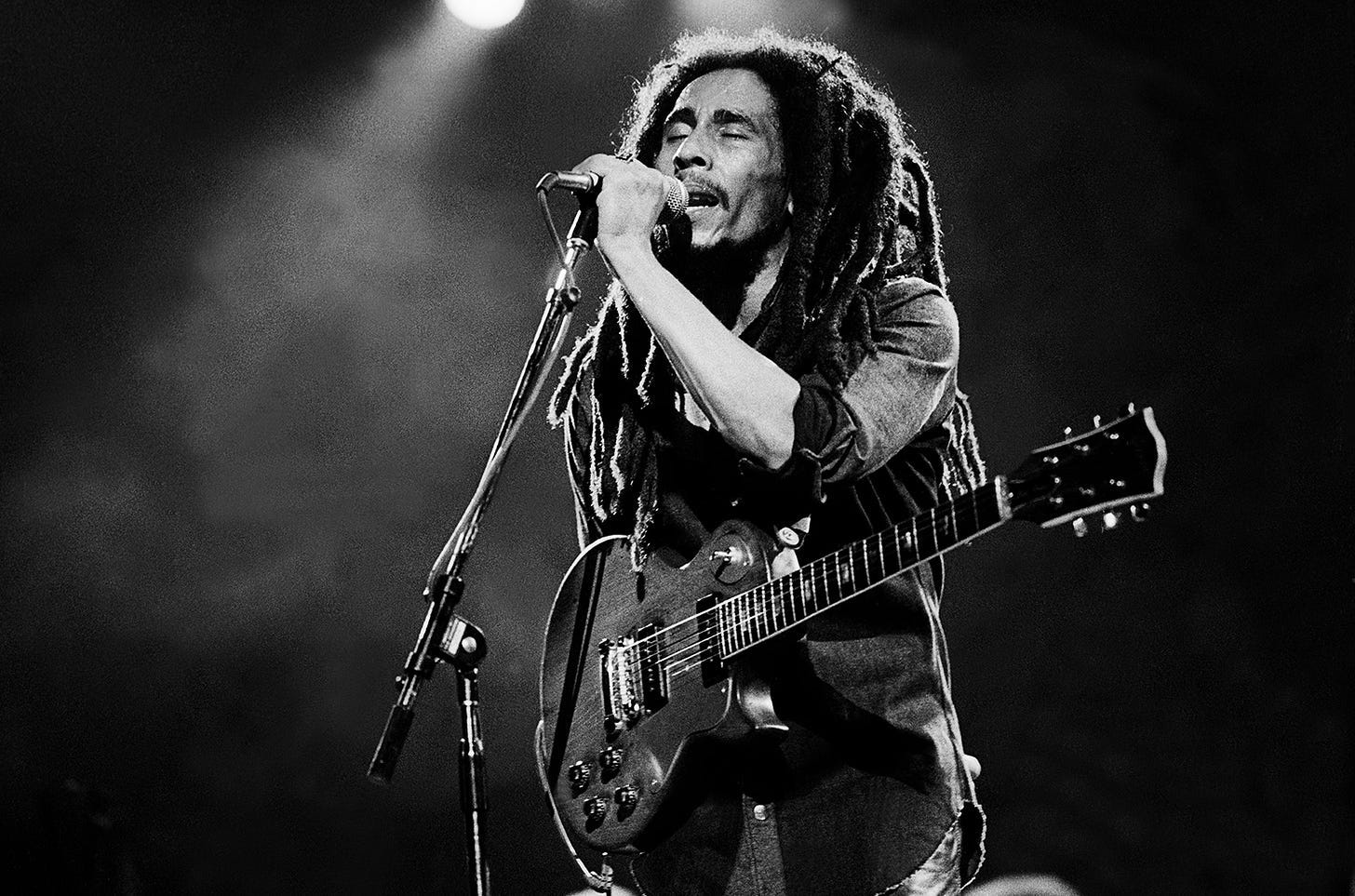
Number 23: Bob Marley & The Wailers “ Rastaman Vibration” 1976. One of the odd side effects of the ‘Mod’ scene in the UK in the 1960’s was the opening up of the market and popular tastes to Jamaican ska music. Named after the rhythm being ‘um ska, um ska’ we danced to ‘Long Shot Kicky Bucket’, ‘The Israelites’ and ‘Double Barrel’ so it was an easy transition to the yet slower still reggae beat in the 70’s. Punk tours were always multicultural and vocally against the casual racism of the skinheads – the biggest fans of ska ironically – so reggae became de rigeur to be played at parties alongside the latest punk or New Wave. Toots and the Maytals gave us the genre with ‘Do The Reggay’ and did well, as did Burning Spear and the homegrown Steel Pulse, but the rulers of reggae were without doubt the Wailers and the king was Bob Marley. They got cross over hits, with white guys like Clapton taking their songs and bringing them mainstream attention. The albums ‘Burnin’ in 1973 with ‘I Shot The Sheriff’ and “Natty Dread” had all the hits that came to fame on “Live” and “Babylon by Bus”. This album is more rounded, no filler or repetitive retreading. The lyrics are more confident, and his voice is now that of a global star and the studio arrangements are superb, with a large band and singers all in one stoned groove.

Number 22: Mathew E. White “K-Bay” 2021. I was late to his 2012 “Big Inner” but fell in love with its big aural landscapes, when I heard it. He is in many ways a Southern songwriter but instead of being influenced by the normal Americana tropes his background in jazz showed through. This is a man who likes wide screen production sound, lots of layers of music, choirs, piano and guitars. The follow up “Fresh Blood” in 2015 was more of the same cosmic gospel but “K-Bay” is his masterpiece, there are shades of “Pet Sounds”, “Give Me The Night” and “Gaucho”. But rather than just be a pastiche of 70-80’s AOR he has taken the smooth production and soundscape but layered over it found sounds and his ironic voice, it also rocks harder than music to cook to.

Number 21: Nick Cave and the Bad Seeds “Push The Sky Away” 2013. Nick Cave is possibly the most attractive version of growing old gracefully there is. He is insanely talented, generous of spirit, creative across several media, was the perfect romantic partner for Polly Jean and has suffered in his personal life in a way no-one would wish on their worst enemy. That he has lost not one but two sons on top of his father dying in a car accident when he was 19 and that he has managed to keep his shit together and keep producing interesting and new music is remarkable. Then in 2023 he admitted part of his ability to get through the turmoil in his private life is that he has been addicted to heroin for 20 years, addicted in a managed way but still every morning and evening addicted. The Birthday Party, Cave’s first band was on the noise side of noise-rock and make The Viagra Boys look like CSN&Y and he has always had that hard edged rock side to him, as much as the later stuff has become more melodic and a real contrast from his Grinderman dark side project. He has a great band in the Bad Seeds but as you can imagine over the 21 years of its existence it has changed, it included Barry Adamson from Magazine, Blixa Bargeld from Einstürzende Neubauten but his core collaborator is Warren Ellis; now that Mick Harvey, who was with him from Birthday Party days is gone, he just gave up in 2012 and moved back to Melbourne, drugs being one of the issues. Cave’s 2024 album “Wild God” was released to rave reviews, but I prefer the darkness of the “Skeleton Tree”, “Dig Lazarus Dig” and this marvelous “Push The Sky Away” version of Cave’s gothic life.

The Tidal playlist is here: https://tidal.com/playlist/a49d4aef-b275-4389-8d37-4dae3554044c

Gones for a Song: Now That’s What I Call Music! 31-40

Definite feeling of being in the home stretch now, which will be a relief for some of the subscribers who didn’t sign up for this and instead are expecting vignettes of daily life in France. Substack does seem to attract nerds of every artistic persuasion, and music anoraks are right up there with train spotters and the guys sitting on camping chairs on the other side of the fence at the bottom of the runway, tuned into ATC and writing down tail numbers. It seems like every day there is someone raving about an album from the 1980’s or something new they have heard. The other odd treat for us is seeing your heroes showing up and writing on Substack, 

Laura Marling

Neko Case

Stephin Merritt and 

Rickie Lee Jones – although in fairness to RLJ she is writing about films, old films and generally having a metaphorical walk down memory lane. 

Nick Hornby is also on here and although his books always share the joys of music from this side of the speaker he gets a mention purely because of the round about introduction to Steve Mason. 

I have been listening to some cool new stuff over the last few weeks and as much as I have enjoyed writing about the aural bookmarks in my life you can see by the distribution of albums from the last 15 years over my top 100 I actually spend most of my time listening to new music. I will bring back ‘Gones for a Song’ in December with a top 20 albums of 2024. Anyway in the words of young Pink, lets get into it: one, two, “Free, Four”https://open.spotify.com/embed/playlist/5GUuKta1wlx1Y0AWOm9RB5

Number 40: TV On The Radio “Dear Science” 2008. I get obsessions about certain bands, when it’s not just I like a song or an album but I devour everything I can get hold of. With TVOTR I discovered them through an EP ‘Young Liars” in 2003 which had a Pixies cover ‘Mr Grieves’ and I was hooked. I didn’t get to see them live until 2012 after the unfortunate death of the bassist Gerard Smith. They of course hailed from Brooklyn, you could tell by all the cool kids who would turn up and do guest vocal spots, Bowie, Karen O, Grizzly Bear, Peter Murphy. The music is upbeat rythym driven alt-rock but clever arrangements and interesting melody lines and harmonies made it the thinking man’s music of choice for about a 5 year period from 2006-2011. The 3 middle period albums are all superb but this one has the better overall consistent flow over “Return to Cookie Mountain” or “Nine Types of Light”. Dave Sitek’s side project “Maximum Balloon” is worth checking out if you have never heard it. There is a potential top 20 list project of ‘no hit wonder’ side projects out there.

Number 39: Gil Scott Heron “I’m New Here” 2010. The backstory to this fabulous album and the subsequent two excellent spin-offs is cool in its own right. I remember Scott-Heron as a hipster jazz-poet in the 70’s when his ‘The Revolution Will Not Be Televised’ was a staple at any cool party. He was actually a poet and damn angry, he was the first one to make a political point about cultural appropriation. Then funk came along, and he missed it, he was still tied into a loungy jazz beat and flute, which could not get you arrested in the late 70’s, let alone a record deal, so he faded from the limelight, probably because he didn’t pull any punches about the institutional racism all around him. He released a few more albums in the 80’s (“Reflections” is actually really good and worth checking out), but he bubbled around in the background as a kind of godfather of Rap character. Like many black men of the time, he got busted and locked up several times for drug possession, while white men on Wall Street got rich while in possession of the same drug. Richard Russell of the fabulous ‘Everything is Recorded’ releases and lots of production work reached out to his former US label and traveled from England to record Scot-Heron while he was out on bail in 2007 and continued over the next 3 years, helping him get some kind of artistic life back. This album was released in 2010, a mix of his ruminations looking back on his life, his grandmother and interspersed with songs. Sadly, by this time he was HIV positive and in May 2011 he passed due to complications with pneumonia. Jamie XX released a remixed version of the songs under the name “We’re New Here” which is excellent, as is the “We’re New Again” by Makaya McCraven.

Number 38: The Knife “Silent Shout” 2006. You have heard Karin Dreijer’s voice if you do not necessarily listen to The Knife, she releases material as Fever Ray, she is on Röyskopp stuff, she has sung with Björk, some of which has made it to ads and TV show episode fade outs. You will however probably never seen what she looks like unless you are a fan, and even then would probably struggle to recognize her in the street, as live she wears masks and outrageous make up, there is a definitely a persona as a singer “dancing for dollars” and as a person she sees that as a separate life. The Knife is the project with her brother Olof, they did 4 albums before they gave up in 2014. This is hard core techno beats but very Swedish with awesome melodies, you can channel some Abba if you look hard enough beneath the distortions, it is also quirky; one of their first big songs was about ‘Lasagna’. They had a couple of hits on their first two albums, but this is peak, edgy Knife, sharp and pointed.

Number 37: Savages “Adore Life” 2016. I had the classic ‘day late and dollar short’ experience with these noisy women, I was really into this the debut album and then word came they were playing ‘The Bottom of the Hill’, a tiny hole in the wall club walking distance from my apartment in SOMA in San Francisco. I thought I should get a ticket for that, but they were so obscure Anglo/French gurrrl rock, no rush. They had such a rush they got moved a week later to the Independent and sold out there within an hour. So, I never saw them. I see Jehnny Beth all the time living in France, she is the Annie Nightingale/Lauren Laverne of French rock shows on ARTE the arts channel, she is also a reasonably well-known actress and was in ‘Anatomy of a Fall’. This is arty post-punk, louder and harder guitars than Warpaint, more catchy and less whiny than Sleater Kinney. They made 2 albums but have not played since 2017 so arguably not still a band. The Beth solo album is terrible, and I have not listened to the other side projects so about time for a reunion.

Number 36: Elbow “The Take Offs and Landings of Everything” 2014. Elbow now snuggle quietly in the bosom of the average British rock fan and Guy Garvey is practically a saint. The lead singer, main songwriter, Radio 6 DJ, professional Mancunian and general great man to have a beer with, in a way that the prior holder of that office Mark E Smith never was. They have released 10 albums since starting out as Elbow in Bury in 1997, they write together and share the credits, so the money is spread out equally. The early albums are claustrophobic, I got “Asleep at the Wheel” but didn’t play it much as I found it all a bit dour, but with each album they got more adventurous in both song structure and emotional heft. “Leaders of the Free World” and “Build a Rocket Boys” are both big, beaty and bouncy, but this is my favorite. Hard to say a bad word about Mr Garvey and his friends, anyone who can write a song called “Jesus is a Rochdale Girl” is a fucking legend.

Number 35: Dry Cleaning “New Long Leg” 2021. Yet another odd British art rock band with the vocals spoken rather than sung? Yes, it is post-rock with great scrunchy guitar and big bass lines with the odd tuning every now and then, that is just on the melodic side of atonal. Floating over that is Florence Shaw’s sprechgesang tales of mundane lives, which are like being part of a conversation in a pub, they are odd and funny as fuck: “I’d like to run away with you on a plane but don’t bring those loafers”, “I’ve been thinking about eating that hot dog for hours”, “What do you think your parents feel? That nod that says, ‘I’ve seen things’”. They have released “Stumpwork” and an EP since this and have had some reasonable commercial success, playing to adoring European festival crowds. I hope they can keep it up.

A person in a cape with wings on his head

Description automatically generated

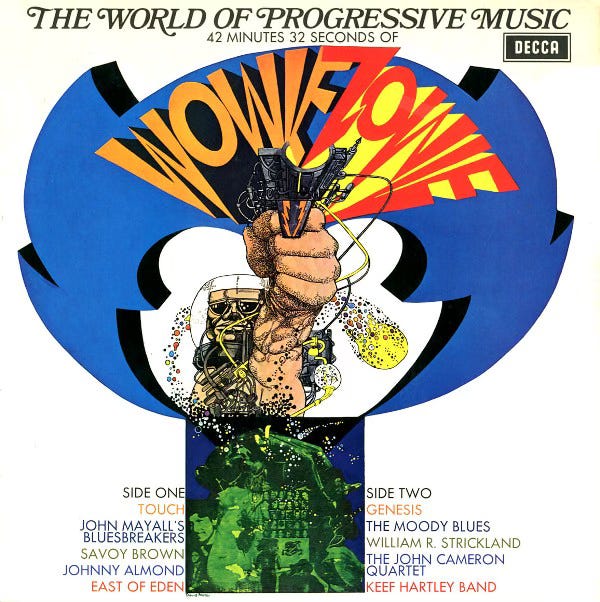
Number 34: Genesis “ The Lamb Lies Down On Broadway” 1974. Genesis were a nice bunch of public school boys who fell under the impresario Jonathan King’s spell, managed to wriggle out and added Steve Hackett on guitar and Phil Collins on drums. They were prog-rock defined, in fact I first heard their song ‘In The Beginning’ is on the “World of Progressive Music” which was the second album I ever owned. Flowery stories, lots of keyboard flourishes, nursery crimes indeed. Peter Gabriel’s voice telling the story, in this case of a Puerto Rican graffiti tagger in New York city. Gabriel had a dramatic flair and live wore odd costumes, including headdresses and makeup putting him into various characters like the ‘Watcher of the Skies’. “Selling England by The Pound” had set the scene as they got darker and less fey, but TLLDOB is their peak. But the recording of it was the end of Peter Gabriel’s involvement with the band, it was arduous, and he was absent for a lot of it due to his wife’s difficult pregnancy. They toured and performed the album in its entirety plus an encore, a decision that was not supported by the entire band considering the large amount of new material. The stage shows also involved new, more elaborate costumes worn by Gabriel, three backdrop screens that displayed 1,450 slides from eight projectors and lasers. When the reviews came in they focused on Gabriel’s theatrics and took the band’s musical performance as secondary, which pissed the others off. So, he left, and they produced a bunch of boring pop rock albums over the next 20 years while Collins became a mega star and father of Emily in Paris. Odd side note: Eno is on this album.

Number 33: The Tubes “Young and Rich” 1976. When I lived in SF The Tubes were ever present, a bit like the Quicksilver and various Dead spinoffs, well past their sell by date, playing bars and free concerts and I didn’t even bother to find out who was still in the band. In 1976 they tried to present themselves as a punk band on the back of a single “White Punks On Dope” which had been on the 1975 original Tubes album. I saw them on that tour when they were such a contrast to what the English punk scene looked like as to be laughable. They survived being ‘gobbed’ on incessantly – the quaint habit of standing in front of the stage spitting at the band. If it was good enough for the Clash or Souixie then the Tubes had to put up with it, even though they looked more like hair metal than punk. This album is so clever and fun and unlike much of what was produced in 1976 is still compelling. Its tongue is firmly in its cheek for sure with ‘Proud to be an American’ and ‘Don’t Touch Me There’ lots of ironic humor and good musicianship. They were not just vaudeville, the musicianship was consistently good, drummer Prairie Prince played for bunch of bands as a session musician and was part of Jefferson Starship, Vince Welnick ended up playing keys for the Dead.

A poster of a person

Description automatically generated

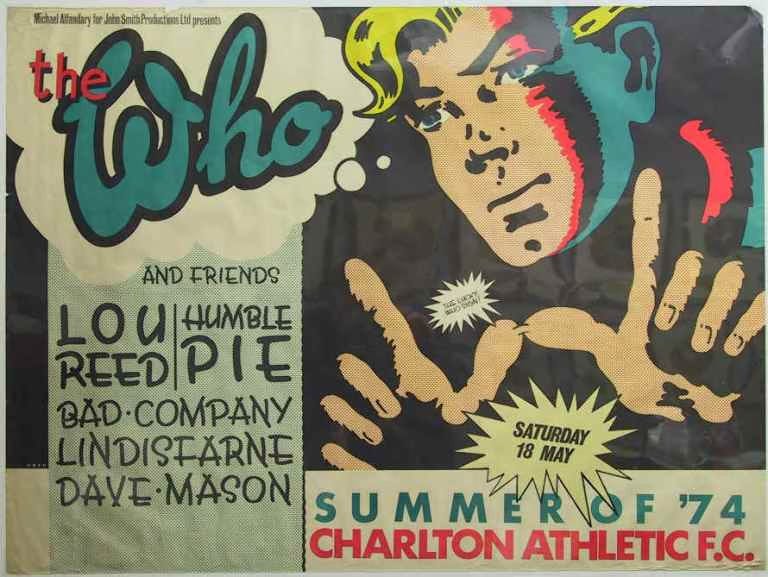
Number 32: The Who “Live at Leeds” 1971. The Who were the Mod band to the Stones being the Rockers band. The 4 piece of drums, bass, guitar and singer never changed and was pretty simple, the songs were always poppy, they started out singing Tamala Motown songs and as much as Pete Townsend wrote two ‘rock operas’ they were mainly 3 minute pop songs, verse chorus verse chorus solo verse chorus. Townsend is and was a stunning guitarist, lots of reverb and fret runs, maybe not as technically as complex as Beck or Clapton but he could rock, and this album is his guitar show piece. It includes the Tommy medley of “‘See Me, Feel Me’, as features in the Woodstock movie, the expanded version includes the precursor to Tommy “A Quick One, While He’s Away”. Both demonstrate they had superb harmonies as well as the craziest drummer to ever grace the stage, Keith Moon. The original vinyl had just 6 songs and they were the perfect hard rock. I saw them at Charlton’s The Valley in 1974 with Lou Reed and others in support and they basically mixed this set with the more upbeat Quadrophenia songs.

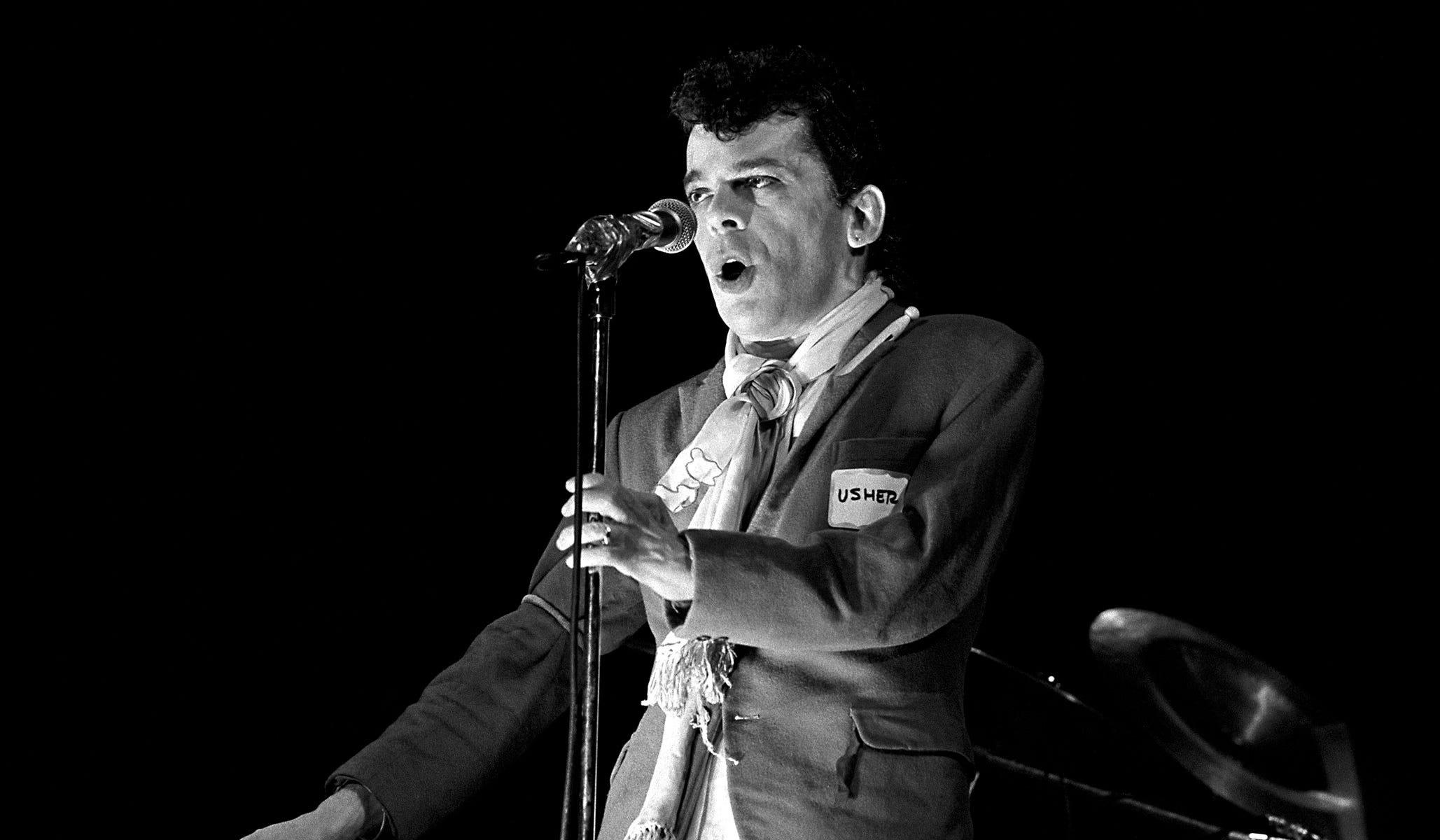
Number 31: Ian Dury “New Boots and Panties” 1976. Ian Dury was a pub rocker, his band Kilburn and the High Roads (not to be confused with Hatfield and the North) were popular in that early 70’s gap before punk, they ironically supported the Who on their Quadrophenia tour in 1973. Dury, Davey Payne and Chas Jankel came out of the last iteration to become Ian Dury and the Blockheads, although this album, which made his fame was released under his name only although Jankel co-wrote most of the songs. Dury was a multi-talented odd ball, he had been at art school with Peter Blake and had a commercial art career before the music took off. He wrote stories about the characters in the demi monde of East London and Essex where he grew up, the names were changed to ‘protect the innocent’ but Randy Mandy, Plaistow Patricia and Clever Trevor are with us to this day, in the same way that Joyce’s Dublin characters are recognizable today. He was great live, and I was lucky to see him and the Blockheads on the Stiffs tour with Costello, Wreckless Eric and Larry Wallis. I somehow befriended Kosmo Vinyl and got myself, girlfriend and a mate back to the afterparty at The Midland Hotel, which was next to St George’s Hall in Bradford, up close you really understood the degree of his disability from polio but it didn’t stop Dury who, to the strains of JJ Cale’s “Okie” as he tried to seduce the girlfriend. Another small world factette, Dury and the Blockheads toured the US for the one and only time in 1978 supporting recovering former poet, Lou Reed.

Tidal Playlist version is here.

Gones to the city: Episode 21 Mrs Harris’ Grandson Goes to Paris

Having failed miserably to get tickets for ‘Les Nuits de Fourvierres’, for the second year running, I had more success getting tickets for Anohni and the Johnsons at the Paris Philharmonic Hall. Off we went for a couple of hot and sweaty days amongst the Emily fans and families on their ‘Europe in 5 days’ itineraries. As is our custom, we managed 3 days in Paris without a single visit to a museum or gallery. We walked all over the 10th and the 11th, ventured fleetingly into the 20th on the hill up to Ménilmontant and got the metro up to the Philharmonie de Paris, which is a glorious building in a music themed park, tucked hard against the Périphérique in the 19th. 

Credit to Rachel for the picture

The campus includes the Cite de Musique, a collection of music spaces including large performing halls, practice space and children’s resources. The Philharmonie itself is modern and shiny and only relatively recently completed, it is covered in aluminium bird shapes straight out of one of Escher’s notebooks. We arrived for our show in the Grand Salle Pierre Boulez at 8.15 and thought it eerily quiet, maybe she had been too optimistic playing two nights at such a large space? We opened the second of the acoustic isolating entrance doors into the auditorium to be met by an usher and a full house and then the lights dimmed, and the show started before we had even begun to follow him to the seats. Having narrowly avoided falling over the low rail in the dark and into the crowd below, we found ourselves in the center of the balcony front row and settled into the performance. A French audience is a joy to behold, attentive, enthusiastic and cheery, and they watch the fucking show, not a phone to be seen. Seriously, I looked over at the packed stall seats and not a single phone, no one filming, no one taking selfies, no one checking Insta, no one doing a quick work email. When the show finally finished, a couple of hours later and the band took its bows, then the phones came out, and they took a respectful shot of the performers. So a word for the wise, if it says 8.00 PM it’s not doors 8.00, show 9.00, it will start no later than 8.15 and do not even think about getting your phone out until the show is done.

The summer is finally here, and a city is not necessarily the best place to enjoy the heat and humidity. Few cafés and bars have air-conditioning, some restaurants do and our hotel, like most now, did have pretty good AC, but it was a sticky couple of days. We had a couple of great meals, an insanely good one and one that could generously be described as ‘average’ but that’s what you get when you eat at the unthinkable hour, at least for a Parisian, of 6.30 PM. Breakfast at the hotel was good, but it was spoiled by a tech bro who thought it would be cool to share his thoughts on coding protocols to the wider world. You get used to the laptops at breakfast, but it seems that the crass self worship that seems to come with working in tech in the US is hard-wired, you can take the asshole out of Silicon Valley, but you cannot take the Silicon Valley out of the asshole, even in Paris.

Tuesday was the feast day of Saint Eleanor or Éléonore, as she appears locally. Originally from Provence, she arrived at the ripe old age of 12 years old at Canterbury Cathedral to marry King Henry III, who was 28 at the time of her wedding, the first time she had laid eyes upon him. She was not completely unprepared for this life, coming from an overachieving family with her three sisters all marrying kings – Margaret was the Queen of France, Sanchia Queen of Germany and Beatrice Queen of Sicily. Eleanor was a loving and dutiful wife, attractive and a bit of a fashion icon, certainly compared to the barely civilized Brits. She had her clothes shipped over from France and was responsible for the introduction of a new and daring whimple, not an item of clothing with many followers nowadays but at the time was quite the thing. Unsurprisingly, as a well-educated and erudite woman who provided advice and counsel to her husband the king, his Barons got their noses out of joint. This was particularly the case when Henry went off to Gascony in 1253, and she was made Regent in his stead. She held the post of Lord Chancellor, the only woman to do so until the great Liz Truss was appointed in 2016. She had a major beef with London, she hated the Londoners, who seemed to have returned her disdain. She took her revenge by taxing her cockney citizens, and they didn’t take it well. Eleanor demanded from the city all the back payments due on the monetary tribute known as queen-gold, by which she received a tenth of all fines which came to the Crown. On a barge sailing up the Thames on the 13 July 1263 she was attacked and was pelted with stones, loose pieces of paving, dried mud, rotten eggs and vegetables, Eleanor was rescued by the then Mayor of London and had to hide out at the nearby bishop of London’s home.

She had 5 children who survived and another 4 who we are not sure about as they are not recorded officially. The first son became Edward I of England. Margaret who became Queen of Scotland, Beatrice who married John II, Duke of Brittany. The younger son Edmund Crouchback, (that’s a catchy name, not sure if it was used to his face though), who became an important ally of Edward later as Duke of Lancaster, ended up establishing the House of Lancaster that was one side of the War of the Roses a hundred and fifty years later. The youngest daughter Katherine died at the age of 3 and both parents were shattered. She survived her husband and both her daughters and spent her later years as a typical royal grandma of the age, finally living at the Amesbury Priory, where she died and was buried. Her heart was taken to London where it was buried at the Franciscan priory of Greyfriars. Henry VIII dissolved the Greyfriars and the remaining buildings were destroyed in the Great Fire of London. Quite depressingly, the building on its site is now the Merrill Lynch’s London office. The physical site of Eleanor’s grave is unknown, making her the only English queen without a marked grave. She has been beatified but not technically canonized, but her feast day is June 26th, the day she died in 1291.

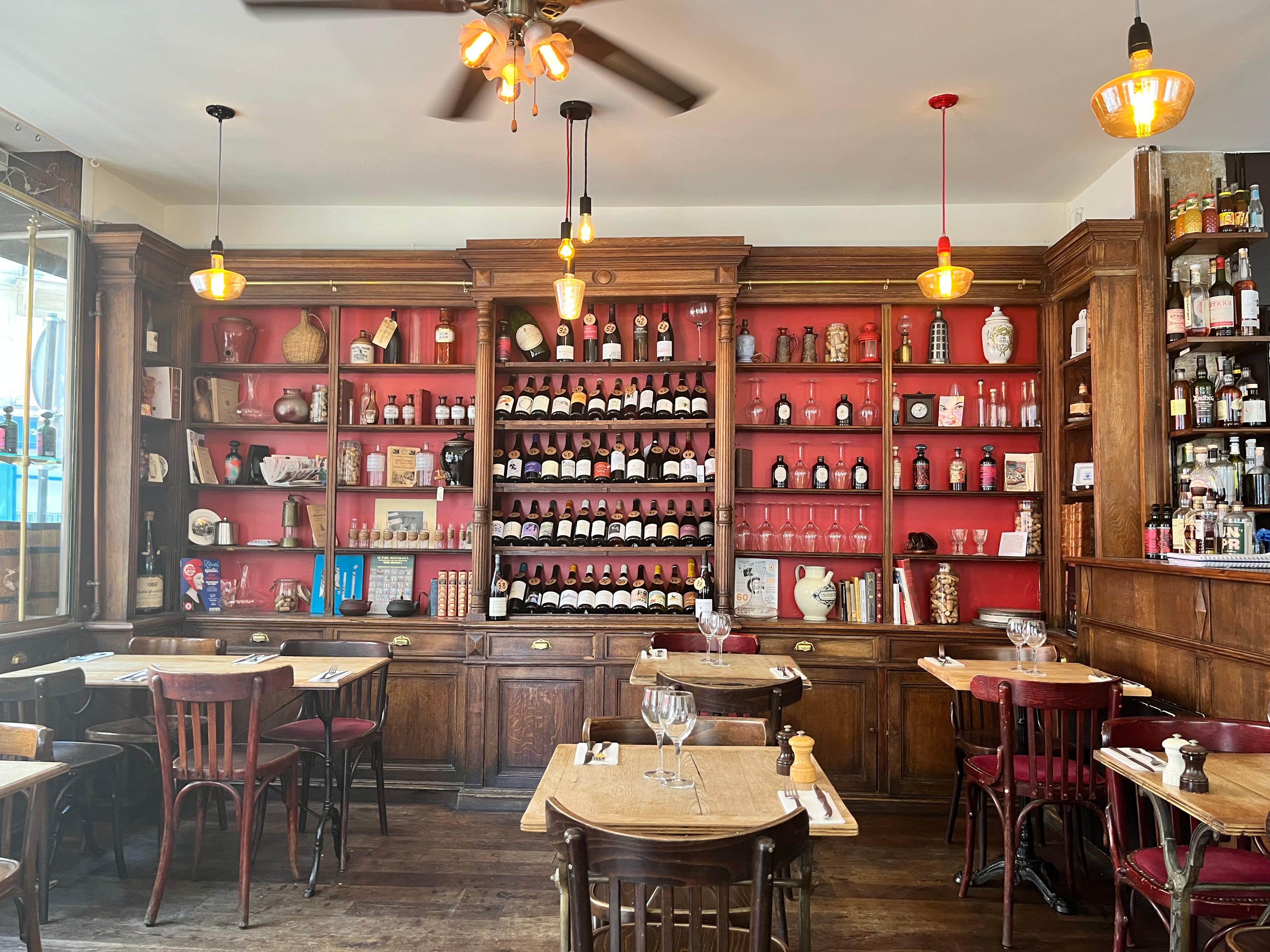
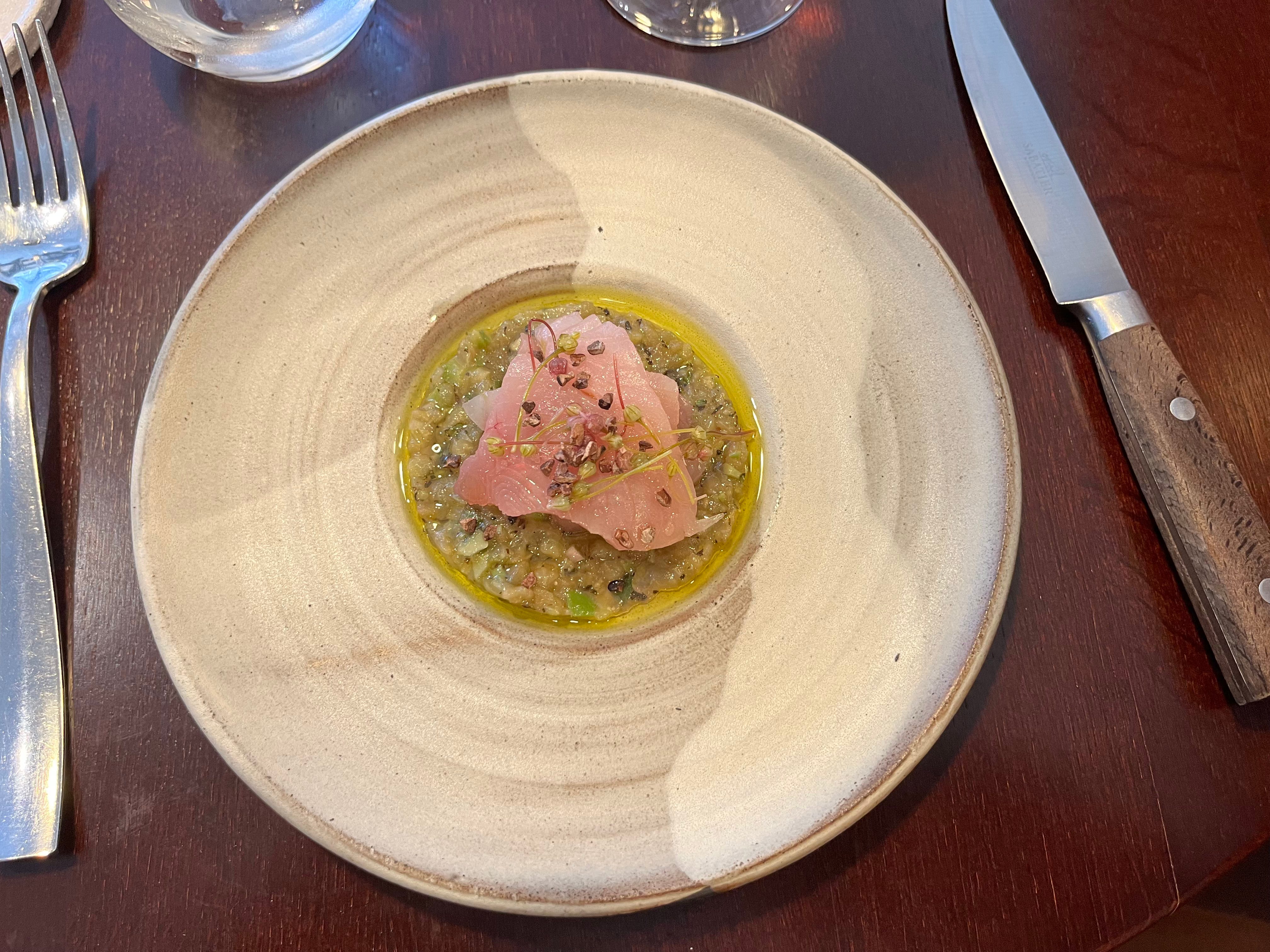
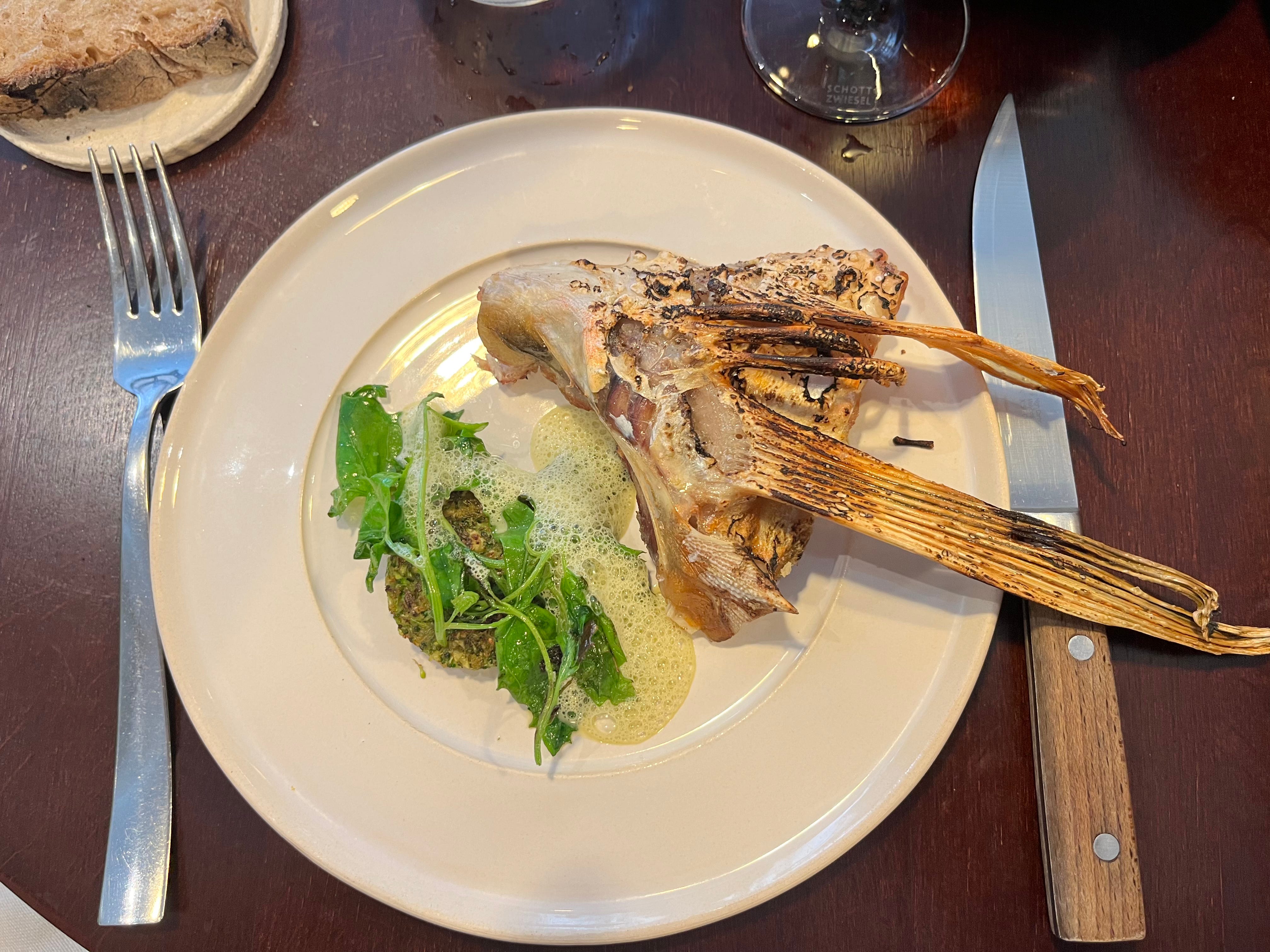
On our last day before catching the train home from Gare De Lyon, we went to a small, modest restaurant called Magma near the hotel. It is the home of Ryuya Ono (no relation to the sack-dwelling keening contributor to “Sometime In New York City”). He and his Japanese team create precise Japanese influenced versions of French classic cuisine. We had a fun amuse bouche of leek soup with a Japanese custard, followed by a white tuna sashimi with a salad of aubergine and cucumber. It had fresh coriander seeds as a seasoning and the whole dish was exquisite. The main course was the collar of Guernard, which I have never eaten before and will now happily seek out at the fish market. The fish was grilled so it had a smoky flavor, but the flesh was sweet and easily fell off the decorative bones. I swilled this down with a couple of glasses of a sublime Chenin Blanc, a ‘Chenin De Ligne – 2023’ from Pinot Bar, the negotiants and garage winery of Chris Laurent and Fanny Caignard, sold as a Vin De France as it’s made in Brittany from Anjou grapes. Desert was equally divine with chocolate, ice-cream and a galette crumb. The skill on display here is already acknowledged by Michelin and worth every penny of the €39 set lunch. 

Gones for a cuppa: Episode 19 – The British invasion

I left Lyon airport on Friday morning for a quick trains, planes and automobiles jaunt to rural Somerset. A green and bucolic land despite its association with the Herman Hess of the Tory Party, Jacob Rees-Mogg. I am not sure whether young Jacob endured an attempted suicide, a spell in a mental institution and direct guidance by a theologian, but he certainly acted in Parliament like he did. No-one I met in Frome, North Somerset, could actually identify which part of North Somerset he represented in the house, but everyone denied it was where they lived. I was in Frome for that very American of institutions, the high school reunion. It was my first time back in four years and only my 4th time back in 30 years or so. It has changed a lot, and yet again it has not. Most of the streets and the grand old buildings are there, many have changed their purpose in life. There is a bypass, a ring road, roundabouts and many places to drink coffee, so many I expected a jittery level of attention to be everywhere, but instead it is just as sleepy as it was when most of us left. For that, you can blame the chai. It has a slightly boho, aging hippy vibe with overly frequent appearance of home knitted clothing, man buns, yoga mats and far too many crocs for my personal taste. In a counter culture sign of accord they seem to have driven the banks out of business, the 3 major banks that flanked the old Market Cross are reduced to one, and it has a sign in the window announcing its imminent closure. Nat West, as was, is a tattoo parlor, is this Frome or is this Brooklyn?

I made the rookie error of getting a train to Frome on a Friday afternoon in the summer. I got the Heathrow Express to Paddington and then waited for my train to Weymouth. Finally, the platform was announced and then what can only be described as a stampede took place to get through the ticket barriers and on the train. It was if there was free money hidden in the seats the degree of commitment to breach the barriers, finally the Great Western Railways staff, fearing for the life of their colleagues opened up two luggage gates and gave up scanning tickets. I was swept along in that flood and luckily found myself ahead of most of the crowd, still slowly scanning tickets. I found a place for my overly large suitcase and sat down in a seat. The train then filled and filled some more and then the aisles were filled, and we left almost on time. The Great Western Railways Train Manager then spent the next few minutes apologizing for the crush, blaming the powers-that-be for having allocated too small a train, a very British complaint. They must go through intensive empathy training or something, as his constant apologies became as much background noise as the rattle of the rail. Finally, after 25 minutes we arrive in our first stop Reading where I had assumed folks would get off and the pressure would be relieved but of course there is a link now from Heathrow and there were more not less people on the platform with large suitcases desperately trying to go west. This was the breaking point for the beleaguered Train Manager and on our behalf he decided that enough was enough, and he was cancelling the train and let those above him, who caused the problem, to have to address its solution. What the fuck? I was alright, Jack, I had a seat and my bag was safely stowed. But no I now had to find another train as if this was full every train following on a Friday afternoon would be full plus our train load. The local knowledge did help and I just got on the next train to Bath where I was sure I could get a train to Frome. Or so I thought as I am standing waiting for the Frome train at Bath Spa, and they announce my Frome train is cancelled, so I should get on the Warminster train to Westbury where they will either bus or taxi us to Frome. We get to Westbury and no-one has any idea about buses or taxis, they do have a Frome train though, arriving in 25 minutes. This is turns out is the train that was cancelled and now mysteriously uncanceled. Waiting at Westbury, what should arrive but the train that I had originally left Paddington on 4 hours earlier, hopefully with either a new Train Manager or the same one on sedatives. So based on my limited experience, GWR may go west, but its rails are used sparingly and the service is anything but great. I completed my transportation trifecta with a taxi to the George Hotel which was our base for the weekend.

We had a fun weekend with lots of memorializing and appropriately named the WhatsApp group for the event sharing of photos, the “Whatever happened to What’s-his-name” group. Four of us got covered in mud hiking a great 8km circular trail around the villages of Mells and Great Elm on the Saturday morning. We ate well, and we drank modest rather than outrageous amounts of beer, including at the celebrated Griffin, home of Milk Street Brewery, opposite our elementary school which is still a functioning place of learning for the little tykes of Frome. It’s in a part of town that when we would walk the 3/4 of a mile to school each day was very run down. Referred to as Chinatown by the locals, it was full of the small old working class cottages of the 19th Century when the town’s weaving and industrial past was at its height, now all restored or gone completely many were derelict in our time. The Georgian nature of the town is still there, with many narrow streets and pathways spread over the hillside. The old printing works is now apartments and the industry that remains is banished to the peripheral trading estates. Frome had an odd atmosphere partly because until its relative recent resurgence it always had an air of former glory, the old large buildings and the many houses were for workers needed in the 19th century not needed again until after the 1980s when it rose for the first time in over 100 years. Frome originally in the 19th century heyday had 52 pubs, one for every week of the year, now many, including our former stomping grounds are gone, some as homes, some as stores and some sad, boarded up and falling apart.

If I had been in France on Saturday, I would have seen the unusual name of a saint to celebrate, that of St Germaine Cousin. Weak and ill, the girl had been born with a right hand that was deformed and paralyzed. Germaine was born near Toulouse in 1579 in a village called Pibrac and her relics are still revered there. She has a Cinderella element to her tale due to the appearance of an evil stepmother. She developed scrofula as a child, and her stepmother used it as an excuse for her to be banished from the family home. Abused by her stepmother, she lived a simple life as a shepherdess but was very pious and there were stories told of her parting waters of flooded rivers and other minor miracles before her untimely death at 21. The real magic started when her body was buried in the parish church of Pibrac in front of the pulpit. In 1644, when the grave was opened to receive one of her relatives, her body was found to be perfectly preserved so as this was in the era before Netflix and other diversions they decided to have it on public view near the pulpit. A noblewoman donated a lead casket to hold the body, and the first of several miraculous cures happened due to her relics. The casket was displayed in the church and opened in 1660 and again in 1700 and the body still it refused to rot, the local Archbishop of Toulouse testified there was no embalming. Some strange guy had an issue with this during the Revolution, and he and some mates took the body out of the casket, dug a grave and threw the body in with quick lime. It was rescued and still shown to be in good condition other than where the quick lime had attacked it. All the while miracles keep occurring, cures of blindness, of congenital disease, of hip and spinal disease and a miraculous mystery multiplication of food for the distressed community of the Good Shepherd at Bourges in 1845. The plea for beatitude attested more than 400 miracles in total and thirty fan letters from archbishops and bishops in France. Pius XI granted their wish in 1854. Her name has nothing to do with German Cousin, which I will admit to being slightly disappointed to discover.

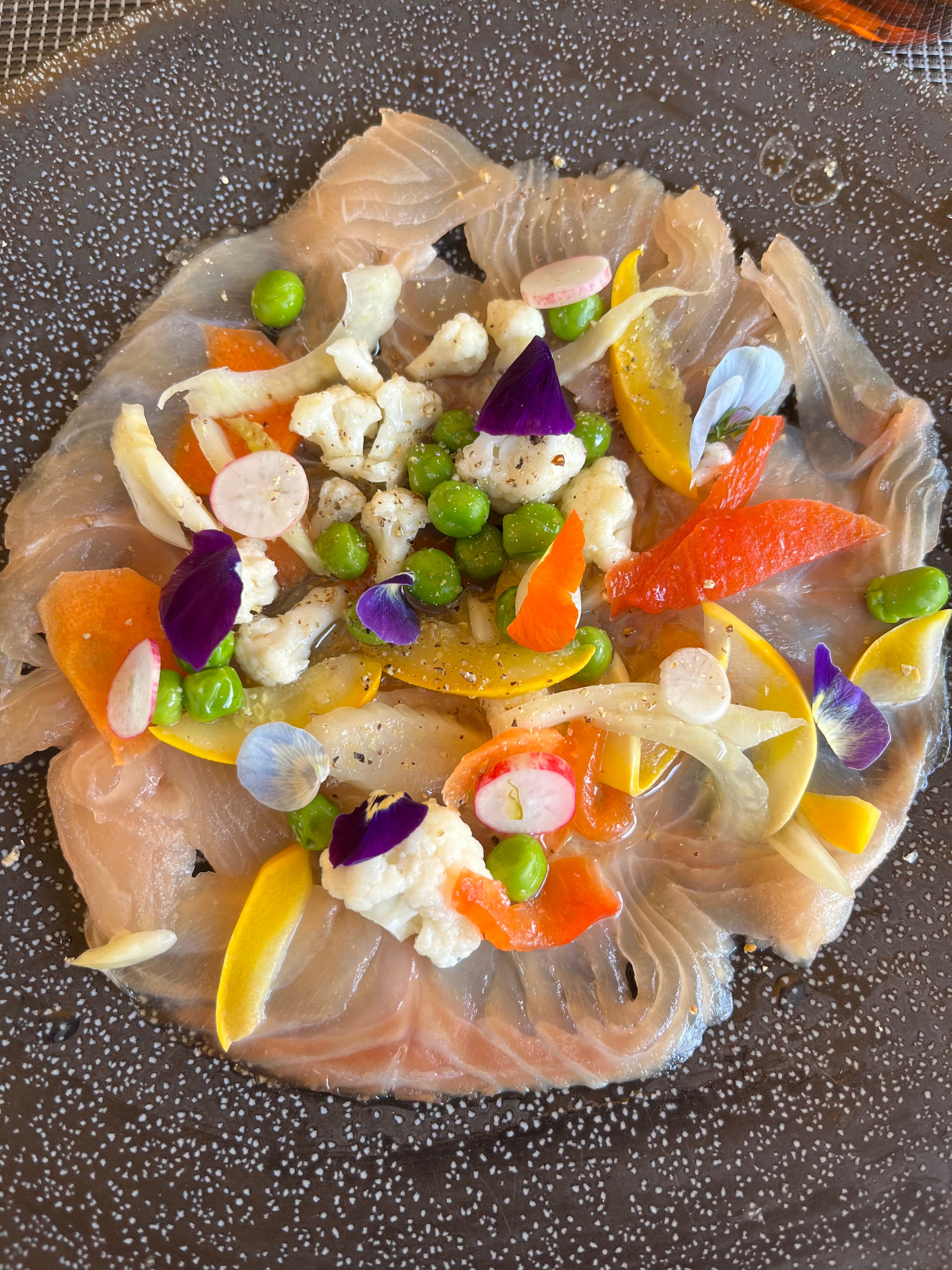
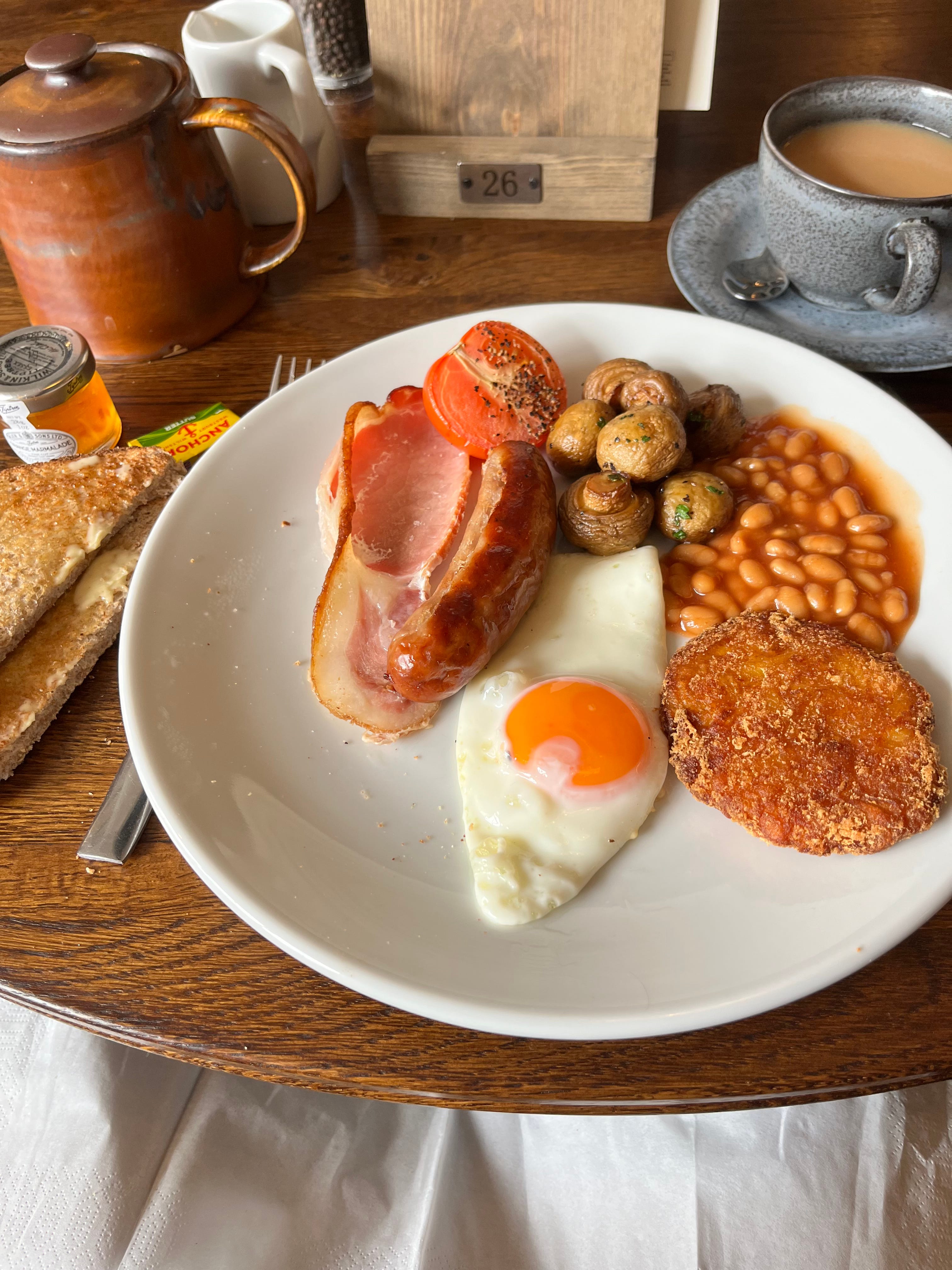
On the food front this week, we celebrated our escape to the countryside of Soane et Loire with dinner at Doucet’s Bistro Quai. It is such a well run and efficient place to have in your backyard. His Michelin one-star restaurant is across the road, but the simple yet perfectly executed fare of Quai reflects the fact that the star chef is at the helm. Doucet himself came through and greeted every table and we, being locals I suppose, got the more personal handshake and smile. I had trout carpaccio followed by a Charollais steak with beef-fat french fries which were as decadent as they sound. Back in England I could not resist the ‘full monty’, it is one of the treats of staying at a hotel. Not sure which is more deleterious to the health, this or the beef-fat chips.

Gones for good: Episode 10 – Fishheads and tales

Salmon is great to eat, but less impressive as a color for pants. You can farm salmon in large lakes, lochs and open sea-pens, so from the perspective of sustainability you would think it would get a hefty thumbs up. Especially as we are supposed to eat oily fish, reduce meat consumption and support a sustainable protein source with no methane emissions. In the US, partly thanks to the ubiquity of farmed salmon in sushi, the annual consumption per head is over 3 pounds of salmon. That sounds a tiny amount from a European perspective, but you have to remember vast swathes of the US eat zero fish, ever. European per capita consumption of just farmed fish production was 6.7 kilos in 2021, the last year data was available. Farmed salmon divides opinion sharply, in fact in some quarters it is demonized. When I lived in California I could choose to only eat wild salmon and its depth of flavor and color is like night and day, but in France we get one choice of Salmon, farmed. There are by contrast a plethora of options of other fish even in supermarkets and my fish guy on the market (a long-suffering PSG fan), has 2-3 whole different types of fish, 6-8 filleted fish plus shellfish of various hue, seafood preparations like quenelles, fish moussaka and preserved fish like herrings, smoked salmon and kippers. But salmon he does not sell, as he cannot compete with supermarkets and their farmed Norwegian salmon. The concern with the farmed salmon, particularly that emanating from Norway, Scotland and Chile, is that it’s raised in poor conditions of health and hygiene for the fish. The fish meal used to feed them together with insufficient water filtration means that the farms cause real destruction around them and have effectively killed off the wild varieties of salmon that gave the original reputation to those fish origins. There are efforts to identify those sources that do play by the rules, but it’s not always that easy on markets or where wet fish is sold to identify whether you are buying good or evil salmon. Being marked as Organic is also a false friend, as that can refer to the food on which they are raised rather than the overall farming regime.

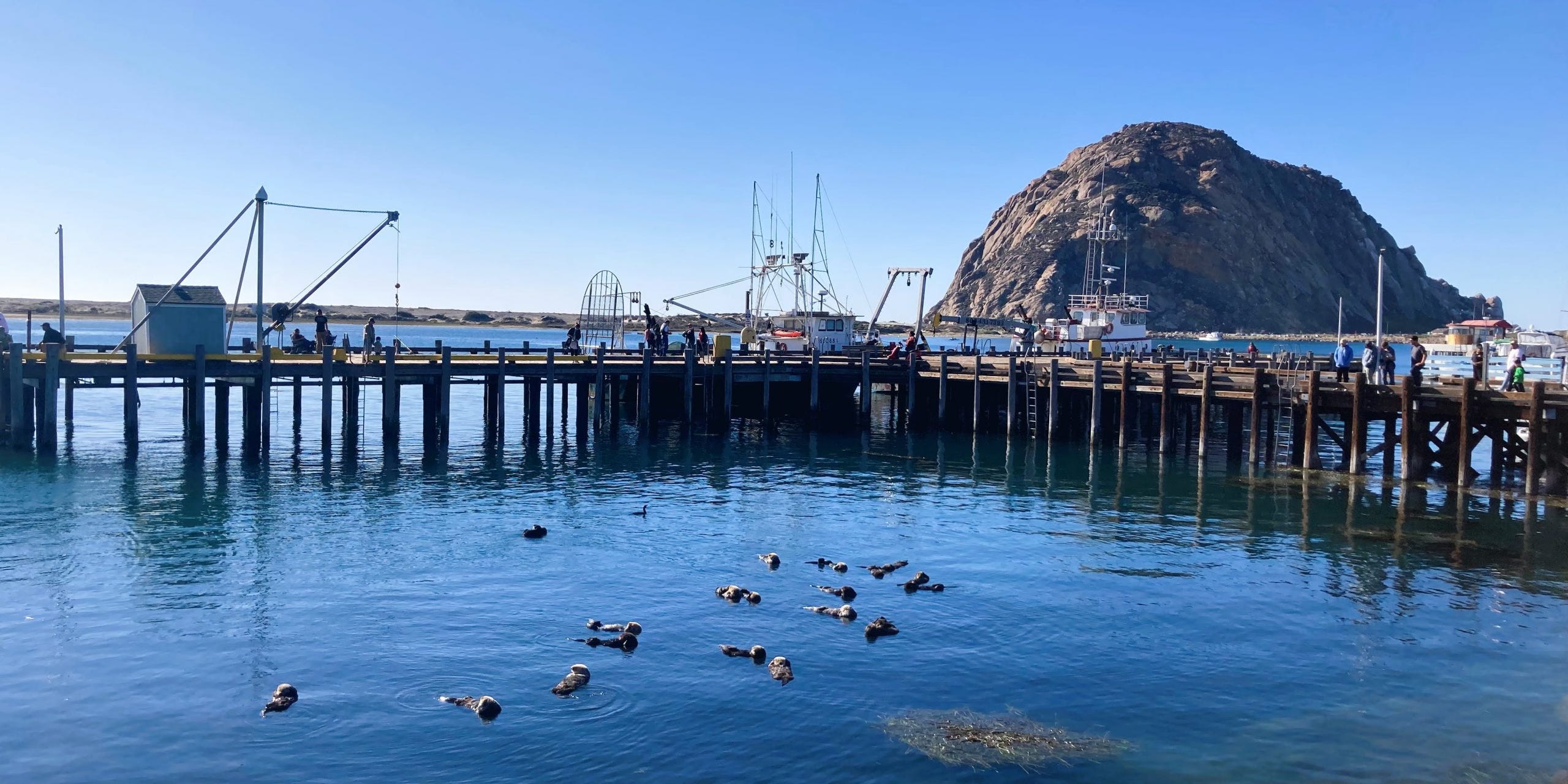
I once went wild salmon fishing off Morro Bay on the Central Coast of California. A friend won a prize at a private school fund-raiser that his kid went to. Another parent was a salmon fisherman, so he, and a plus one, got to go out on his commercial fishing boat. I was roped into being the plus one and at 6.00 am one Saturday morning was picked up to go and fish. My friend forced down me some disgusting anti-seasickness med with coffee, despite my protestations that as a semi-experienced sailor, it didn’t bother me. Off we sailed on a small fishing boat on a pretty flat, sunny morning sea while the Dramamine fucked with me. I felt like death for the first 45 minutes as we headed out to sea, finally the mate cooked us a fried breakfast – part of the prize thank god – and finally the nausea disappeared. We were using sonar to find the shoal of King Salmon the captain was in search of. This was definitely not Ahab and the beast, this was technology provided mastery of our domain. The visual clues were dolphins and seabirds, the dolphins smash into the shoal, which for safety swim in giant spherical shapes. The dolphin impact stuns and breaks off the salmon swimming on the perimeter of the ball, and they float up, stunned, to be gobbled up by the dolphins or the diving seabirds. The ball shape shows up clearly on the sonar, and we let out the fishing lines. Again, no romance here, just large hooks with shiny reflective aluminum lures on lines 800 yards long get trailed off the back of the boat as we slowly drift over the battered ball below us. We haul the lines back in and every 6-8 feet there is a large king salmon flailing on a hook, some of these are immense, the size of small sheep, 30-40 pounds in weight. Friend and I help with the hauling-in of the lines but the Mate and the skipper do the execution work, the gift to the school ensures we don’t have to bludgeon our way to our prize. An hour or so later we putt-putted back into Morro Bay, the catch nicely snuggled in the chiller hold covered in ice. We were each given one cleaned King Salmon as our bounty-come souvenir of our morning’s adventure on the high sea.

I am, as the regular reader will have spotted, quite fascinated by the daily saint’s days that the baker’s shop writes on the chalk board each day. So last Tuesday the 9th of April was in honor of St Gaultier. He should be the patron saint of reluctant labors, like my salmon fishing, and is in fact I was delighted to discover invoked in case of work related stress. He is also patron saint of Vintners, which is a good cause. St Gaultier was a professor of philosophy and rhetoric which was so exciting he became a Benedictine monk near Meaux, of mustard fame. He was appointed by the king, Philip 1st, abbot of a new foundation at Pontoise. The discipline at this new Abbey was lax, and he ran away several times to avoid the responsibility of making it less lax. He gave up completely and went to Cluny, which is actually not far from us at Charolles and was at the time the biggest and richest abbey in Eastern France. They sent him back to Pontoise. He tried to escape to Tourraine and hid himself on an island in the Loire, before yet again being led back to the abbey. He also escaped to an oratory near Tours before being recognized by a fellow pilgrim, who grassed him up. 

After being forced to return yet again to Pontoise, this time he decided to go to Rome to appeal directly to Pope Gregory and gave him his written resignation. Gregory instead ordered him to resume his responsibilities as abbot and never leave again. Accepting his fate, he campaigned against the abuses and corruptions of his fellow Benedictines, and was beaten and imprisoned for his troubles, which may have been why he was not so keen on the job in the first place. He resumed his work after being released and died in 1099.

St Gaultier or St Walter as he is known in English, was buried in the abbey at Pontoise, the place he had strived so hard to avoid. He was canonized by Hugh, Archbishop of Rouen in 1153, and was the last saint in Western Europe to have been canonized by an authority other than the pope. He did finally escape Pontoise, as they managed to lose his body during the Revolution.

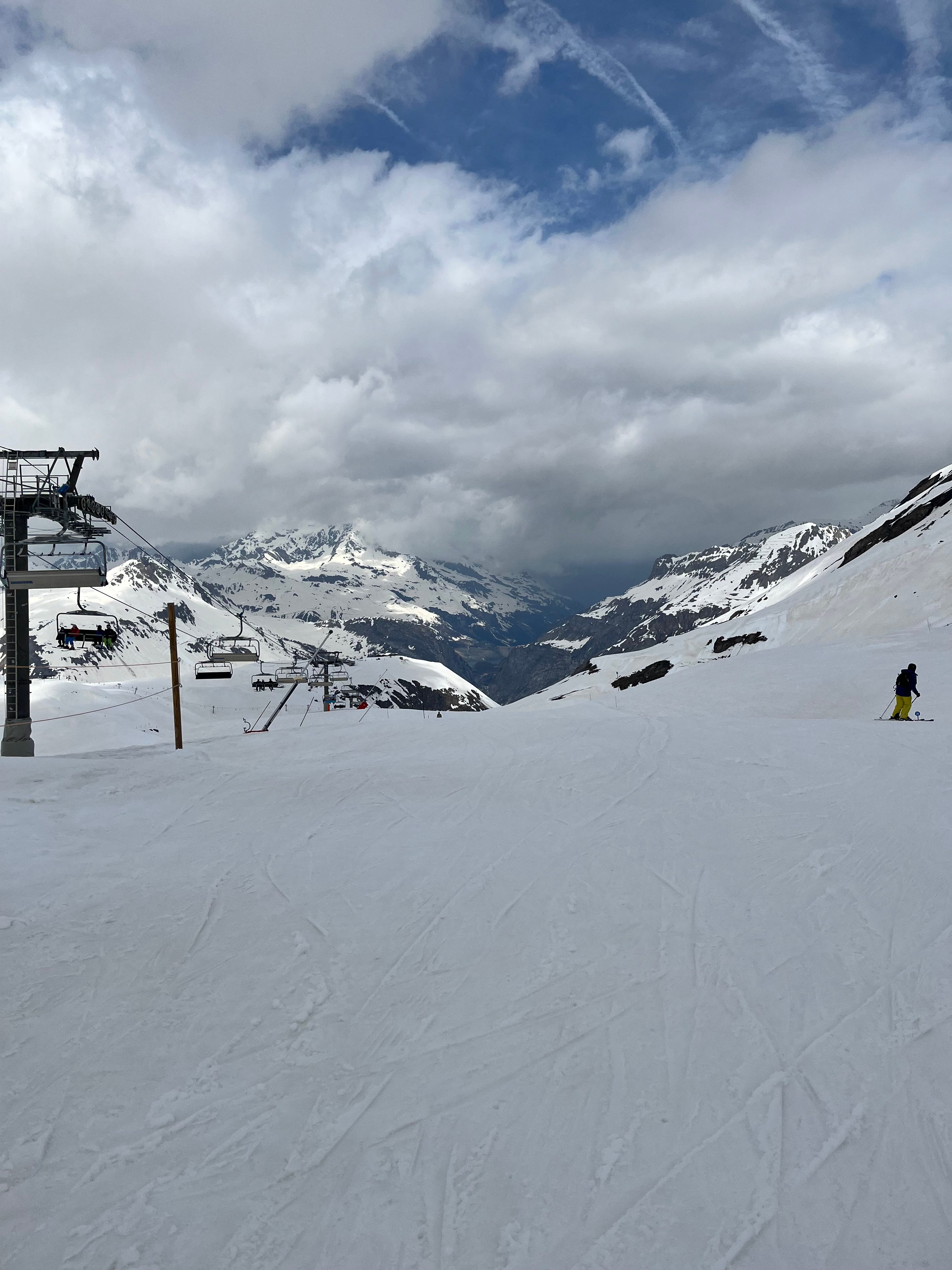
I have escaped the city life of Lyon this week by taking a late break to ski with Dan in the Val D’Iseres, staying with a friend in Tignes 1800. It’s typical spring skiing so today we had sun, sleet, snow and rain. It is by coincidence the last week of the Easter school break for Paris so the resorts, although not full as it is late, are awash in Parisians. Some are gloriously old school in terms of spring skiing means one thing and one thing only, working on your tan. There are great examples of people at each bar and restaurant with pine yellow tans, working hard to get them to the full dark oak tan that some of the older French ski-instructors sport. It was a sunny day yesterday and there were folks laying out in deck chairs at 10.30 in the morning at 2500 meters above sea level. If I hadn’t watched him play badly against Villa later that day, I would not have been surprised to spot Ben White of Arsenal fame laying out there too. He is a young man who seems to have taken upon himself the curation of a serious tan all winter and with his odd goatee, looks more and more like a pantomime Captain Hook, grease paint and all. 

We are this week in the former land of Savoy, Italy is just over the mountain to our East, and so much cheese, ham and pasta is consumed. They have basically exhausted any way of cooking cheese, ham and potatoes and all combinations are sold for lunch and dinner. Tartiflette, raclette, baked whole Mont D’or and Rebluchon. Pasta with cheese, pasta with ham and cheese, pasta with cheese, ham and potatoes dominate the menus. The good news is that the local wines from Savoie are good accompaniments and great value, we had a Chignin Bergeron last night which was a bright pretty white without being floral. If you are spring skiing, you oscillate between being cold, wind swept and needing staunch hearty food and being hot and sun burned and wanting salads and bottles of rosé at lunch. Happily, the quality of food at French ski resorts puts to shame the rarefied efforts, at what is basically fast food, that masquerades as $45 lunches at any US ski resort. We are surrounded by valleys that in summer provide pasture for cows that deliver the milk for the Beaufort, the Abondance, the Raclette and the various Tomme de Savoies that enrich the local dishes. The other local drink owes much to St Gaultier’s fellow Benedictines, Chartreuse. In both Green and Yellow forms, the bottles are behind every bar, in every restaurant, in every shop. Here in the Alps they also have local Jenepé liqueurs which compete taste wise with Chartreuse and both the original and the local versions turn up in ice-cream and deserts. Lyon celebrates its affinity to Chartreuse like San Francisco does to Fernet, but for some reason our local wine shop on Felix Faure cannot seem to secure regular supplies. I am going to have a Chartreuse with a coffee one morning this week, just because it seems to be the done thing, and maybe I bring a bottle home.

Gones for Good – Episode 8 Nelson’s bells

When does the constant climactic chaos convince the conservative pols that this shit is real? I was reading an interesting post by the Ruffian Ian Leslie where he made the following point using an old quote from G.K Chesterton: “…the world was dividing into Conservatives and Progressives: “The business of Progressives is to go on making mistakes. The business of Conservatives is to prevent mistakes from being corrected.” The divide I think that is most apparent now is those who accept that the climate is fucked, and we need to do something about it, and those who don’t think we need to change anything. Either you think it’s an ongoing catastrophe, and we must do something, everything, to stop it getting worse, or you think it’s just more liberal, woke, green garbage, and you are not going to do a thing to change your gas guzzling, methane spewing lifestyle. That we continue to pump oil, burn coal and let methane vent into the atmosphere without limit is a mistake. There is no debate on the science of the climate crisis, outside of certain tin-hat wearing conspiracy groups. There have been and continue to be massive misinformation campaigns on behalf of the fossil fuel-committed, but you would think at some point even the hard core petrol heads have to accept that the consequences of extreme weather are getting in the way of them having fun.

The French endured their worst nightmares this week with the return of Nelson. Not happy with the mass destruction of Bonaparte’s navy over 200 years ago this week, Tempête Nelson ravaged the French coast. Record wind speeds of 187 kmh hit the Finisterre peninsula, followed by flooding and rain across most of the rest of France other than the very south. To the east of Lyon in the Alps 150kmh winds kept resorts closed for two days and on the peak of Chamrousse near Grenoble 200kmh gusts were recorded. This is not normal. Lyon was an odd twilight world on Friday night, t-shirt warm with crazy cold intermittent gusts and lit up by pre-thunderstorm yellow tones. The streets around the apartment are more Kiev-chic than France suburban as they are torn up, piles of concrete, pipes and barriers everywhere. The sewers and electrical conduits are all being replaced around Rue Garibaldi. This is a superb piece of joined up thinking that the French excel at; the reason they are doing this upgrade all at once is that they are taking half of the roadways on Garibaldi, Felix Faure and other major routes and planting trees. Lyon is planting 56,000 trees this winter, part of the national ‘Canopy Plan’ which targets 30% of urban surface areas to be tree covered by planting 3 million trees. They will create major gardens and tree lined pedestrian and bike paths completely separated from the cars. Having done all that work, they want to avoid then disturbing the roots and digging them up to upgrade someone’s fiber, so first steps, get the pipework done. The city has its own incredible Tree Charter which covers every aspect of the incorporation of trees as a critical element of the city’s landscape from choosing the right trees, diversity of trees for various uses, pollen issues, creating tree surgeon and maintenance skilled jobs, it’s here in French but just skim it to get a sense of how thoroughly thought through this approach is. The key benefit is that the trees reduce the temperature by 4-5 degrees C and have been shown in some situations in Lyon to drop it by 10C in mid-summer. So instead of causing more carbon by allowing A/C systems to proliferate, the window-mounted A/C typical of a New York apartment block are banned and Lyon is instead going to use trees, and lots of terraces and cold beer.

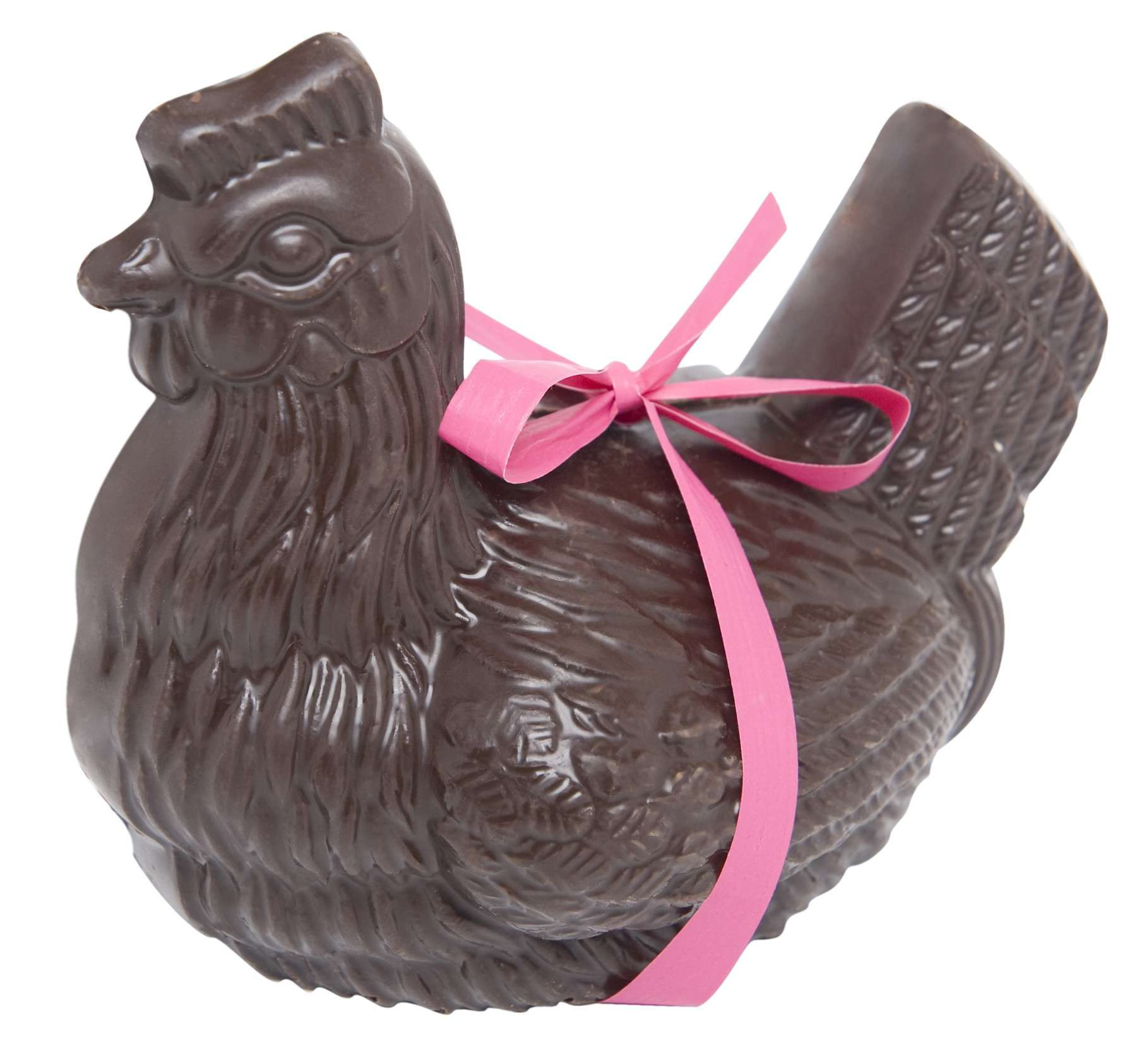
Today is Easter Sunday, so I thought I would give you a break from yet another pious rich woman getting a sainthood and would share some French Easter traditions. Every pâtisserie and chocolatier is chockablock with chocolate Easter baskets and chocolate animals full of treats and little eggs. Unlike in the UK or the US, the animal of choice is not the rabbit. The French quite correctly from a physiological perspective prefer the Chicken as the animal to bear the chocolate eggs. So chocolate chickens, chocolate frogs, chocolate shrimp, chocolate hippos, even lots of chocolate fish but not many bunnykins in sight. So if the Easter Rabbit is not delivering the Easter eggs, who is? Well of course here in France the Bells are. Bells? This is a deeply Catholic tradition. From Maundy Thursday until Easter Sunday, the church bells are stilled. To explain the absence of the bells ringing, they decided to tell the children the bells were going to Rome and the Pope would bless them before their return. Then Easter Saturday night and Sunday morning the bells ring again, bringing treats back from Rome and hey presto chocolate fish, eggs, chickens, hippos are strewn around. In eastern France, to replace the bells “gone to Rome” during Holy Week, children rang rattles in the streets to announce services. The altar boys got a starring role in those 3 days too, as they would announce the services several times during the day. The first time they shouted: ‘Réveillez-vous’ “Wake up”. The second time: ‘Préparez vous!’ “Get ready.” The third: “Hurry up”, ‘Dépêchez-vous’. We woke up, got ourselves ready, and then hurried over to La Garibaldine to line up in the rain and secure a chocolate chicken. 

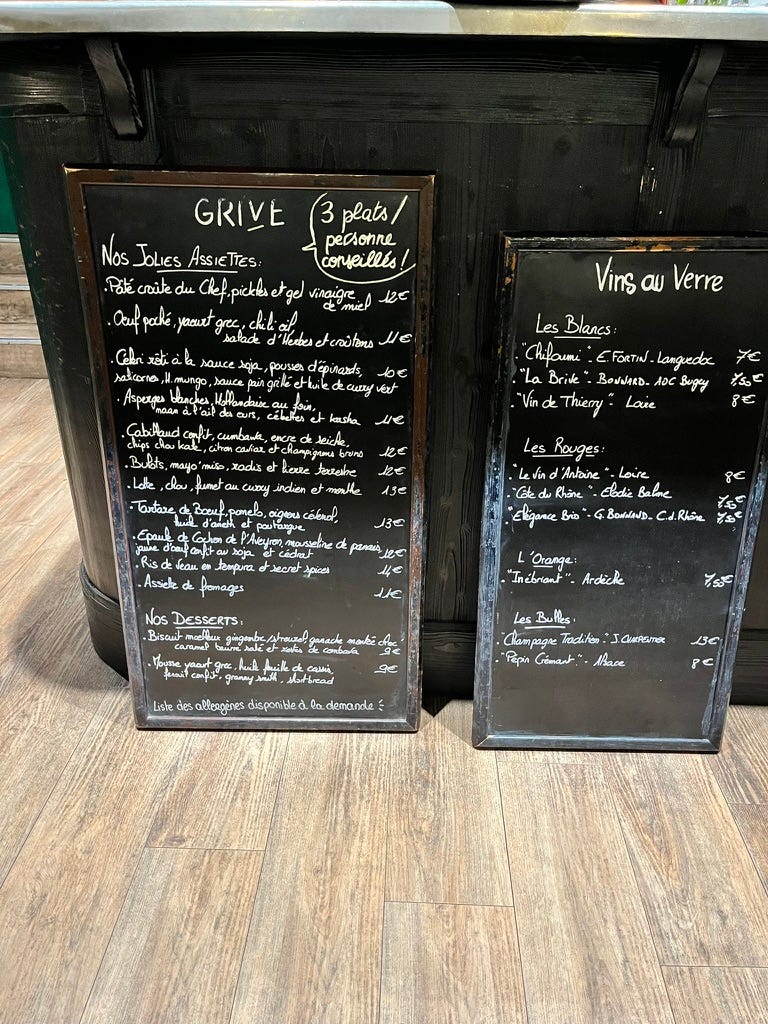
We also celebrated Easter on Friday night over on the banks of the Saone in the old town at Grive. The narrow streets gave us some protection from the gusts, and the chalk board menu of small dishes never disappoints. We had not been for a while, so every dish was new to us. Small plates work great for a couple or as we were 3, but for 4 they can be a pain as no dish comes with more than 3 items and if you order 2 plates it’s still odd with 6 items for 4 people. The veggie dishes were superb, white asparagus is just in season, and you cannot go wrong with roast celeriac. The pulled pork on a bed of roast mashed parsnip was a winner too. There were 3 fish dishes, monk fish wrapped in cabbage and confit of cod on a squid ink sauce as well as bulots with miso mayo. Bulots are sea snails, they are rarely seen on a menu in England and never in the US but the French rightly love them, as do I. Less chewy than clams but more substantial than mussels they are often served as part of a large seafood platter, the ‘Sélection de Fruits De Mer’ served up on a stand at coastal sea-food places in Province and the Cote L’Atlantique. For the squeamish, pulling them from the shell can be off-putting, but they were served here already shelled. Monday is Poisson d’Avril but that is a fish tale for another day. 

If you would prefer to receive this via Substack you can subscribe here 🙂

Gones for good: Episode 7 – Bread Heads

There was a recent article in the storied business journal, the Harvard Business Review, on the tactical genius of the French Boulanger. Through a study of the bakers in Lyon, the three learned professors “analyzed the location strategies of 177 bakeries within the city of Lyon, from the beginning of 1998 to the end of 2017”. They were surprised that Traditionalist bakeries (in the food capital of France) had survived. Bread making in France is a relatively simple business and is regulated in part. The ‘baguette traditionnelle’ specifically by law, can contain only flour, water, salt, and yeast. By their name, the Traditionalists don’t use a variety of “time- and cost-saving practices (such as the use of mixes and frozen dough), which are more or less invisible to consumers”. My emphasis in bold. What does not appear once in the research paper is the word or even the concept of taste. I could be snarky and make the case that as 2 of the three researchers are Dutch and the third Swiss that we should not be surprised. But really? The authors of the article were shocked, that despite these disadvantages, the Traditionalists have maintained a strong majority share of the French bread market despite modernist competitors using the cheaper efficient production tricks. They came to the mystifying conclusion that there was a logic defying trick by the Traditionalists, who instead of shunning being next to or nearby a modernist bakery, actually more often than not, set up right under their modernist competitors noses. So you make something you love making, in a time honored traditional way using natural ingredients and as sure as shit, tastes better than the bland cheaper option, and you are in business in a country that loves bread, in a city that worships at the altar of nourriture every day. Unsurprisingly, you are successful. In other news, wine is wet.

Other bread loving nations include the English and the Irish. Ireland has one of the highest natural incidences of celiac disease, yet you will not find a lot of gluten-free options. It seems the Irish have made a conscious decision that if they are to suffer, it will not be for a lack of bread. Nor for a lack of Guinness, although I was surprised to see the UK drinks more of the foamy browny-black stuff than its country of origin, closely behind Ireland is Nigeria. In a hot, sticky, equatorial humid climate the last thing I would be craving is Guinness, but that’s why I am not running a global drinks business like Diageo. Where you will not find cans of Guinness for sale publicly is the Kingdom of Saudi Arabia. The Kingdom is dry and has been since 1952 when King Abdulaziz banned it after one of his sons got drunk at a diplomatic function and killed the British Consul with his sword.

This Thursday, continuing our own swordless tradition, we celebrated the saint’s day of Sainte Clemence. Yet another German widow of nobility who when her hubbie, Menginard I, Count of Sponhiem (a minor kingdom yet again in the Holy Roman Empire) went toes up, goes into a convent, does some good work and then mysteriously ends up beatified. If you are born on this day, the French refer to you as a Clementine, which could be confusing if you became so ridiculously successful in business to the point you are dubbed a mandarin.

Good weather, good times

Wednesday through this weekend was the “Le Temps Est Bon” (Good Weather) food festival which, although it’s the third week of March, was prophetic in its timing. It was 22 yesterday, and everyone is behaving like it’s spring. We went to one of the events, a dinner with the Mich 1 starred chef Vivien Durand from Lormont, near Bordeaux was invited to take over the kitchen by Florian Remont of the Bistrot du Potager, which is in the 7th, the Gerland area. Remont’s place is known for his South Western Pays-Basque style cuisine, so it was obviously a meeting of the minds. In a small world coincidence, we drove so many times across the Pont d’Aquitaine to and from Bordeaux airport to the cottage in Duras. On the headland to the south of the bridge’s entrance was a ruined château that in its day, i.e. before they built a 6 lane suspension bridge at the bottom of the garden, it must have had great views over the Garronne estuary. For all those years it was a graffitied husk of its former greatness, but in the latter few years of our journeys it was being refurbished, and it just so happens that Durand’s Black Prince restaurant is situated in the château’s former stable block.

The menu was a 5 course tour de force. Brussels, young and fried whole like a flower with a syrupy dressing of shitaki mushrooms kicked it off. Followed by sea-bass carpaccio, then a glorious sous-vide prepared monkfish dish. I think sous-vide is generally preposterous, but this was ‘melt in the mouth’ so I get it was worth the faff.

You are kidding me

The main event was kid goat from the Basque Country, spit roasted and served in an unctuous sauce with girolles and perfect roast potato. It was then followed with a selection of spring veggies – roast baby leeks and roast white asparagus on a bed of fried kale and spinach with pea-shoots garnish. It would have pleased Popeye and my Olive Oyl thought it the best dish of the night. Dessert was a bit of a mess with some crispy chocolatey sticks that were nearly inedible, on top of hazelnut cream and a bread flavored sorbet that just didn’t work together. Otherwise, pretty great food in quite a cool space.

The other oddity of the night was the total fail on the music. As well as the French do food, they do music as badly sometimes. We dined with a soundtrack of electronic disco at a volume that was just annoying enough that you noticed it, yet too low so all you really heard was the tinny repetitive beat. The music that if played loud while the young bucks were doing prep in the open kitchen would have been fine, but not dining music, never, ever. In the loos downstairs they seemed to have replaced the ceiling speakers with former earpiece speakers from old telephones so the tinny beat was something otherworldly, laughable even. It’s a shame as the French can do dance music – Justice, Daft Punk, Cassius, Laurent Garnier but this was just crap. This is what good French dance music sounds like.

Besties

It’s been a long and weirdly deflating winter. Milder than it should have been for weeks, wetter than it should have been for more weeks, and cold but not for long enough so far. The whole mess in Gaza continues to be an affront to supposedly Western democratic norms, but then again, the ongoing one in Ukraine is also a long-running festering sore. The climate summit was hosted by the head of a Petro-state’s national oil company and attended by over 4000 lobbyists; the climate crisis has devolved into nothing but the script of a bad 1990’s disaster movie. 

We seem to be living in the shadow of many megalomaniacs, as I have mentioned in prior outbursts. I feel a particular sense of failure about them as a group, as they are all of my generation. When I misguidedly thought that we were all reaping the benefits of the baby boom on our cruise towards a better place, some were in fact being formed to become tyrants. Viktor Orbán, two months younger than my brother, Xi Jinping, 3 years older than me but a year younger than Putin, a year older than Recep Erdoğan, baby boomers one and all. They obviously were not concerned about what car to drive, where Frank Zappa’s house was in Laurel Canyon and what was the best modern novel. The best car for them was chauffeur driven and bullet proof. They could plunder enough personal wealth to buy most of Laurel Canyon and the best book is obviously one written by them telling the proles what to do. There are some other minor characters strolling around the world stage, Nehandra Modi is an elder statesman having been born one year after the partition and departure from India of the British is 1950. He is well-loved by the Hindu majority of Indians and feared by those of other faiths, but he loves a bit of authoritarianism alongside his vegetarian and abstemious lifestyle. Benyamin Netanyahou, born the following year, is meanwhile bombing children with US-funded and supplied weapons in an effort to prolong the ‘war’ against Palestine helping him to avoid criminal charges, let alone the admonition for the terrible sequence of events that the supposed hard man of Israeli politics oversaw, that led to the horrific deaths of 1139 of the citizens he was supposed to protect. But the country is at war and that’s no time to stop taking action, or look at what you are doing for now and the future?

Lurking and gurning, stage left, is public enemy number one, the Donald. He is actually the oldest of this august group, born the same year as my sister in 1946. He is ahead in any poll you care to read, across most age groups including for some frightening reason the young. He is leading over everyone’s favorite grandfather Joe Biden. ‘Sleepy Joe’, as Drumpf dubbed him and Fox have continued to remind everyone, is at best underappreciated, at worst sleepwalking into an electoral disaster. Not that the Democrats don’t have experience with that, just wait until the numbers get worse mid-year and some bright spark will suggest Hilary should come back and throw her hat into the ring. Biden is four years older than Trump and wears each year like a decade. He walks across a stage, or down a flight of stairs and if successfully accomplished, we all breathe a collective sigh of relief, like parents watching their child negotiate his first nativity play as Shepherd Number 2, little Joe didn’t fall over or drop his Crook.

He is however single handedly keeping Western Democracy functioning. He is keeping China from invading Taiwan, he is keeping Putin out of Ukraine and doing this while what passes as the Republican party nowadays careens around the Washington political institutions trying to stymy him in anything and everything he does. The Federal Reserve has tried to kill the economy under Biden, but he has survived and the economy has survived. A little bruised but still punching. The general standard of living has improved and improved most for the people at the bottom. The jobs are still more in demand of job fillers than the prior decades of people hunting in vain for a job, a situation that continues to support modest and successful wage rises and better conditions for Union workers. The administration has ramped up green energy infrastructure, even if most of it has occurred in the south and southwest where it’s easier to build anything, period.

Sadly, Biden is the very embodiment of Rodney Dangerfield. He is old and he does not get no respect. Our common hope is now reduced to Trump being so deranged during the primary campaigns, where he will assume that the nomination should be his by right, without having to go through the motions, and that the legal convictions pile up enough doubt that enough people hold their nose, forget about his age and re-elect Biden. What then happens we can probably look forward to another B-Movie script too.

So as 2023 slips into collective memory I am not the most enthusiastic about what 2024 holds for us. There was some great new music created in the past year or more accurately discovered by me in the past year. So in the spirit of making an effort to finish on an upward tone here are some highlights of what the young people have been doing musically while my cadre have been busy fucking shit up: 

The links are to Bandcamp/YouTube but for those inclined there is a Spotify playlist here.

Geese – Album: 3D Country – bunch of young gents from Brooklyn or at least currently based there. They defy simple description but sound like the product of many nights drinking and listening to old 90’s geezer rock like Primal Scream’s Exile on Mainstreet Phase or Ash or Supergrass, but through a very American lens, almost a C&W bastard child. 2122 or Mysterious Love

Lil Yachty – Let’s Start Here. Where do you start with this? Yachty is a 26-year-old from Mableton Georgia, rapper, cool looking guy, man about New York City, hanging with the stars. Had some big hits including Broccoli with DRAM. All so normal then this drops. This album is the stepchild of Axis Bold as Love, Fulfillingness First Finale and Dark Side of the Moon, just insanely layered and fun and if Floyd or Stevie Wonder had the use of a vocoder this is what they might have sounded like. My favorite album of the year without question. Drive me Crazy or Black Seminole.

Fever Ray – Album: Radical Romantics – Karin Dreijer is a unique voice and has produced some of the most interesting electronic music of the last 20 years as half of The Knife and her solo stuff as Fever Ray. Some of her output is admittedly hard work but she has a great turn of phrase and the very Swedish electronics work well. This album is melodically stronger and dare I say it quite fun, the live video is worth finding. Kandy or Carbon Dioxide for the atmospheric gas fans amongst us.

Baxter Dury – Album: I thought I was better Than You. I was late to the Baxter Dury party. I was a massive fan of his Dad and had the good fortune to meet him once and have a drink with him while he serenaded my girlfriend to the dulcet sounds of J.J.Cale. Baxter has his Dad’s way with a lyric but has added his own louche style, girl backing singers a key part of his sound. I have consumed his early stuff now thanks to Rachel for the introduction to I’m Not Your Dog which for obvious reasons is popular with the French. Aylesbury Boy or Celebrate Me ‘lick my head’ indeed!

Steve Mason – Album: Brothers and Sisters. I have been a fan of Steve Mason’s happy, clappy, mellow soft rock since the Beta band 3Eps days and their 30 seconds of stardom in High Fidelity when John Cusack drops it into play. He continues to make great music and it’s all pretty upbeat, he has also done some dub versions with Dennis Bovell and that deep bass sound has permeated his work. There is yet another reworked sample of Nusrat Fateh Ali Khan’s qawwli song Musst Musst as well. Brixton Fish Fry or No More.

Will Butler + Sister Squares. What happened to Arcade Fire? There was a period when they defined cool, “it” and relevant and then they disappeared into a haze of seriousness and a bad Christmas album. Will Butler was the earnest front man and happily this album, his 5th or so since the Fire went out, is fun, upbeat and catchy, still with Will’s quirkiness at times. Saturday Night or Stop Talking.

Hania Rani – Album: Ghosts. Hania is an accomplished Polish jazz pianist who has played with Portico Quartet and released some moody piano instrumental works like “On Giacometti” from earlier this year and her memorial pieces on behalf of Ukraine. This album shows her amazing voice and cool arrangements, interesting rhythmic stuff also going on from the Portico’s who back her on several songs. Don’t Break My Heart and Dancing with Ghosts.

Do Nothing – Album: Snake Sideways. In the wake of the earnest singy-shouty bands from the British Isles like Idles, Fontaines DC, BCBR or Yard Act comes Do Nothing. Two well received Eps were followed this year by the Snake Sideways album and it’s a lovely little grower. You have to like the spiky post rock guitars and Chris Bailey’s voice but there is some really great stuff here that rewards repeated listens. Amoeba or Happy Feet.

Ian Sweet – Sucker. Ian Sweet is the stage name of Jillian Medford and is the other side of LA to LDR’s glossy Hollywood glitzy antics. Her songs are of the young poor strugglers that make up most of the striving artists and actors in SOCAL. Gritty electric pop with some production that really pulls it together. Sucker or Fight

Skinny Palembe – Album: Hardly The Same Snake. Doya Beardmore grew up in South Africa but then moved to Doncaster of all places and his music reflects a global vibe that works as well in Donny as Jo’burg. It swings, it has a jazz inflection but works as a good collection of songs and his voice is more sustainable than Alex Turner’s striving eeforts at crooning. Don’t Be Another or Like A Heart Won’t Beat

Lana Del Ray – “Did you know that there’s a tunnel under Ocean Blvd?” Lana continues to get better and better, and this oddly named paeon to LA, the Carpenters and 70’s soft rock is superb. Couple of self-indulgent spoken voice segments by guests apart this is faultless. She has more confidence in her voice so happy to share the vocals with others. She wrote this on her phone and then built it up over time with collaborators and finally Jack Antonoff to pull it all together in an LDR album way, her 9th for god’s sake.  Did you know that there’s a tunnel under Ocean Blvd and Fingertips.

The Reds, Pinks and Purples – Murder, Oral Sex and Cigarettes. The RP&P is the performing name of Glenn Donaldson who lives in the Inner Richmond (I know as he released an album called that) in San Francisco and is prolific to say the least. He can be accused of sounding like Morrissey but he is way much more than the baritone which is indeed at times a bit familiar. All heart ache and frustrations, very, very catchy songs and then a throw away guitar instrumental that is glorious. What will heaven be like? Or Use This Song If You Need One.

Some corner of a foreign field, Part 1

The heady days of August

Corporal Harris, 2/10th Battalion, London Regiment

It’s been a bit of an “Oh, What A Lovely War!” kind of year, having visited Austria and immersed in Crown Prince Franz Ferdinand, the Habsburgs and the remnants of the Austro-Hungarian Empire my brother and I planned a trip to Flanders Fields.

For a very formative period of our lives for both of us, our maternal grandfather, Arthur, lived with us in a big rambling Victorian house on a half an acre in Frome in Somerset. Pop, as he was referred to by us kids, was a handsome and erudite man and was ever present, from breakfast through to the end of the day as he worked at his upholstery business from his workshop in the garage. That was until his slightly shrewish wife, Annie, known as Nanna, decided that some bizarre slight had occurred and, with very little notice, they upped and moved out of our home and into a pensioner’s flat a half mile away. He started off walking the short way back to his work shop each day, but over time he spent more time in the armchair watching TV and visibly and rapidly aged.

For the period they did live at home with us, they were part of our rambunctious lives, generally arranged around large communal meals, evening dinners and Sunday lunches. They had their own living room, bathroom and bedroom, and lived privately while yet being part of the larger family. Pop had his bottles of brown ale in his sideboard and as we lived next to a pub, they often went next door for a social drink. He helped out in the garden and Annie, helped my Mum out in the kitchen, baking, cooking and cleaning. The arrangement worked well, which was probably why it seemed such a tragedy that at the age when they would probably most need my Mum and Dad’s help, they decided to go it alone. In the Royal Oak next door, they drank in the Public Bar whereas my Mum and Dad preferred the Lounge. His sister, Ivy, the first lesbian I knowingly met was the landlady for a few years. Accompanied at all times by her slightly mustachioed, cigar smoking ‘friend’ Florrie. They kept a pair of corgis and regardless of the fact they happily shared a bed, my grandmother would hear nothing but that they were just close friends. They moved on to other pubs and later introduced us to Mark and Jason, “cousins” who also shared the same bed and the flair for interior decorating, flower displays and running very successful pubs with food, at a time when pubs and food were never said in the same breath with any expectation of much beyond a Ploughman’s Lunch or Ham Baps. Mark and Jason stayed as paying guests, one of several youngish men who passed through for 2-3 months at a time, eating with us en famille, breaking bread and usually providing interesting dinner discussion, a rural Somerset salon for our growing intellects and interests. Every now and then, my grandfather would try and chip in with some anecdote, and as it was the most formative experience of his life, he would often share a moment from life in the trenches during the first world war. As much as my brother and I were always happy to hear these tales of mud and misery, he was cut short by his wife Annie and the dismissive “They don’t want to hear about all that Arthur!”. She had perhaps heard them too often, but over time we discovered that she really didn’t want to be reminded of those days.

Arthur left London after his 16th birthday and went to Dorset, worked for a couple of months as a farm laborer and joined the local Dorset Regiment reserve on the 26th May 1913. His plan came to nothing as he was discovered, finally, to be too young to serve even though the war was coming, and they kicked him out in June 1914. Back in London, he and other male members of the family were rushing to the Hackney swimming baths to sign on to the London territorial regiments. Two months after being rejected for being too young at 17, Arthur lied about his age and joined up again.

Recruitment officers were paid two shillings and sixpence for each new army recruit, and needed all the soldiers they could find. Not many people at the start of the 20th Century had a birth certificate, so it was easy to lie about how old you were. The minimum height requirement was 5ft 3in with a minimum chest size of 34in and Arthur easily met all these. His brother George, named after their father George, famous in Hackney for being the MC of the local boxing competitions, joined the 1st/13th London Regiment, in July of 1914. His Battalion, Princess Louise’s Kensington Rifles went immediately to France in August, where George, newly promoted to Corporal, was killed the following May.

Arthur’s Battalion, the Hackney Rifles, were newly created as part of Kitchener’s Army, so they had to be taught how to soldier. They were sent to protect the infrastructure from spies and agent provocateurs, guarding ports and railways in Ipswich, then onto their tent encampment in Bromeswell Heath in Suffolk in May 1916 and then to Longbridge Deverell in Wiltshire in July 1916. Arthur with his prior 9 months service probably new the drill better, and he got promoted to Corporal and then Sergeant before being shipped off to France in February 1917 by which time the underage boy is an experienced man.

Meanwhile, Annie’s elder brother Dennis joined the London Regiment too in 1915 but after 7 months of service in the 2/10, Arthur’s unit, he was invalided out with TB, he died in 1919 in a military hospital, the current Chelsea ‘Pensioners’ Hospital. Arthur was also invalided out in 1919. Annie’s father was known in the Hackney boxing world as well and had boxed, so whether the two families knew each other is uncertain. What is certain is that Annie and Arthur met and eloped when she got pregnant. They lost the child but returned to London as “Mr and Mrs Harris”. As a testament to the practice of early obstetrics for the poor, Annie’s son died in the womb, but the x-ray showed that due to childhood rickets she would struggle to deliver the corpse if they induced birth, so they physically broke the dead baby up in the birth canal and pulled out the pieces that would pass through her shrunken pelvis. Arthur joined the family trade as a French polisher, and they lived in Whitechapel. Remarkably, after what they had gone through, they had my mother in 1925 by an early version of Caesarion section, a vertical cut that left a vivid scar.

Arthur took a gamble and using money he earned during the Great Strike driving a strike-breaking ‘scab’ truck he bought his own furniture business in Dagenham, opposite where the new car plant being built by Henry Ford, would soon be surrounded by houses to shelter the new workforce. The plant didn’t actually start production until 1931 and the workers didn’t get the new houses until the production volumes finally came up after the depression, by which time Arthur, his wife and 6-year-old daughter were bankrupt, and he moved back to London to work for others polishing furniture in the French fashion. As the war broke out in 1939 they were living in the top half of a rented house on Bromley High Street in Bromley by Bow, Poplar. They got evacuated out to Wiltshire in 1940 during the blitz and if you look around that part of Poplar its proximity to the London docks meant it was completely flattened and none of the buildings Annie and Arthur would remember remain today.

Arthur and Annie liked Bradford on Avon and stayed until the 60’s, living on a house on the steep Coppice Hill. He had a workshop and what were common skills in the East End of London, furniture making, polishing and upholstery, were practically rare in sleepy Wiltshire, he made a reasonable living. He decided that he wanted to help out in the new war but understood at the age of 40 that going back to the infantry was not realistic. So he joined the Royal Air Force and, stationed nearby at Melksham Air Force base, Airman Harris gave 4 years of further service to the King. Whether on her own or through his service, my mother, now aged 19, met a young pilot from Cheshire called Ronald, stationed at Melksham. They married in 1944 in October. Ronald took off from Norway on a foggy cold early March morning and never returned. Two months later her daughter, my sister, was born and name Ronny in his honour.

So Arthur and Annie welcomed the new member of the family to their home. Years passed and Melksham played a further role in their lives when Josephine met another RAF chap, this time a Flight Sergeant Engineer with a baby face and a rugby player’s physique. They married, had two boys and in winter of 1963, together with Arthur and Annie, moved to the big old Victorian house in Frome, 12 miles away.

At dinner Arthur would tell stories of his time in the mud of Flanders but Annie still didnt want to hear them.

Sketches of China

There was a rumour that my grandfather, Arthur Harris, was part Chinese. His grandmother was Irish who arrived via the port of Liverpool. According to the legend had been left, with child, by a Laskar sailor, she moved to London, married Arthur’s grandfather and life moved on. Looking at pictures of my grandfather and our mutual lack of body hair supported this bizarre legend right up until ’23 and Me’ burst that bubble to reveal the more prosaic fact that I am mainly English and Irish, genetically, with a 6% smattering of French, probably via Huguenots arriving in East London in the 18th century.

I first went to China in 1992, a quick and unremarkable business trip to Beijing which was cut short after a day when I was sent packing, for the unforgettable business crime of being found out that I was about to jump ship to the competition. I think at the time we still referred to it mostly as Peking.
In the intervening 30 years I have been often to China, mainly in the south of what is an immense country, so I would not in any way consider myself an expert or even a Sinophile. I have had offices under my direction in Shanghai on three occasions, one of which was actually on the Bundt in the old Hong Kong and Shanghai Bank Building. Now occupied by some regional minor Chinese bank, its insanely large single-piece 50′ green marble pillars hold up the domed roof of the grand foyer with its mural of the centers of global trade, as of the time of construction in the 1930’s. Our office was accessed from an unassuming side door around the corner but there was definitely a sense of Shanghai as this global city of trade. The Bundt was that symbol, colonial grandeur on a grandiose scale, replete with expensive restaurants and bars and the view of the burgeoning Pudong business district with its Soviet style Sputnik inspired radio tower overshadowing all else. Since then, I have had two depressingly small and modern offices in unassuming buildings back from the main drag and that has been mostly due to Shanghai’s rise, its massive building boom and the inflation in office rents.


I had a gap in visiting China from the middle of 1999 until 2005, and on my first trip back I can vividly recall the long grey drive from the airport into the city and seeing all the factories, that you were used to seeing, being knocked down and office parks being built. The offices were for banks and insurance companies as Shanghai pivoted to try and become the Asian financial hub and compete with Hong Kong. This was the start of the rise of China’s middle class, the domestic market for houses, apartments and appliances was taking off. There were of course still factories and a trip to Shenzhen the next year, where we held a sales meeting at a golf resort reminded you of where that growth was fueled. Western golf resorts have one championship course designed by famous old white golfer dude, maybe two. This place had 18 courses, each 18 holes, each designed by a different old golfer dude. I could run first thing around the various fairways but only that early. By coffee break at 10.00 the air was acidic and metallic, by the lunch break it was visible and by the evening it was plainly toxic.

In 2005 Shanghai was booming, the old houses of the French concession held small boutiques and restaurants, and it was popular with tourists. I like many visitors brought back imitation luxury handbags and watches, if you paid a bit more you went to rooms in the back of shops where the quality knock-offs were found, probably copied directly on the production line of the main western brands, but if you just wanted a Louis Vuitton copy handbag there were hundreds of street sellers who would sell you one for $10 in hard green currency.


I took another break from visiting between 2009 and 2015 and when I came back next the change had accelerated again. The Chinese financial and property development companies were trying to out-do each other with more and more ornate, flashier towers overlooking the Bundt from Pudong. The radio tower is now completely overshadowed by these new and ever taller skyscrapers of modernist style that would not look out of place in Hong Kong or New York and in a uniquely Chinese touch, each of these large glass monuments to commerce is completely covered with moving light displays, mainly high-tech ads for cars and air conditioners but on a scale that makes Time Square seem like Piccadilly Circus in the 1950’s.

The cheap knock offs had gone, and the reason was self-evident, in every shopping mall that had popped up the western luxury good shops were wall to wall. Xintiandi had become Beverly Hills. There was an odd irony as in the middle of the district is the hallowed site of the first national congress of the Chinese Communist party and around that much lauded and revered former school is surrounded now by some of the most expensive real estate on earth.  I visited other cities like Xiamen and Quanzhou and back to Shenzhen. The acrid air had completely gone, as had the factories producing running shoes, sneakers and plastics. They had been shipped off to cheaper labor markets in Vietnam and Thailand. The riverside locations which had been convenient to load finished goods in boxes into boats to go down river to the ports of the Pearl River delta were now apartment buildings and parks. President Xi’s mother lived there, of course the air was clean. If you were a resident of Guangdong province, you had unfettered access to Hong Kong, partly to allow residents to work in Hong Kong. If you were mega-rich it was worthwhile having a property in Guangdong and make that your official residence to get that access to Hong Kong and the freedom to travel when you wanted without visa issues and if something went sour between you and the increasingly doctrinaire government, you could get out of the country easily.

The Bundt and the dome of HSB Building

I always loved Hong Kong. Its energy was stimulating, the variety of food and shopping was more interesting than the mainland generally, and as I was fortunate to have friends living there I would by default weekend in Hong Kong rather than Shanghai. If you stayed in a western primarily tourist hotel in Shanghai or Beijing you still had reasonable internet access to the west, CNN was on the TV together with BBC World and Al Jazeera. If you stayed in Hong Kong, you were still in the democratic world, both figuratively and spiritually, basic western norms of censorship, freedom of the press, freedom of expression. It was the only place anywhere in China where you could even mention Tiananmen Square, they even commemorated it every year.

Since the ascendance of Xi and the shift from politician to God-like figurehead, the new Mao in the Chinese consciousness, things had been going generally well on any measure. GDP growth was the envy of the world year-on-year, even if we all knew they massaged the numbers. They had been successful at bringing a billion people out of poverty. They also seemed to be making massive strides in technology, what the Chinese people used their phones for, on a day-to-day basis, was 3–4 years ahead of the west. Their on-phone gaming, entertainment sites and combinations of what in the west are several distinct activities was impressive and world leading. The reason was simple, they had a massive domestic market, and they were pretty good at keeping foreign well-funded competition out. They had done that across many sectors, but the phone-based consumer economy really stood out.

Then they decided they didn’t like a China copy that didn’t have the same restrictions as the motherland, as it might give people ideas about their Xi-thought based controlled existence, if they saw another way for Chinese people to be governed. Unsurprisingly then Hong Kong got shut down, freedom of press gone, right to protest gone, right of assembly gone, right to criticize the government gone. The local government does not just kowtow to Beijing it actively worships the direction and instructions handed down. They also quietly closed that escape route for the rich and successful out of Guangdong.

Then they gave the world Covid-19, either directly through a lab escape or indirectly by continuing to turn a blind eye to live wild animal ‘wet’ meat markets to mix pathogens and species. In a country with an infallible God-like leader massive uncontrolled pandemics are embarrassing, so the Chinese government went by the standard authoritarian playbook. Denial, punishment of anyone who has the temerity to report that shit is out of control, belated and limited steps to lock it down, refusal to cooperate with all the multilateral medical treaties put in place to speed sharing of vital data. As China prides itself as a technological global leader it would be equally embarrassing to admit that it cannot make a truly effective vaccine, so they continued to ignore Western offers of assistance and continued to promote the myth of their great scientific hegemony by donating millions of doses of Sinovac’s vaccine to the emerging economies in Africa, Middle East and sub-Saharan Africa, even though it had very limited efficacy and had issues with younger patients and limited testing data was shared.  The elite in Beijing were of course protected and their limitations experienced daily were mild. The rest of China however enjoyed Orwellian levels of control; months locked inside their apartments with food delivered to the housing compounds while geriatric male local wardens enjoyed the power of an official armband on the sleeve to enforce an iron like lock on daily life. Shanghai had the temerity to suggest the rules were overdone and after the first wave of infection abated tried to move back to some sense of normalcy. Beijing always has a beef with Shanghai, it’s always seen as too uppity, too open to the outside world and their heretical views. So, while the rest of the world actually went through various waves and built up a general herd immunity over the two years of the main pandemic China isolated itself. The government recommended traditional herbal remedies, partly because their health system is spotty at best and if you are in the boonies your local ‘health care’ is a partially trained nurse in the next village over and you are hundreds of miles from a real hospital. They spread good news stories through the media about their medical heroes, how everyone was happy and at home. Chinese social life is set up around very small living spaces, generally shared with multiple generations, leaving for work 6 days a week and eating out a lot. Not as great a place to be locked in for months at a time. Unsurprisingly at the end of 2021 the wheels started to come off so overnight it seemed, the government gave up and let it rip through the population. They still publish death figures, but according to the official data very few people were able to die in front of someone having just been tested positive for covid to qualify under their byzantine rules as a ‘covid related’ death. However, the crematoria data told a different story. The data was leaked then quickly disappeared, as is their way.


Technically Chinese residents have been able to travel, as in request an exit visa, since January 1st, 2022. Very few did in 2022 as they faced a 4-week, later reduced to a 2-week, government sponsored and controlled quarantine upon return. As of this January the requirement for quarantine is only in the case of a resident arriving in an infected state, although they have a declaration requirement for entry into China which generally prevents you entering back into China, resident or not, if you are ill with Covid. Chinese tourism to Europe and the US is still very low this summer, the large number of Chinese tour groups with their flags, obsessive photographing anything and everything will not be missed other than by the tourism industry. We did a tour of the Vatican and Sistine Chapel in 2018 and it felt like getting on the Kowloon Ferry at rush hour, all you could hear was the sound of the cash register and the fact that every piece of elaborately ornate art bore the legend of how someone or other had gifted it, Jean Calvin would be surprised to hear they are still selling indulgences it seems.

I arrived in Pudong airport two weeks ago for the first time since 2019. I scanned my QR code of my health declaration entered through the ubiquitous WeChat app and was let in. It had a whole performative quality to it as no-one really took the code check seriously. A Polish acquaintance on the same trip had struggled to get the QR code so instead, in frustration, photographed an Amazon return label’s QR code and brandished it noisily rather than scanning it and was waved through. Very few people wore masks. In fact, I saw more masks in San Francisco on hipsters walking their dogs in the Spring.
There are 42 desks for passport checks at Pudong. I have been through on prior trips and all 42 are in use, its massive but historically they are set up to handle very large volumes, over half are for returning residents. They had 8 open for residents and 4 for ‘Foreigners’. The airport is cavernous and empty of people now, for a long boring reason I ended up arriving and leaving China twice in 5 days. I decided to get some exercise after a long flight from London and walked up the half mile long terminal away from the gates that were active and after a couple hundred yards it got super sticky as they had turned off the AC for that half as it was just not getting any traffic, the retail outlets are shut down at that end.
Shanghai was busy, it is holiday season and I was attending a trade show, one of several that were going on. The majority of visitors though are Chinese. The hotel we use near the office is a Marriott Renaissance but it has now pivoted to Chinese domestic tourists as the foreigners are obviously not numerous enough to support the hotel. So now on the hotel WIFI you cannot access Google, you can access the sanitized Bing (thanks Microsoft, still helping Big Brother!). The TV only shows Chinese TV, 32 channels of sanitized approved messaging consistent with President Xi Jinping Thought. There is an English language new channel, China International News Television. We were served up some scripted version of global news by their versions of William Joyce, a big bluff American anchor in suit and tie straight out of CNN in 2005 and supported by a couple of Aussies. The ticker across the bottom was displaying headlines about US aggression and Chinese good works. Looking out of my hotel window the building site across the road where they cleared the old style Shikumen houses is still scrub and debris. The cranes across the cityscape can still be seen but you can count them now, a fools’ errand in 2015.
The electric scooters have mysteriously disappeared. They had competing app-based young startups fighting for share and Unicorn valuations when I was last here. They have conquered the world although Paris just banned them and San Francisco have limited them but in the homeland they have been completely excised as if they never existed. When I first visited Shanghai, the streets were full of bicycles, old big wheel city bikes. The cars were revamped older models of Volkswagen and Buicks, Toyotas and Renaults. Then the bikes were replaced by motor bikes and the cars started to get more diverse. Then the motor bikes were all changed for electric, silent death for unwary pedestrians, the e-scooters were all over the pavements and the cars were all BMW’s and Audis. Years pass and the bikes are back, but they are rental bicycles, the e-scooters are gone. The cars are now 50% electric with Tesla the market leader but most of the brands are local. The models are futuristic and slightly alien, the diversity of car brands you have never heard of is odd. The strangest one is “Build Your Dreams’, yes that is the company name and it’s not a shake-based diet, the badge is on the car rear in all three words not BYD, which I guarantee is how it will be marketed in the west; they are serious, and Berkshire Hathaway is an investor. Zeekr, Wuling, Xpeng and Nio are all fighting for share and all looking to export. I have been involved with purchasing lots of stuff from China over the years and its low tech in general but their predilection for cutting any corner they possibly can to save a nickel does not make me rush to buy something as serious as an electric car. In fact, I pull my hair out over how a garden hose cannot make it through the summer so a potentially very fast lethal device built around a lithium battery that can and do explode does not fill me full of hope.

Bikes in SoHo, not that SoHo
Rental bikes in SoHo

Overall Shanghai looked tired and worn around the edges. The Beverly Hills style shopping malls with Carrara marble entryways are now all chipped and any fine work is broken or uneven, probably was not Carrara marble after all. The exhibition center which was built for the World Expo in 2010 has seen better days. It has a leaking roof, I have seen toilets in better condition at an English football ground, and the main hawser cables holding the curved sail shaped roof are all corroded. It does have shiny new facial recognition cameras at the entry gates, but they only work on the locals and even then, we get funneled into one of the 10 gates that are lit up as if working because the process is we show our badge, look at the camera then the young lady presses the button to let us through. The other people at the vacant gates are just there to direct us to the one where the gatekeeper is working. We then get patted down and bags X-rayed but all the beeps of the hand scanner of our phones and keys etc. are just ignored, as long as we have been scanned, that seems to be the important point, not that they investigate anything the scanner finds.

In 2016 it really felt like they were winning, that China was the most vibrant growing economy on earth, they owned the West. Since then, it has slid sideways and backwards as Xi’s thirst for control has pushed all the resources into a centralized Communist Party-controlled state sector. That only goes so far especially as the building boom is bust, regardless of how many aircraft carriers you build, there is a limit to state sponsored infrastructure. I met with a State-owned shipping line exec and on his card, he proudly states he is Party rep as well as CEO. They have been locking up the tech entrepreneurs, banning games, restricting hours that children can be on devices for pleasure. As much as the elderly curmudgeon in me thinks limited access hours is not a bad thing it should not be a state dictate. It sure as shit destroyed the blooming tech sector. They are publishing economics guidance for the coming year and finally they are making noises about the need for the Private Sector to grow as well as the state sector. However, they also at the same time released notes and guidance for private companies about the need for them to foster Party behavior, structures and Party practices, that should do wonders for entrepreneurialism, having some more committees to vet the next steps.
China has graduate unemployment at 20% currently. So, the loyal members of society who stuck by the one child choice, scrimped and saved to pay for the private tuition to make sure little Lian or Lue get into the best schools, then do it again paying for tutors so that they get into the best University and after all that 1 in 5 cannot find a job. President Xi’s grand plan is that they should go and work in the fields, to develop character.

They had successfully managed to take the shine off the tech sector and its growth and jobs by 2019 and then Covid 19 and their heavy-handed approach, especially the serial shutdowns has taken the wind out of the economy. It has quietly kick-started a brain drain, which is just what you need for a country with a declining birth rate already below replacement levels. Everyone I met who has built a business up and is successful has moved their family offshore and commute back. Australia, Canada but mostly Singapore. Hong Kong is no longer safe so they cannot even take the half measure of moving there. Hong Kong’s brightest have moved to the same destinations, the less gifted have made it to Taiwan and Malaysia, Cantonese restaurants turning up everywhere.
All things have a natural cycle, especially economies. What the Chinese have done since the death of Mao is incredible, especially in comparison with Russia. They have lifted the majority of their people from absolute poverty and enduring short unpleasant lives. In the 90’s it looked like the ‘End of History’, that capitalism would level everything, if you gave everyone blue jeans and an I-phone democracy would follow. Xi obviously saw that as a threat to the Party and to China’s future and has done what he can to preserve a sense of Chinese destiny and control. However, with all authoritarians the world has a habit of coming up with levels of complexity beyond the ken of a single man, regardless of how deified his very thoughts are. Democracies greatest strength is that it allows discourse and different opinions and solving big issues sometimes needs that debate. As much as we can get annoyed by the stupid decisions that democratic countries make, like Brexit, BoJo and Truss as Prime Minister and Trump’s election to the Presidency, regardless of the not so hidden hand of Putin in all of that, it is so much better to have that choice to be stupid as a society. One guy does not have the answer to everything, and history has a way of sticking that reality up their ass in the end.