Gones to the Mountains: Episode 54

Casual abuse of snowboarders

As I mentioned last week, Buttons Junior and I escaped to the Portes de Soleil and continued this week, defying gravity and the limits of our ability to digest cheese. We were with old friends les Poireaux and Poireaux Junior for the first part of the trip then in a WWE tag team hand-off, my brother Buttons Minor, hot-bedded into the basement of the chalet, and we continued without missing a beat.

As a reformed ski-boarder, I think I am qualified to throw the odd judgment about our friends on planks or trays, as the less injurious parts of their more commonly used epithets describe them. The first thing to notice in Europe is that unlike in North American ski resorts, where the blight of the slope scraper is at epidemic levels, in Europe the ratio is much lower with boarders in the French part of the trip at 25% of the folks on the mountain and in Italy they were outnumbered by old ladies walking up from the gondola to get lunch with their grandchildren. The other odd thing is that when you do see a boarder in a bar or restaurant, they more often than not turn out to be a Brit or an American. The current younger generation of French hipsters may still smoke, they like their ‘Mac-do’, they may have taken to drinking IPA rather than red wine to the frustration of their elders, but they have stuck to skiing and not embraced the schlubby chic of the boarder. The terrain park that we watched the crews build at Avoriaz ahead of the weekend was hit by trick skiers when it opened, far more than by boarders. Therein probably lies the reason, terrain in the Alps is set up for skiers; lots of pistes, steeps get chopped and mogalled and valley floors have long run-ins and narrow, flat road tracks to get from one Valley to another. That is not great snowboard territory. Flats are a nightmare and when the sun warms it all up early afternoon to primordial soup texture that is soul destroyingly slow for the poor sap on a snowboard so as we use whatever slope and ski speed to avoid getting caught on the flats we whistle by frustrated boarders as they lumber or walk their weary way along.

We finished the week in Courmayeur, through the Mon Blanc tunnel and into Italy. There were plenty of road signs and places with very French names, but everyone is Italian through and through and the crowd shifted from urbane French and noisy Brits to trendy Italians of all ages up from Milan and Turin, and a smattering of Brits, less noisy and more adventurous than their thronging kin an hour and half away. The Italians, as I mentioned last week, are generally the more stylish visitors to the mountains, always good for some random fur collar trim or leather pants. They also seem to be quite fond of hi-vis neon pink and purples, an odd mix for disco wear and even more disconcerting on ski jackets. They have brands which do not make it through the Mont Blanc tunnel. We were stopped by French customs on exiting the tunnel into France on our return, they asked us whether we had any cigarettes, large amounts of cash and probably would have asked us about any garish Italian ski-wear if they had time.

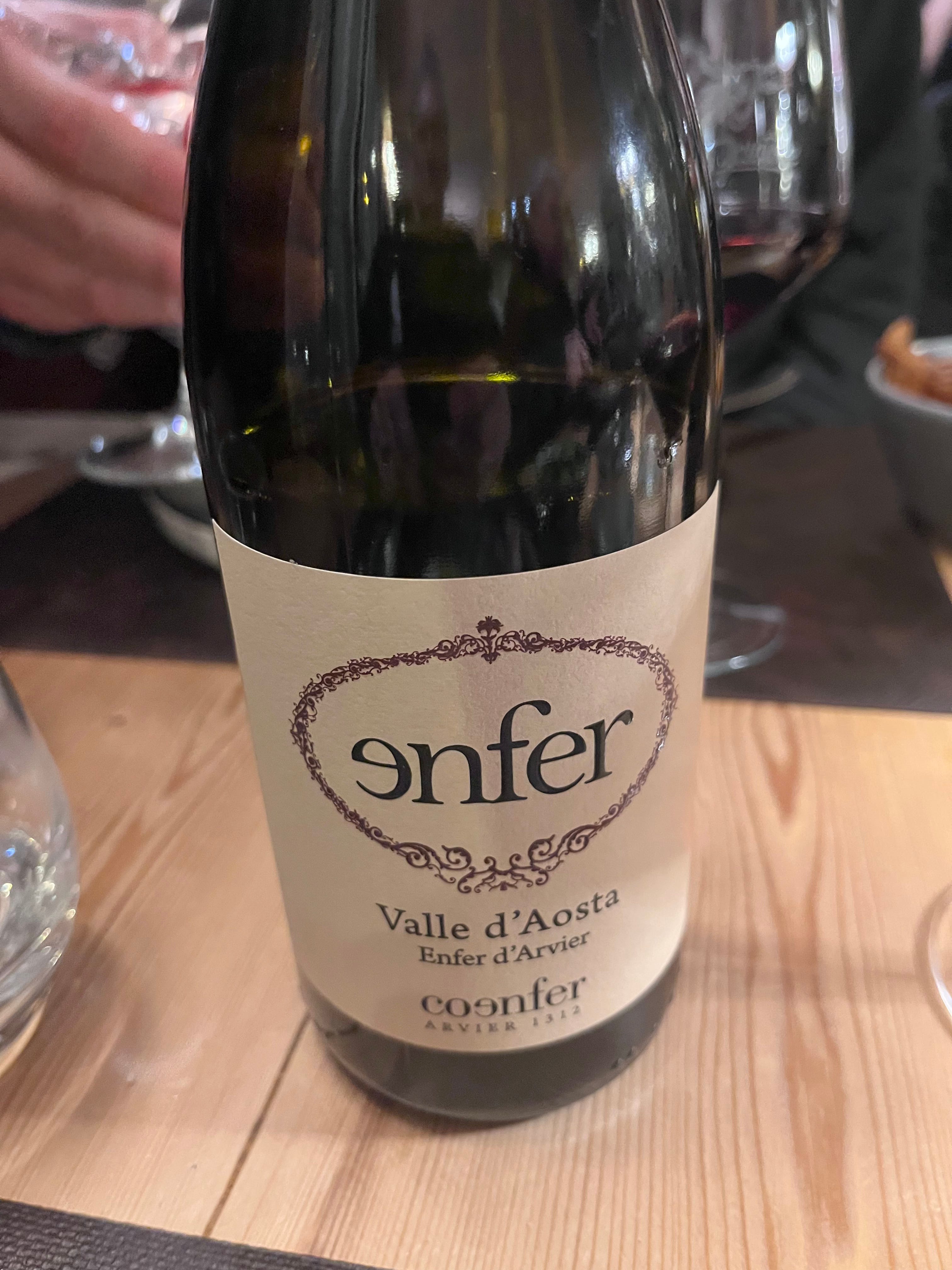
One does not ski in Italy for the fashion, one goes for the great food and large selection of Amare, the herbal digestifs which are great with that last espresso at the end of the day. One lunch we had a risotto, a salad and a pizza to share amongst the three of us and ended up leaving a third of the risotto and one slice of pizza, we also had to lie down before continuing the day, it was that rich. Glorious, but not exactly exercise food. Courmayeur is steep, not exactly a beginners hill and again not great for our boarder friends, tight steep runs with random cliff edge warnings. For those who do like a fast booming run though it is a treat, we were denied by weather on the last day as what could have been lovely new snow overnight ended up being warm rain in the morning and the guy at reception at the small hotel we stayed at in Dollone, very matter-of-factly said “Not a day for skiing” so we bailed and headed home. As well as local herbal ‘Amaro’ Génépi, not to be confused with the French version, we discovered that the Aoste Valley produces some fascinating wines, Nebiollos and Enfer, which even the barman at the hotel was unaware of. Very gluggable.
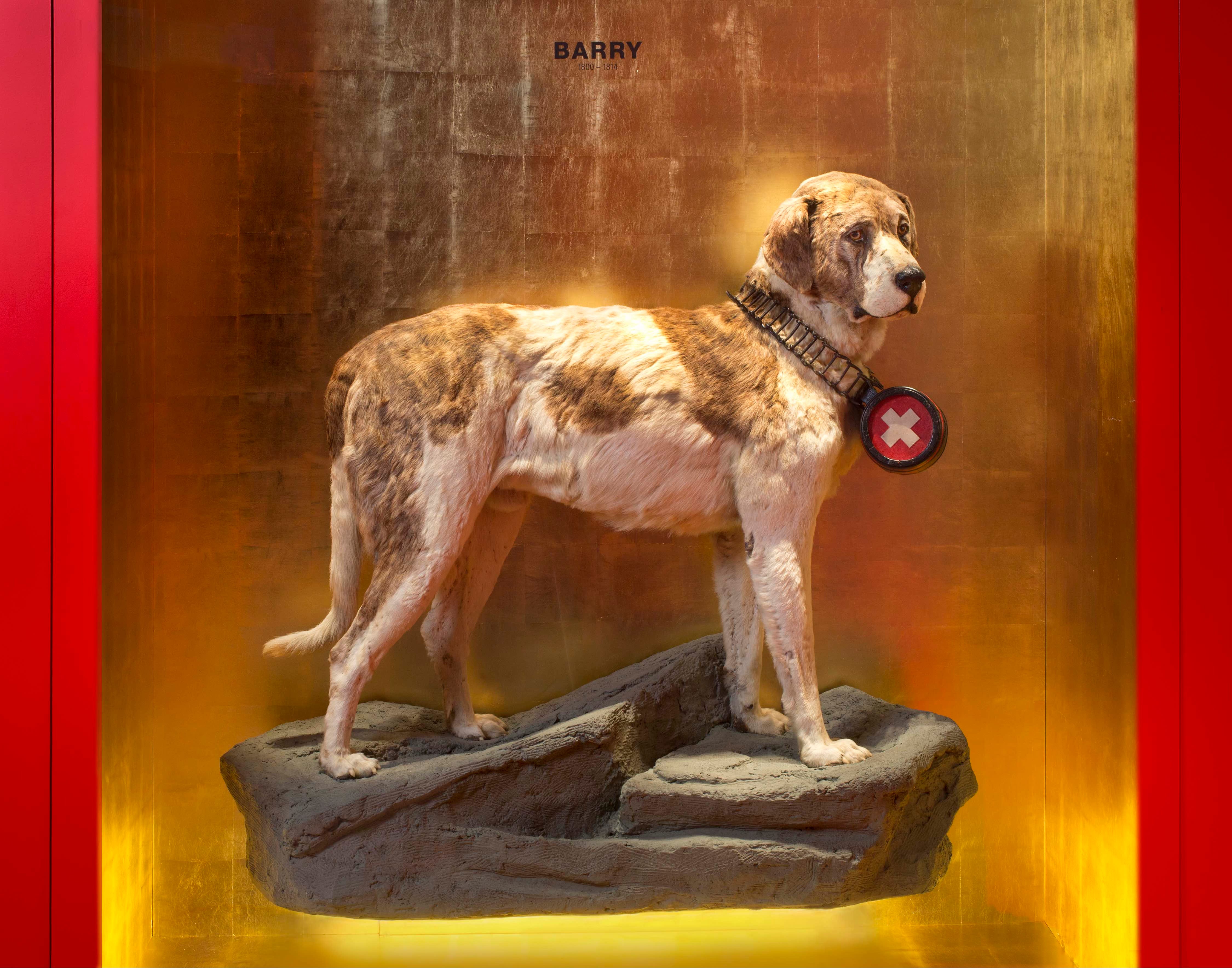
The patron saint of skiers and snow-boarders is Saint Bernard of Menthon, he also looks after hiking, backpacking, and mountaineering and thanks to Pope Pius XI the patron saint of the Alps since the early 1920s. St Bernard was another son of a rich French noble who decided to abandon his familial duties and follow the churching path. He refused an honorable marriage proposed by his father and supposedly had to sneak out of the castle on the night before the arranged nuptials, he threw himself from the window, “only to be caught by angels and lowered gently to the ground 12 meters below”. Desperate to avoid that poor woman he rocked up in Aoste 400 miles to the south, where over time he became Arch-Deacon of the passes and Valleys around Courmayeur, including the two passes over into Switzerland. These today are known as the Great or Little St Bernardino passes. Bernard set up hostels at the peak of the passes, to care for the travelers, many of them pilgrims on their way to or from Rome from France or Germany. The monks over the years continued their work of caring for travelers and in the 17th century started using the local Vallais cattle dogs to help them find the lost or those trapped in falls or avalanches. The dogs became famous and synonymous with the hospices, and like them, they were named St Bernards. The most famous St. Bernard to save people at the pass was a famous dog called Barry, who reportedly saved somewhere between 40 and 100 lives. Barry was so famous that he is commemorated by a statue welcoming visitors at the “Cimetière des Chiens et Autres Animaux Domestiques” a Cemetery of Dogs and Other Domestic Animals in Paris, the most French Dog Ossuary. This elaborate pet cemetery also contains cats, horses, monkeys, lions and even fish. Barry’s actual body is preserved in the Natural History Museum in Bern. Young Barry looks different from the St. Bernard of today because of crossbreeding. The dogs never received any special training from the monks at the hospice, younger dogs would learn how to perform search and rescue operations from older dogs. The dogs only became known as St. Bernards from the middle of the 19th century. Prior to that the ever observant British travelers referred to them as Alpine Spaniels, and generally the dogs were called “Saint Dogs”, “Noble Steeds”, or “Barry Dogs”. Severe winters from 1816 to 1818 led to a catastrophic increase in numbers of avalanches, killing many of the dogs used for breeding while they were performing rescues. In an attempt to preserve the breed, the remaining St. Bernards were crossed with Newfoundlands from Canada in the 1850s, as well as with other breeds which made the breed bigger but not much better for rescue work, regardless of the caricature of the dog with its barrel of brandy around its neck. The long fur they inherited would freeze in the snowy climate of the Alps, weighing them down and reducing their effectiveness as rescue dogs. With the tunnels and helicopters changing the crossing traffic and the dangers for pilgrims being a thing of the past, the Hospice put the remaining dogs up for sale in 2004.
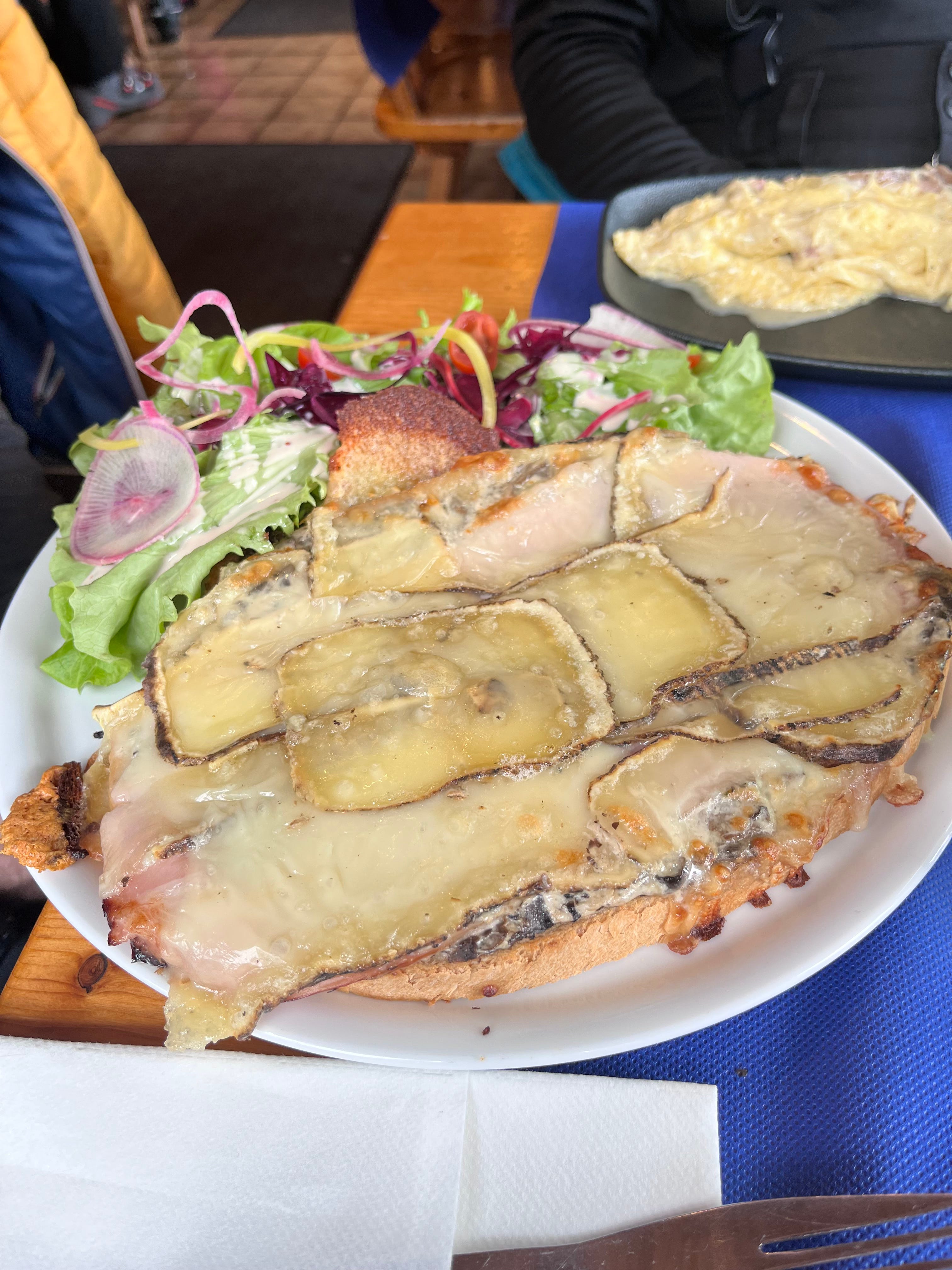
In terms of eating this week we had much cheese, potatoes and ham in the Savoyard places in Avoriaz, Montriond and Morzine, including a spectacular Tartiflette in the village at Abricotines. Buttons Junior had what was loosely described as une croute or toasted sandwich, which ended up being a slice of bread fit for the Flintstones, a large amount of a ham and then several kilos of cheese melted over the top; unsurprisingly he finished the whole thing. There were the normal temptations of Raclette and various fondues, but at lunchtime when skiing it seems both decadent and self-defeating. We did try out various of the Mont Blanc brewery beers, the Ambrée or red, the normal lager or Blonde, their IPA and Poireaux Junior bravely selected the Myrtille which we all agreed tasted like Ribena. I did one of the Green or Genepi variants and that was palatable, a taste of juniper without it tasting completely like cough medicine. We also managed to get a visit in to ‘Ibex’, the microbrewery in Montriond, the beer was great even if the setting in an industrial estate was not the most picturesque, it was full of the local ski workers, which showed it was good value. Italy was a shift in tone food wise. More pasta and of course every restaurant must offer pizza, just in case it misses out on the tourist’s slavery to the dish. The food seemed typical Italian rather than mountain specific offers, but I will be honest the sample size was small. What we did enjoy was the early evening drinks in the center of the old town of Courmayeur, everyone people watching the “passegiata”, and you get a thoughtful selection of foccacia, cheese and ham with your drinks.

Gones for a Song: Now That’s What I Call Music! 80-71

I know I am being hypocritical in trashing Spotify while using it to provide a shared playlist, but the idealist in me wants it and other platforms to just be better. How about making money without crapping all over the content providers? How about being a force for good rather than a force for enrichment and ultimately, part of the overall enshittification of the interwebs. I read about another unintended consequence of algorithmic streaming this week in the Economist, the struggle to make music festivals financially sustainable. Costs of any event are up post-Covid due to shortages of labor and wage inflation, but only the very largest, like Glastonbury, have enough demand to pass the costs on – 43% up on 2019. Even Coachella struggled this year and didn’t sell out for the first time. I used to hate listening to the radio in the US as it was all so regimented and Spotify’s algorithm has done the same to the streaming audiences, they have been all subdivided into smaller and smaller niches, isolated tribes. The effect is completely compounded by only playing songs, and no-one under the age of 40 listening to a whole album in one sitting. If the average Spotifist is listening to half their own choices and half what the shiny man in the space suit has chosen for her or him, then unsurprisingly the exposure is reduced dramatically to not just new songs but whole swathes of music, as they become off limits and not fitting into the target music as defined by the machine. If you live in the UK you have my sympathy; but you do have the joy of BBC Radio 6 Live which is like a day of programming in the spirit of John Peel. (You also have many other redeeming joys like Fulham FC, great beer, amazing cheese, Shropshire, The Ottolenghi empire, the Ebble and Nadder Valleys and Marmite.) The lack of exposure to music outside of the tribe means a struggle, even for what I lazily term Pop stars. As the Economist noted, Rita Ora struggled at the London Mighty Hoopla festival to get much of the crowd to join in on her songs, as no-one seemed to know the lyrics. At Coachella in April the crowd was unmoved by Blur’s set, “Damon Albarn, scolded them “You’ll never see us again, so you might as well fucking sing in”. Whether the problem was that Blur have not really aged that well or the crowd simply didn’t know who the arrogant prick was if he wasn’t in his Gorillaz costume I am not sure. Anyway, on to the music:

Number 80: Blondie “Blondie” 1976. I saw them on their first tour in ‘77, it’s hard to say they were not hyped but it was before the big hits took a punk band from New York to ridiculous levels of fawning and adulation. They had the incredible Clem Burke on drums who was the new wave drummer of choice for several years on the back of Blondie’s success. “Parallel Lines” had the big hits but the first album, which never really sold in the US gives you more of a sense of what a great pop band they were, matching Beatle bowl haircuts and all. The album is classic new wave, basically redoing 60’s garage rock with a bit more swagger: guitars and organ, upbeat and cheesy harmonies.

https://open.spotify.com/embed/playlist/0e3KUCpRXsrZAGNfyazmKr?utm_source=generator

Number 79: TV Girl “Who Really Cares” 2016 . TV Girl made the list primarily as they have a unique vibe and sound that somehow, they have managed to sustain, or at least the original founder Brad Petering managed to sustain after the other two founding members bailed out. I first heard their second EP “Bennie and the Jets” which is great if not actually being the song that everyone thinks it is. It is super catchy, and I was hooked and even though, by the very nature of their stuff having a unique sound, over 4 albums and an album with Jordana, they all sound similar, similarly charming and fun. They all have an odd harmony, and the lyrics are simple love and relationship stuff, and they mix some fun 60’s sound bites and samples, it has a retro pop sound for sure but cool rather than forced or kitschy. In an odd way, you can tell they are from San Diego, don’t take themselves too seriously, which is the opposite of the LA bands.

Number 78: New Order “Power, Corruption & Lies” 1983. One of the most ridiculous decisions I ever made was choosing James White and the Blacks “Off-White” to buy over Joy Division’s “Unknown Pleasures”, as recommended by the guy in the record store in Stoke in late 1979. A snappy Sax meets Punk & Disco vs. one of the most important albums of the post punk era. I finally got into New Order having missed the glory days of Joy Division and stuck with them over the years, but this album I go back to more than any other. Like everyone at the time I bought “Temptation’ and “Blue Monday’ on 12” single and they were part of the blossoming of Manchester based culture with the Fall, the Smiths and A Certain Ratio, Factory Records and Tony Wilson in his pomp. I like how their sound got fatter over time, and they have taken regular breaks when they decide they cannot stand being around other, but they come back for more, I have not loved some of the later stuff but hold ‘Get Ready’ almost as high in my esteem.

Number 77: Rilo Kily “More Adventurous” 2004. Coming out of the ashes of the Postal Service and the Elected (both of whom’s stuff has aged really badly) Rilo Kiley were Los Angeles in song at the beginning of the millennia. Jenny Lewis was a child star and can be seen in ‘Troop Beverly Hills’ and some regular TV show, Blake Sennett was also in TV so how much more LA can you be? They produced 4 albums, and the sound got tighter and less fey as they went on, the stories got darker and More Adventurous is the perfect balance of being great songs, tight arrangements having played together for 4 years by then, without being overproduced or smoothed out like the last real album “Under the Blacklight” which was their most commercially successful. This album sounds closer to Lewis’s solo stuff with that bit of country twang buried in the alt-rock meets Bacharach and David mix, the lyrics are very much a woman’s voice. Jenny and Sennett went from being lovers to bandmates and that never seems to work for long and the band went into permanent hiatus. I have enjoyed some of Lewis’ solo stuff and odd projects with new partners, but she is just too torch and twang for my taste generally.

Number 76: Pulp “Different Class” 1995. Sheffield’s own Leonard Cohen is Richard Hawley but Jarvis Cocker is the city’s Springsteen. He writes about quotidian English life in the dour northern towns where the steel mills are closing and it’s all gone a bit grey. Jarvis is funny and yet serious at the same time, he famously angrily pointed out the irony in Michael Jackson singing at the Brits Awards, surrounded by young children and pretending to be the Messiah, Cocker crashed the stage and waving his ass at the camera and derailed the whole thing. He has released great solo stuff over the last few years, but there were three great albums as Pulp, this is their classic with 4 bonafide hits as well as minor classics ‘The Bed’ and ‘Underwear’. But also check out the peak darkness of “This is Hardcore” (listen to ‘Glory Days’) and the earth friendly groove of “Trees” (‘The Night Minnie Timperley Died’ but the whole album is impressive.) He has successfully avoided becoming a national treasure and after splitting in 2002 the original members have come together occasionally over the years as Pulp since and there is some noise about them recording something new currently.

Number 75: Velvet Underground “White Light/White Heat” 1968. Arguably one of the most influential albums from one of the oddest gathering of people to be such a major influence over 60 years since they emerged strumming and drumming so hard from some basement club on the Lower East Side of New York City. When you listen to the frantic noise of the title song or anything on it and it is so unlike everything else being made at the time, there are no harmonies like CS&N, no plinky plonky Grateful Dead, the Zep/Cream blues boom is from a different planet. It’s only 6 songs and just over 40 minutes long, and the 8 minutes of ‘The Gift’ is a spooky spoken word spiel by John Cale. Side two is ‘I Heard Her Call My Name’ which is shouty and then 18 minutes of the crazed ‘Sister Ray’. The glorious noise is made by just 4 of them, as well as the export from Wales, Cale on bass and keys, the drumming is Mo Tucker and Lou Reed and Sterling Morrison on guitars. The first album featured the German model Nico, a part of Warhol’s retinue on strange ‘femme fatale’ vocals, the band was Warhol’s house band at the Factory in certain respects and he encouraged their collision of avant-garde and rock. Reed went on to his solo stuff and Cale is still making music today utilizing his deep Welsh baritone. The list of bands influenced by this lot would go for two pages.

Number 74: Madeline Kenney “Perfect Shapes” 2018. Maddy Kenney is a young artist based in Oakland, CA who over the last 7 years has produced really strong personal material that goes beyond simple singer-songwriter stuff. Her songwriting skills have grown and got better with every release. She has had help from fellow Oaklandite Toro y Moi but also having become friends with Jenn Wasner of Wye Oak and supported Flock of Dimes her last album featured her on bass on tour and she did the production for this album. There are a ton of single female artists in the alt-rock and surrounding space, but Madeline stands out through great song structures and a desire for clever arrangements over simple and poppy. She is on Substack here and has announced she is recording her 5th album now.

Number 73: Portishead “Portishead” 1997. My parents lived in Portishead, I never lived there but visited enough to appreciate the irony in a band having the name. Beth Gibbons has one of those voices that having heard it you cannot be failed to be moved, I am not a fan of the diva blasting and that is an accusation you would never level at Beth. Quiet yet indomitable, her voice dances over the most trip-hop mix of loops and instrumentation. They had a whole film-noir feel to their music and this album is probably peak Jazz club meets the Mysterons. Bristol had its moment in the sun with Massive Attack, Portishead and Blue Aeroplanes with Geoff Barrow and Beth the last people looking to be pop stars. I probably think ‘The Rip’ from “Third” is the best individual song they wrote, but everything on this album is gorgeous, it cries out to be played late at night with a glass of good whisky that you don’t really need. They technically are still a band and played in 2022, we were lucky to catch Gibbons’ solo tour this year and she sang ‘Humming’ from this album as an encore.

Number 72: Stephen Malkmus & The Jicks “Pig Lib” 2003. When we lived in London again 2004-2008 we had a friend of a friend who worked for Matador Records and every few weeks we would get a pile of CDs, including the fully expanded versions of “Brighten the Corners” and “Crooked Rain, Crooked Rain”. So, I had a belated but deep dive into Pavement and this was also in the pile one month and it was interesting to see Malkmus move into melody and more structured songs, yet without losing that edge. It was like the equivalent of watching Robin Williams go from crazed stream of consciousness stand-up impressions to becoming a serious comedian. He famously played the complete CAN album “Ege Bamyasu” at a festival in Berlin, which made him even more of a star in my book, spoiler alert! Malkmus is a stunningly talented guitarist and writes fun songs, still does to this day. I was lucky to be in SF 10 years later and saw him live at Slim’s, Boz Scagg’s club. 

Number 71: Sault  “11” 2020. I always had a soft spot for well produced ‘soul music’ as it was called before it split into funk, R’n’B and got completely steamrollered by rap and slipped into irrelevance, other than almost tribute versions of acts doing Vegas shows featuring a tiny share of original members, Harold Melvin and the Bluenotes, The Three Degrees, Delfonics. Prince was the last serious proponent of truly black dance music and he died alone. In London however, a candle burns brightly. The presence of truly great jazz players and the melting pot of West Africa, the Caribean and Britain has produced some prodigious talents like Kokoroko, Sampha, Ezra Colective and the daddy of them all Sault. The project helmed by Dean Cover ‘Inflo’ and usually featuring incredible vocals from Cleo Sol, Kid Sister and Chronixx is ridiculously productive, as a functioning cooperative should be. They started with two albums in 2019 “5” and ”7”, two in 2020, then a whole bunch given away in 2021 and this in 2022. They have released 11 albums since 2019, that’s Gizzard Lizard levels of output! It’s a fun upbeat, drum driven journey interspersed with spoken voice pieces usually on a theme.

Gones for a Song: Now That’s What I Call The 100 Best Albums!: 91-100

I had so much fun reading Kevin Alexander and Sam Colt’s “Wax Ecstatic: The Hundred Greatest Albums of All Times” posts that I could not stop trying to have a go myself, it’s a slow summer and who doesn’t like listicle. I enjoy writing the “Gones for good” weekly about life in Lyon, but in the summer we get the hell out of the heat, as do most of the other Gones*, and so for a change I thought I would do some album musings. After all, I am one who delights in all manifestations of the Terpsichorean muse. The clever conceit in their approach was to make it personal for each of them without trying to tick boxes.

My choices differ in that they are mine, based on my listening to music as a soundtrack to my life. I kept it simple and only one album per artist, as opposed to it being half Zappa and the Fall. I am not trying to make a case for being genre defining but for each artist I think the choice is about being the most important to their careers, as short as some of them were and for the major artists these are very much my personal favorites based on a couple of simple tests. Can I play it today and still enjoy it? When I compiled this there were some that I thought I had to include then I played it and realized, like some wines, they did not get better with age, or that my taste had definitely changed. If someone like my daughter has just discovered them and wants to check out their music, which one album would I suggest to start with? I tried to avoid recency bias and the distribution to me tends to reflect when I have been more and less engaged with music, due to having kids, living in the boonies or been led down what turned out in hindsight to be bad alleyways. In a vainglorious effort to keep in my ex-wife’s good books, there was definitely a period in the late 90’s when I bought and played more mellow and less interesting music than I would normally listen to.

There are 5 from the 1960’s, 25 from the 1970’s, 16 from the 1980’s, a mere 8 from the 1990’s and 2000’s each, 32 from the 2010’s (thanks to San Francisco) and 6 from the last 4 years.

I wanted to share a simple playlist for each weekly release of 10, so I can do two tracks, 20 songs to share but check out the whole thing, especially the stuff from pre-streaming times when an insane amount of thought went into play order. Spotify has once again shit all over artists with the recent change to royalty payments so I have been encouraged by a post from The Slow Music Movement to try Tidal (yes Pete, I know you told me) and using Soundiiz I am able to replicate all the playlists I made on Spotify, and it even lets me update artists from Discogs, which is massive. If I can solve the Bandcamp log-in problem, I will have that set up on Tidal too. If, however, the sharing doesn’t work without people signing up, it’s fucked.

Number 100: Tim Buckley – Greetings From LA (1972). Buckley was an odd, tortured soul who bounced from one genre to another over 9 albums in, so his fame never matched his talent. Sadly, now known more for being the father of the Jeff Buckley who also died too young. Father died of an overdose at 28 while the son drowned swimming at night in the Mississippi at the ripe old age of 31. Buckley was raised in upstate New York before the family moved to SOCAL where he had aunts who shared their love of blues music. After high school where he was the big man on campus, he went to Cal State Fullerton but dropped out of college after two weeks to be the new Bob Dylan. He played folk which morphed into folk rock as did everyone in 1965-66 and yet he was open to all styles and influences, which in an odd way is the death knell of a popular music career. He had two insanely productive periods when he recorded 4 albums from 1969-70 and then completely different style for the final 3 recorded in 1972-3. Unable to be pigeon-holed it was tough to get consistent support on radio which at the time was the only way an artist made it. He had two well received folk rock albums and Happy Sad was commercially successful at a time when this was hip in a Dylan, Byrds, CS&N way. The third album, Starsailor, had his probably most well-known song on it, “Song to the Siren”. He then threw out two more albums that did meh and got sick of the singer-songwriter stuff, fired his touring band and in 1970 went funky. This lost him most of his remaining audience, and the album that came out of that was Greetings From LA. Sometimes derided as ‘sex funk’ it is a free-flowing upbeat album that shows off his amazing range and the cool large band and is the classic vibe album. The problem was the sexually explicit lyrics, which believe me kindergarteners would sing today compared most mainstream rap, at the time it meant little to no airplay apart from the, at the time limited, FM alternative stations. Warner Brothers in their intimate wisdom deleted it from their catalog in a couple of years later.

Number 99: J.Geils Band “Live Full House” (1972) The “Detroit demolition” crew were the archetypal urban white blues rock band that took the British Blues invasion and instead of being fused with the country blues of Elmore James and Robert Johnson were influenced as much by Motown and Stax as by Muddy Waters. Yes, it has Magic Dick on the ‘licking stick’, or harmonica as us regular folks might call it, and Mr Geils himself could shred along with the best, but they brought more of a soul and hard old school R&B sound than a pure south side Chicago blues sound. They were fun and their two live albums are masterpieces of the genre, this one and the aptly named “Blow Your Face Out”, both helped along with Peter Wolf’s crazy hepcat ad-libbing between songs. Wolf looks as louche as his name suggests, and dated Faye Dunaway as living proof that it was not just bluster, damn he was cool. Further proof of his undoubtable swagger was when he was at school at Boston Museum of Fine Art, he roomed with director David Lynch. The band from Boston were originally called Snoopy and the Sopwith Camels but as J.Geils Band they had a good run as a bluesy R&B rock band before making the commercial cross over in the early 80’s with most people knowing the song “Love Stinks” from the Wedding Singer and their biggest hit “Centerfold” in 1982 which even charted in England. J.Geils in its original blues form was probably the inspiration for the Blues Brothers and so much more interesting than the stuff that probably made them rich.

Number 98: Sparks “Gratuitous Sax and Violins” (1994) The Mael brothers are still today producing original fun pop music having started in 1971 as ‘Halfnelson’. Although SOCAL through and through, UCLA Arts grads the pair, Russell, he of vocal antics and ridiculously black hair, and Ron, he of keyboards and crazed stare over a Gumby mustache, really broke as a band in the UK. Having relocated to London after a couple of poorly received albums, in 1974 they released “Kimono to My House” and the standard “This Town’s Not Big Enough For The Both Of Us” made them popstars. They have released 25 studio albums up to and including last year’s “Girl Crying Into her Latte” which they persuaded Kate Blanchette to star in the video for the title track. They have not only survived they have managed to stay relevant; they are fucking weird, they live in rather strange personal circumstances but they are loved. The Maels write eminently danceable classics and as much as the techno stuff sounds like the straight man’s Pet Shop Boys, they can do way more than irony. Their lyrics are literary, obscure, kitschy and funny, they write clever songs and have played around with most variations of modern pop that has come up over the last 50 years and made it their own. So out of 25 albums where do you start? Here, it is peak Sparks, all puns, starting with “Gratuitous Sax” and ending with “Senseless Violins”. The hits keep coming “When Do I Get To Sing My Way”,” I Thought I told You To Wait In The Car” and the stunning “Hear No Evil, See No Evil, Speak No Evil”. 

Number 97: Canned Heat “Living The Blues” (1968) I made a stab at a ‘Best of the Blues’ a few years ago called ‘Cultural Appropriations Poster Child – Blues Rock’, which broke down into the original black blues and the white copyists they inspired, you can check that out here. For some reason I managed to overlook the Heat and in a way this addresses the omission, I had this record as a beat up double album back in the day and played the crap out of the two-sided Refried Boogie, which is a 40 minute live version of a John Lee Hooker riff recorded at the Kaleidoscope Club in LA which they ran and operated as the house band for a couple of years in the late 60’s. It also has “Going Up The Country” which they made famous at Woodstock. The Heat went through numerous changes over the year, losing members to overdoses, fights and exhaustion. John Mayall took the bassist Larry Taylor and guitarist Harvey Mandell for his backing band and writes about the Heat and Bob ‘The Bear’ Hite on the “Blues From Laurel Canyon” album. The best line up is the classic one featured on Living The Blues. Versions of the band toured through the mid 2010’s but the heart and soul of Wilson and Hite had passed years before the death of Larry Taylor in 2017, the last remaining founding member.

Number 96: Electrelane “The Power Out” (2004) The first of several angular arty English bands to appear in the listing – spoiler alert! It has that Stereolab drony sound that apes the best of the Velvet Underground, but it has the gorgeous harmonies that make them so much more interesting than many of the Velvet copyists. The band from Brighton, of course they are, wear their intellectualism on their sleeves a bit with one song in French, one in Spanish and one in German. The latter, “This Deed” using a repeating line the meaning of which I have no idea other than its from Nietsche, has the amusing outro of “Hande Hoch” which every older British kid knows means “Hands Up” from jingoistic cartoon books showing brave Tommies capturing ‘Jerries’. The musical arrangements are always interesting as much as the drums keep the rhythm on track, Verity Husman, who did most of the complex vocal arranging on this album has since had a successful career in Avant Garde and improvised music and playing in touring bands including a favorite French band of mine Francois and the Atlas Mountains, but that’s probably because Francois was based in Brighton for a long time. They stopped doing anything much after the excellent 4th album “Shouts and Calls” in 2007.

Number 95: Warren Zevon “Sentimental Hygiene” (1987) Warren Zevon is known for his wry rock songs, which tell of losers and characters out of James Thurber, he was the original for Stan Ridgway’s late-night tales. His real life as a child in Chicago was like something out of a Thurber story: His father, a Jewish immigrant from Ukraine, changed his name from Zivotofsky to William Zevon and worked as a bookie who handled volume bets and dice games for the notorious LA mobster Mickey Cohen. Better known as Stumpy Zevon, worked for years in the Cohen gang, and was best man at Cohen’s first wedding. Warren’s mother meanwhile was a Mormon, so she had enough of the crazy and his parents divorced when he was 16 years old when she moved Warren to Fresno. Somehow Zevon was an occasional visitor to the home of Stranvinsky and he briefly studied modern classical music alongside Robert Craft. Warren is best known for “Werewolves of London” which inspired the movie, and “Lawyers, Guns and Money”, but all his stuff has the common reference points of the ups and downs of life in LA with rock and strong harmonies. He nearly gave up after a crappily received first album and moved to Spain in summer 1975 and sang Country and Western songs in an Irish bar called The Dubliner. Attempting to get him to come home, Jackson Browne wrote Warren a postcard, somehow it works, and he returns in September, rooming with Stevie Nicks and Lindsey Buckingham. The next album gets rave reviews from Rolling Stone and Linda Ronstadt covers two songs to acclaim. His career goes up and down as does his drug and alcohol consumption. This album is his first after a gap of 5 years and features REM’s Peter Buck, Mike Mills and Bill Berry, as Zevon’s band. Michael Stipe sings Harmony on Bad Karma. Odd backing vocals and other stuff from Dylan, Neil Young, Brian Setzer, Jennifer Warnes, Flea and Don Henley. 

Number 94: Little Feat “Waiting For Columbus” 1978. Little Feat were the thinking man’s classic rock band in the mid 70’s, deep themes, technically complex without disappearing up their own ass like Steely Dan had and getting all soft jazz on us. The band featured 3 ex Zappa sidemen so a very LA sound but when they started out in the early 70’s on Warner’s new rock label, they were Dixie rock with a swampy southern spin on things thanks to Lowell George’s lilting voice. George had enough country chops to resonate with many folks without being syrupy C&W like the Burritos or Poco and were not as consciously country folk like the early Eagles output. “Time Loves a Hero” and “The Last Record Album” were their creatively sophisticated peak but live they were always a really tight band and so this album is a kind of best of but it also features the Tower of Power horn section which fleshes out some of the songs to deliver their best funky pomp. From 1969, when he was fired by Zappa supposedly for “Willin” and the “weed, whites and wine” drug reference, until 1979 when George disbanded the group they were one of the most interesting bands around, no blues changes but lots of soul. The band was reformed after George’s death and tour to this day with Bill Payne, Sam Clayton and Kenney Gradney from the original line up. Lowell George’s death from pizza overdose does not make pleasant reading.

Number 93: Orange Juice “Rip It Up” 1982. This band with their sound of Glasgow was one of the break through acts that moved from post-punk New Wave towards a more whimsical pop phase that included the so-called New Romantics. Orange Juice never took themselves that seriously and produced only 3 albums over a 3 year period before the classic “musical differences” but had an immense influence on people as diverse as the Smiths, Franz Ferdinand, Wet Wet Wet and The Wedding Present. Edwyn Collins who sang most of the vocals and wrote the bigger hits had a relatively successful solo career before suffering a stroke in 2005 which forced him to relearn to play guitar and impacted his vocal chords. The title track features one of my favorite in-song shout outs to another song, Collins references the original Howard Devoto fronted Buzzcocks ‘Spiral Scratch’ and the outro on “Boredom” where Devoto can’t be bothered to sing the whole chorus and intones “budum budum”.

Number 92: Neil Young and Crazy Horse “Rust Never Sleep” 1979. So while the rest of the world was obsessed with punk and New Wave Neil Young was also ripping it up and starting again, something he has done often in his long career. A lot of the frustration with the excesses of Prog Rock, corporate rock and pomp which brought about the rest from Punk was equally felt by Young and he showed it in the desire to strip it back to drums and guitars. Neil Young has had such an incredibly diverse and long time in the spotlight, 48 albums and counting. He has delivered some atrocious rabbit holes, “Trans” which was Neil Young does Kraftwerk, “Everybodys Rocking” which is Neil doing the Stray Cats, “This Notes For You” which is Neil meets Booker T and the MGs. In general, you can group Young’s ouvre into two sides, the country tinged acoustic folk and the alter ego is banging feedback soaked guitar rock. This album is the archetypal example of Mr. Hyde to Dr Jeckel’s Harvest Moon.

Number 91: Phantogram “Voices” 2014. I have a bias towards the female voice I think. There were numerous electronica meets rock bands in the 2010’s, The Pains of Being Pure of Heart, Superhumanoids, Hundred Waters, Mr Little Jeans, Fear of Men, and I was fortunate to see all of them over a 5 year period while living in San Francisco. Phantogram were the best of the pack, and this album is representative of the sound. They are a duo from New York, Sarah Barthel and Josh Carter, who record and work together, and both sing and play multiple instruments although live they have a backing band so the sound is harder in the flesh. They have also worked with Big Boi of OutKast and together have a project called Big Grams.

The playlist is here in Spotify and Tidal here.

* ‘Gones’ in local Lyonais patois refers to the inhabitants of the city, its slang for kids so its use in “nous Gônes” is kind of “us kids” . The origin is one of two competing theories: firstly it comes from the Gaulish gunna (“pelisse, dress”). This meaning is found in the old French gonne (“dress”), so kids clothing. The other is that it comes from the ancient Greek γόνος, pronounced gonos (“child”), how ancient Greek gets into common usage is beyond me.

Gones for good: Episode 11 Disquaires, drugs and discoveries

Lyon made an unscheduled and unflattering appearance on France 2 a few weeks ago. France 2’s news programming is the most watched, like BBC’s or NBC’s nightly news, it is more generally watched than other populist or entertainment-focused options. They have a serious approach to the news, slightly undercut by the female news anchors still tottering around in 5-inch heels; they may be occasionally allowed to be in jeans to show they are not overly buttoned up, but the jeans are ferociously tailored, and the heels are sharp. The men always and without exception appear in blue suits, white shirts and often with blue ties. The royal blue suit, a fashion item not seen in the anglophone world since the 80’s, regularly makes an appearance. Lyon’s appearance was on a 45-minute special ‘exposé’ featuring an undercover examination of the urban drug trafficking in one of Lyon’s suburbs, the Tonkin public housing complex in Villeurbanne. The hidden cameras were concealed among the efforts of a group of citizens who formed a collective effort called Tonkin-Paix-able, looking to ensure a peaceful Tonkin. The group rock up regularly in the middle of the major drug exchange with white t-shirts, rubber gloves and trash bags and ostensibly remove the detritus of the marketplace, ironically less used needles and more fast food packaging and beer cans thrown down by the dealers as they sit, hoodied and bored, on make-shift cardboard seats on the steps of the large public building opposite the tram stop. The collective tries to engage with the dealers to keep things as civilized as possible for the neighbourhood.

The story is common across France, not just the large banlieues that ring the major cities. Banlieue means suburb in a strictly etymological sense, but in France it is more synonymous with what Americans refer to as ‘the projects’. Public housing is a key part of the French social contract. The majority of French people rent rather than own houses and long term rental contracts, ample legal protections for tenants and local government rent controls mean it’s a simple long term choice for many working class people in the large towns and cities. Much of the rental housing is state owned, usually by the local council, some are private or charity but most is truly public housing. Through a natural process of selection recent immigrants get concentrated into the less well positioned cités, as in the movie images of ‘les banlieues’ in Marseilles or the Paris suburbs, isolated for many years without access to good public transport. In these areas, poverty and lack of opportunity follow declining standards in the schools and those who can do, move away, further concentrating the young poorly educated boys, not really men, into a process of boredom and finally relief through working for drug trading gangs. Selling ‘stups’ as in ‘stupifiants’, is a way and for many the only way for kids to make a living, other than riding scooters and bikes delivering food to the richer areas. The biggest trade is in weed or hash, with coke and crack some way behind. It’s a cash business and profits flow upwards, so at the sharp end the kids are not covered in gold chains, nor driving Mercedes SUVs in some wannabe rap video lifestyle. They all wear the same drab outfit, black Adidas jog pants, black Nike ‘baskets’, black zip hoodie, black baseball-cap and the one sign of affected affluence, a faux Gucci man-bag strapped across the chest.

France still gets shocked when the turf wars escalate into deadly violence, and even a single death will usually make the nightly news. Macron, in one of his studied efforts to deprive the far right of its rallying points, recently dropped into one of the major banlieues of Marseilles, La Castellane. On camera, he told residents that his newly announced campaign will “try to destroy the networks and the traffickers.” Macron said 82 people have already been detained, with 60 of them remanded in custody for further questioning. “Drug trafficking is a growing scourge” and “the situation is very difficult” in Marseille and other cities, he said, adding France was in the throes of a “battle” against the dealers. One of the ‘difficulties’ is that if the dealers are under 16, and most are, they cannot usually be arrested. The other glaring problem is the obvious demand for weed and an almost blind denial of the simplest thing to do would be to regulate the sale and take the clandestine market public. The wine lobby is dead set against legalizing weed as it watches Gen Z drink more IPA than vin de table. The French are happy to regulate the crap out of tobacco and vapes, but not marijuana. Go in a tabac today, and you are confronted by pack after pack of cigarettes with no visible branding and statutory stipulated 2.3rds of the packaging displaying pictures of cancers and post-mortem lungs. There was a story this week, continuing the theme of the “national effort” to save the tabacs. With some 23,300 shops across France, 41 percent of which are located in towns with fewer than 3,500 inhabitants, tabacs are an important part of French life, even for non-smokers. We regularly get parcels delivered to our local tabac as it’s often the free or cheaper option. This week’s new effort was paying the expanding no-touch automatic freeway toll charging. Last Fall, it was them selling ammunition for hunters. Why not allow them to sell weed? Solve all the small town angst and big city crime in one joint.

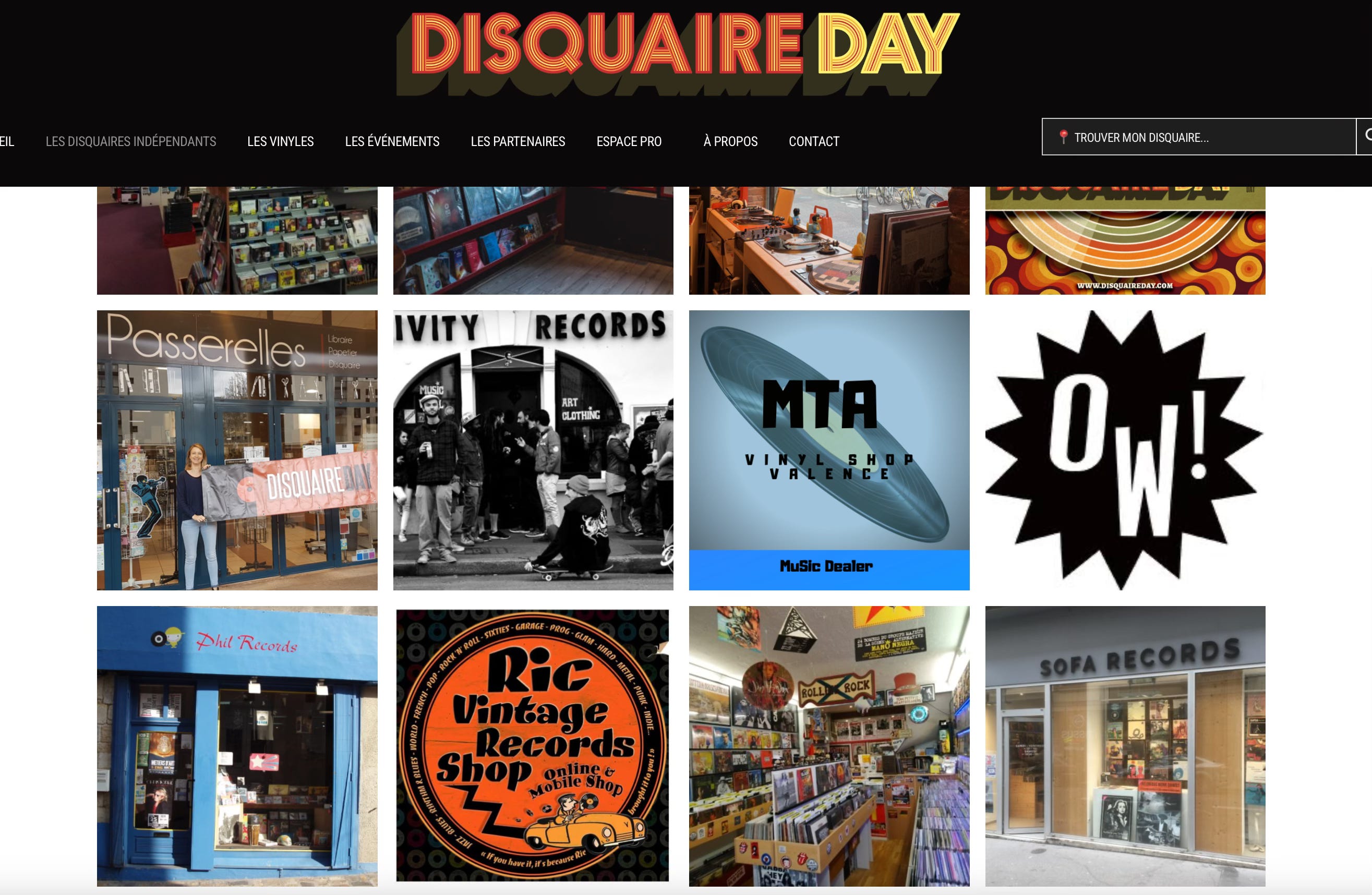
Saturday was the saint’s day of independent record stores, Disquaire Day or Record Store Day. Fuelled by special one off releases or collector’s items in the making, April 20th is a celebration of small and large record shops and Lyon is blessed with lots of them, most within walking distance spread around the narrow streets at the foot of les Pentes de Croix Rousse, a short walk from the Hotel De Ville. We made our way through the weekly pro-Palestine rally and the now regularly red stained fountains symbolizing the daily death in Gaza to my favorite, Sofa Records. They have an insane collection of West African and Hi-Life music and always something intriguing playing. They have good rock and pop stocks as well, and the shelves are well organized and easy to browse. Maybe it is completely unlikely that I would find a real gem of a discovery as those are now only found in charity shops, but it’s still a pleasurable way to while away some time. There was an interesting article in last Friday’s Grauniad about record collecting, ahead of RSD. In the UK even the charity shops have worked out that a quick look on Discogs will turn a €4 bargain into a €25 special display.

I didn’t need a Rumours picture disk or a “réédition splatter” of Sabbath’s ‘Paranoid’, so my shopping was less focused on the ‘special RSD releases’. I found the following treats: 

“Lets Make Up and Be Friends” – The Bonzo Dog Band’s last album before Stanshall’s death (but featuring the first appearance of Sir Henry Rawlinson).

“TANGK” – Idles – independent record store version, new album from the best men in dresses.

“Desolation Boulevard” – The Sweet. The vainglorious effort by the Ballroom Blitzers to shake off their Glam-Pop reputation with a hard rock record.

“Flock” – Jane Weaver – a bargain pink vinyl version of her 2021 album which features vibes and who can resist a good vibraphone sound.

“Actual Life” – fred again – The first of the ‘Life’ trilogy, silver vinyl.

“Pretty Hate Machine” – Nine Inch Nails. A gift for Rachel, who is currently inspired by Reznor and tough to find on vinyl.

“Live Montreal 1971” – Frank Zappa. A semi-official bootleg from a radio broadcast. Its the ‘vaudeville’ band with Flo and Eddie on vocals, so all Fillmore 71 favorites plus one of the songs from the eponymous Phlorescent Leach and Eddie album from 72, which I have never seen on any official release.

If you would like to sample these treats, listen here.

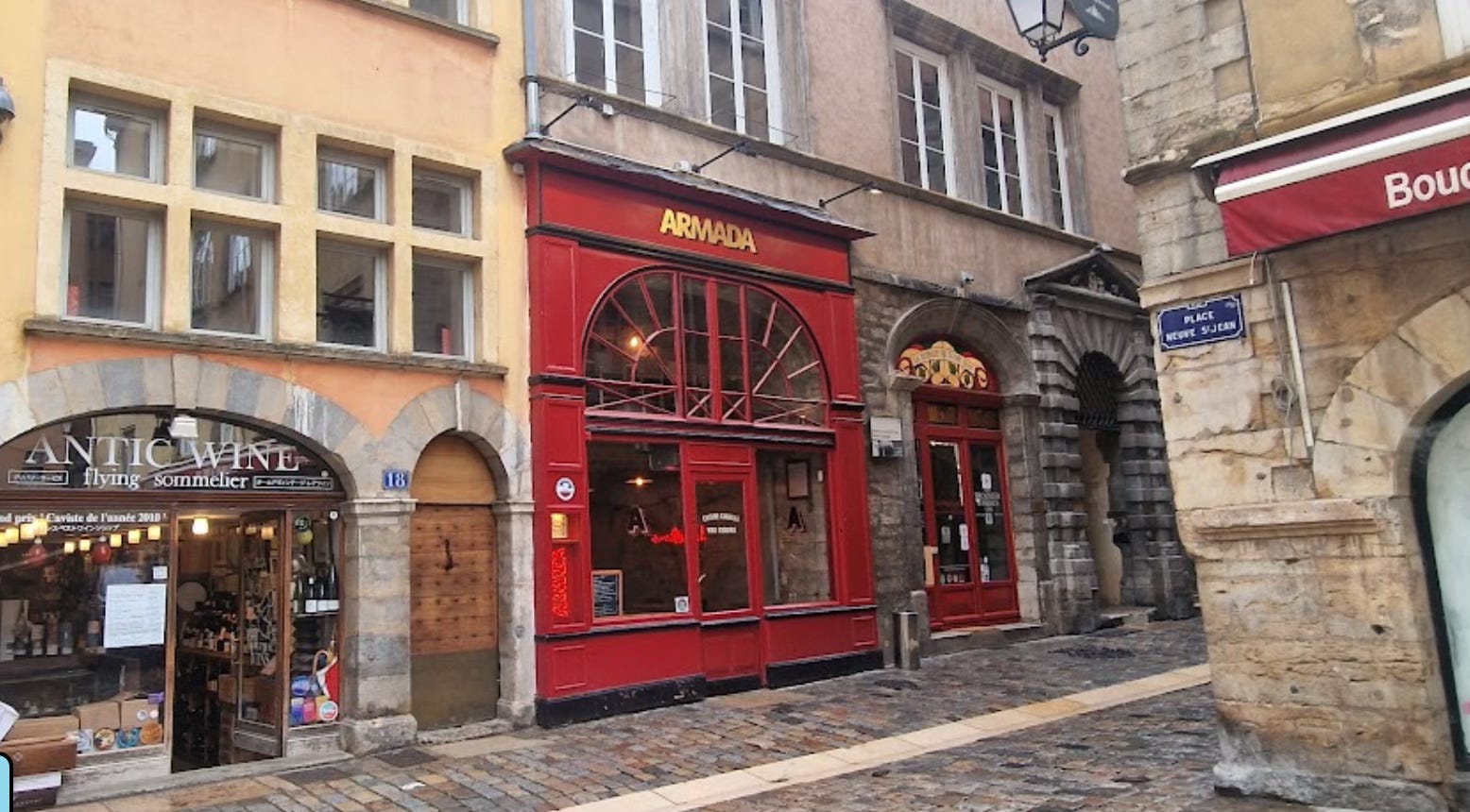
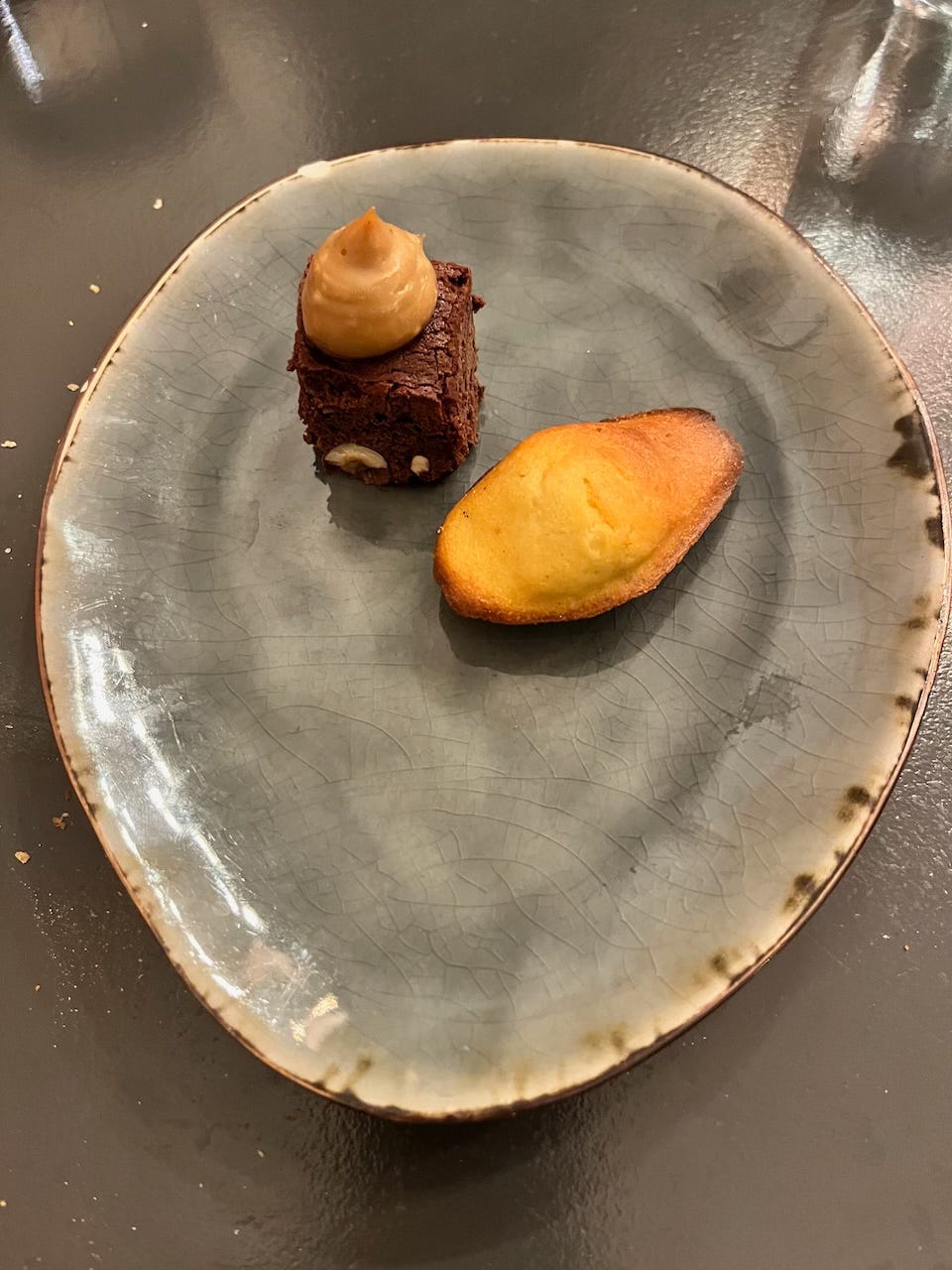
After a week in the mountains living on cheese and ham, it was good to get back to proper nosh. Friday night we went back to Armada on Rue de Boeuf in the old town. The first time we went there was by coincidence when they publicly made Le Fooding Guide, so it was interesting to see how they had adapted to their new fame in the intervening couple of months. They are still super friendly and faithful to the original vision of fun food. A modest space, sharing plates but not twee, tiny portions that you end up ordering 3–4 dishes a head. All very very good, the veggie driven starters were spring encapsulated, which was welcome after the winter of Tuesday and Wednesday in the shadow of Mont Blanc. Next door is Antic Wine, so they occasionally have specials from the neighboring cellar, and we had an amazing 2013 Montlouis followed by a 2011 St Amour. Some Loire whites are known to age and Chenin is a good grape to do that but a 13-year-old Cru Beaujolais is not common outside of Morgon, so we were blown away how good this was. The best dish of the evening was a lamb spring festival on a server, lamb from the Ardeche 3 ways, the fatty belly end grilled, the main rump chop served ruddy and the sweet breads done quickly on the griddle. All served over peas, pea pods and asparagus. The chef proudly delivered the two deserts and happy to chat about what made them special to him and ultimately to us. Among a ton of tourist traps, the modern Francis Drake would be happy to stumble into this Armada.

If you would prefer to receive this via Substack stroll over here: https://open.substack.com/pub/anecdotesandantidotes/p/gones-for-good-465?r=tnn6j&utm_campaign=post&utm_medium=web

Gones for Good: Episode 9 – Cheese coursing

April the first passed with several striving consumer brands demonstrating their hip edginess by self-knowingly winking at the April Fool’s tradition with hot dog flavor soda drinks, stoner-speak decoding apps and Korean BBQ scented deodorant sticks. It does not really translate in France, as their tradition for April 1st is a unique and esoteric take on pranking someone by attaching to their back a paper cut-out of a fish. So the worst that can happen to you is that you are the Poisson d’Avril for a period of time until you work out why everyone is sniggering and yes, it’s you, you have a paper fish stuck to you! 

The origin of this odd little tradition is that until the 16th century the new year was celebrated at different times, in different regions of France; the first day of spring in some places, Easter in other, 1st of April in others. Charles the IX decided to standardize the calendar, and the new year officially started in 1564 on January 1st. The word didn’t get distributed that well in pre-industrial days, but when the King’s Messengers finally spread the word, there were still some folks celebrating the turn of the year in April and giving the traditional gifts of fish – partially tied to the ending of Lent. The sophisticated and well-informed took the piss out of the rural rubes by giving them pretend fish gifts. So if you end up the butt of the office joke and everyone is sniggering behind your back as you discover a paper fish sellotaped to your designer hoodie, then blame King Charles.

What the French do take seriously is the overall quality of life, more as something to debate about rather than boast about. As much as arriviste foreigners we look at France and revel in its positive contrast with the tattered putrefying carcass of our homeland that once was England, or the political dumpster fire of a gerontocracy in thrall of big business that the US has sunk to, the French always find something to complain about. This week, the French woman’s magazine ‘Femme Actuelle’ published its list of top 50 places to live in France as a woman. They used data from the Ministries of the Interior and Health but also from numerous agencies known intimately to the French but who remain to me just one of many confusing collections of initials, including INSEE and CAF. They evaluated the quality of life for women through the comparisons of factors such as health, access to housing, public transport, security, juvenile delinquency and even pollution. For each, they gathered the most relevant indicators, but Femme Actuelle admitted that this was not always easy. The data had to be available, reliable and comparable for all the competing cities. As an example, they could find no reliable publicly available measures of the share of green spaces or pedestrian zones available in a municipality, although, under certain conditions, women favor them. They finally selected twenty-one indicators, to which a weighting coefficient was applied, according to the importance the magazine attached to them, focused around 4 key axis to derive the final ranking: the provision of specific care, security, the living environment and the action of the municipal authorities. Lyon was happy to receive the fourth place in the ranking behind Strasbourg, Rennes and Bordeaux. Paris was 7th and in last place Perpignan, just behind monied Antibes in 49th. Lyon takes the green space and pedestrianization super seriously, so might probably have scored higher if that was one of the measurable common factors.

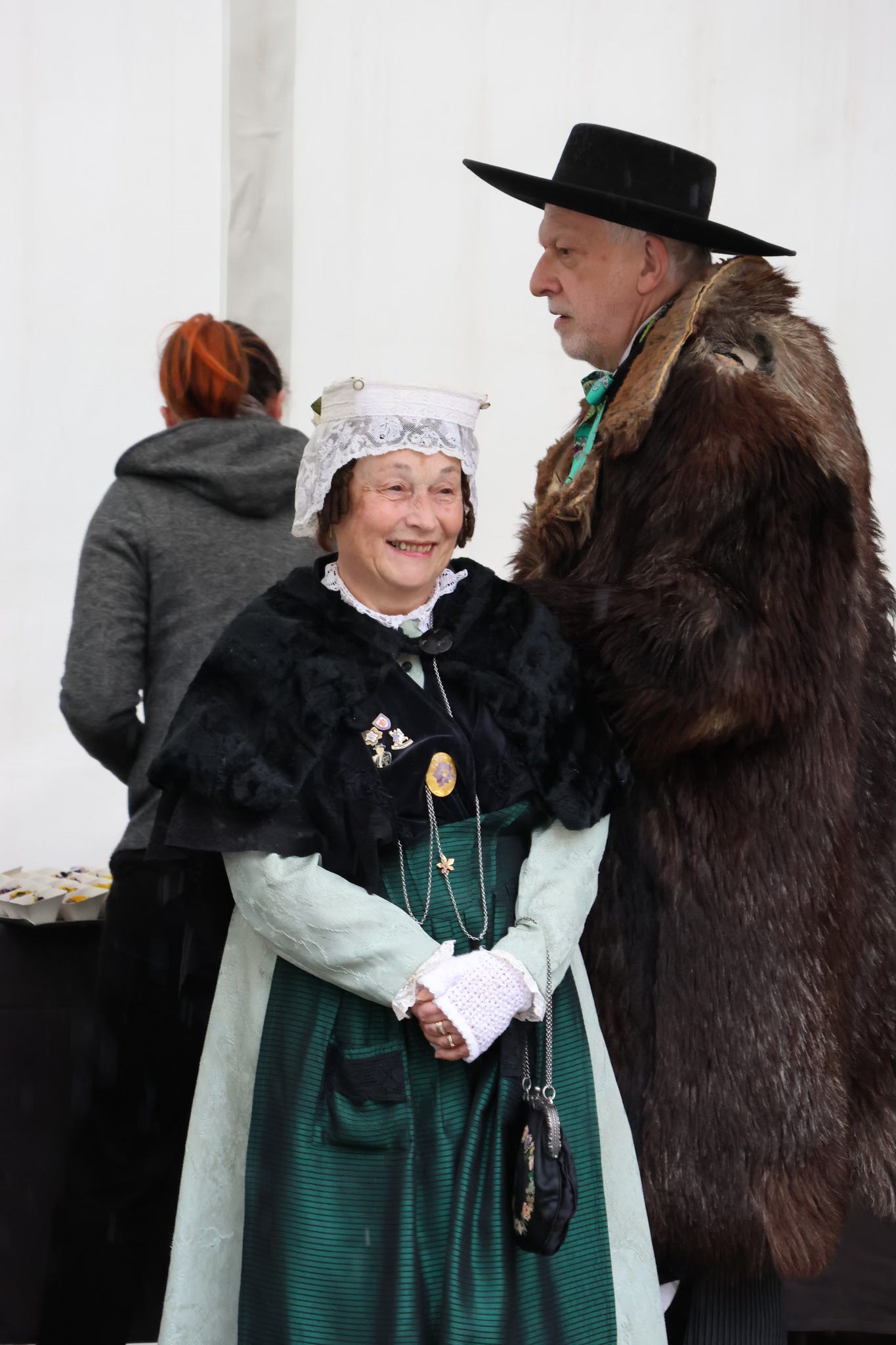
The French also take cheese seriously. As part of Charolles’ inaugural Gourmet Festival, “Les Rendez-vous Gourmands” there was an event hosted by our local L’atelier des fromages, the cheese workshop, which being out of Lyon for the week we took advantage of. This was in contrast to Maître Doucet, who hosted 3 four-handed dinners at his Michelin starred Maison Doucet, each one featuring a guest pair of hands from another 1 or 2-star chef. Those little beanfeasts were €250 a head, each one; so I would be intrigued to find out how many locals ponied up for more than one of these. Doucet is a relentless self-promoter, appearing on the French equivalent of Good Morning America, cooking Charolais beef during the recent Agricultural Foire in Paris. That was the one that Macron spent an unprecedented 14 hours at, to prove his ‘man of the people’ standing. I am sure Doucet has a well-heeled fan base who made the journey up from Lyon or down from Paris for the rendez-vous. He was there as the event was kicked off on the Wednesday morning, which coincided with the weekly market, so the town was bustling, even in the incessant rain. They had drinks and folk music and the local folk culture society, Les Gâs du Tsarollais turned out in their peasant costumes of yore, which for some reason seem to include fur coats.

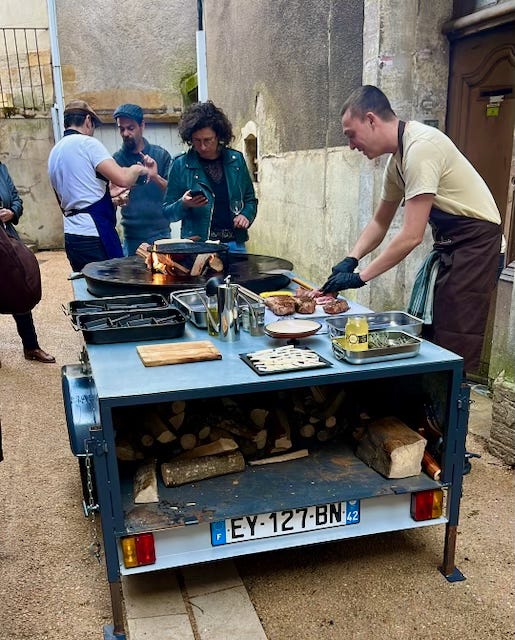
He is a good chap, our cheese guy, literally as his name is Bonhomme. He provided an “Atelier Brasero Autour Du Fromage” of 5 courses with drinks included for €30 a head. The rain and wind fortuitously decided to bugger off that Thursday morning, and so we had a warm spring evening around the Brasero, tucked away in the alley between the cheese shop and Place Baudinot. The Brasero for the unitiated, (myself included before the evening) is a large circular wood-fired grill with cast iron cooking surfaces above and surrounding the vented fire box.

We were welcomed to start the evening with a selection of cheese appetizers with a local Blonde beer. Each of the cheeses was given a formal introduction by Pierre Bonhomme, all examples were Fromage Fermier, which is a subtle but critical distinction. This means it is made on a farm and not in a large dairy, it brings a link directly from the animals raised to provide the milk, the land they graze on and the hands that work the cheese. We had a winter’s milk Beaufort, a fruity Comté (16 month old), a local Charolles AOP goat cheese and a mild sheep’s milk blue cheese.

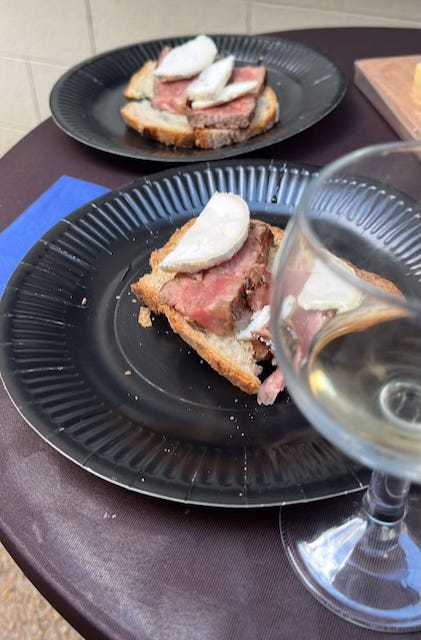
The Brasero kicked into action and we had local beef grilled then bathed in an oil-based dressing of garlic, wild thyme and local honey. It was served with a slice of another Charolles goat-cheese and drizzled with honey and served with a White organic St Veran, which is the closest quality white wine to us. Pierre explained that Charolles as a AOP, appelation d’origine protégée, has one of the highest proportion of fermier producers, with each hustling to make the little towers of cheese, supposedly inspired by the Tour De Charles le Temeraire; it takes 3 liters of milk to make 1 Kg of cheese.

This was followed by a take on the traditional raclette, with a chilli infused raclette cheese, heated to bubbling hot served on bread with generous options of charcuterie to accompany it. This was served with a Fleurie.

For the traditional cheese course, we then had two contrasting but stand-out strong cheeses. There was a lively discussion about which are the ‘strongest’ tasting cheeses and Montgomery Cheddar, which he sells, got an honorable mention alongside Maroilles and Munster. He served Epoisses, which was made originally by a religious order but has been made in Burgundy for over 500 years, its orange rind a result of the regular brushing with Marc de Bourgogne, an eau de vie. There remains only one fermier producer still producing it today. This was accompanied by another strongly flavored rich cow’s milk cheese, Chaource, from 2 hours north-east of us on the way to Champagne. This was another farmer produced and refined cheese, Fermier AOP. We washed this glorious pairing down with Hautes Cotes De Beaune and had a serving of whole grain Dijon mustard on the side. 

On the subject of strong cheese, we then had a tasting of Pierre’s ‘Fromage Fort’. This is a typical poor man’s food that takes leftovers and recreates something new. Generally it’s the odd pieces and leftovers of cheese that remain, shredded finely and mixed with cream or yoghurt, some alcohol (white wine or marc) and some also mix in leek or other vegetable stock. The beaten, smoothed version of a cream cheese is then eaten on toast. It’s an acquired taste and depends ultimately on the recipe as it is very sharp, pungent and acidic. Pierre makes one with only goats milk cheese or only cows milk cheese, never with sheep and never with blue cheese. If you like those acidic Danish blue cheeses, you will like Fromage Fort. I think you could also use it to revive olden wooden furniture or polish tarnished jewelry, not a great fan; although Dan, who was with me, loved it.

We finished the cheese exploration with Salers on whisky-flamed toast and the same Irish single malt whisky on the side. By this time most of the social awkwardness in throwing 16 people together had melted around the now-cooling brasero, so we had a rambling discussion on salted butter, whisky and whiskey, Brexit and walked away full, satisfied and happy into the dark evening streets, no fish stuck on our backs.

Gones for good – Episode 6 blossoms amongst the beef

Green, yellow and pink. The colors of the Charolais countryside are ‘other side of the rainbow’ technicolor contrasts after the cement and tarmac gray of Lyon in March. The green is so lush and bright that it has a hyperreal quality as the sun courses across crisp, clean blue skies and appears to welcome us back to the country. We welcomed visitors from Brooklyn who had spent some fun but rainy days in Paris, before the TGV delivered them into the underappreciated former industrial belly of Burgundy at Le Creusot. We had plans for an indulgent culinary tour of our part of France, a bit of a blow out, a ‘bonne bouffe’. 

Les vaches Charolaises

As we headed south into the Charolais the weather smiled on us, and we were greeted on either side by the white cows of the local breed, nuzzling their way through the pasture in their small hedge rowed fields. As you get further south into the more hilly and higher elevations of the Brionnais, its sister breeding ground of the Charolais beef cattle, the fields are edged by dry stone walls that are familiar to anyone from rural England. The fields are small to allow simple rotation, avoiding over grazing, the walls provide shelter from the wind in winter. They are too small and uneven to be used for arable crops at scale, so we are spared the pesticide induced monocultures of the north of France. We benefit instead from lots of butterflies, bugs and crawling things and all the birds and small animals that feed on them, and the larger birds of prey and larger animals that feed on them in turn. The forested parts are full of large wild boar and to a lesser extent deer, which keep the local hunters busy every winter weekend and provide a steady supply of ‘saucisson de sanglier’, dried wild boar sausage, to the local shops. They -reintroduced wolves to the Morvan, a forested mountainous plateau 45 kilometers to the north of us, Romanian wild wolves. Much to the annoyance of the local sheep farmers, the wolves will do their wolf-thing regardless of man-designated borders and fancy lamb in their diet from time to time. The protests of the farmers are smoothed away with cash payments for lost livestock at market pricing, quietly and quickly, like a wolf in the night the problem comes, and the problem goes away.

Our grand bouffe took place on March 14th which was the feast day of St Mathilda. Unlike many of the saints who followed a path of denial and simple life, our Mathilda was a Saxon Queen and was used to feasts and wine. She was the first of what are referred to as the Ottonian Queens, she gave birth to the first King Otto, who then had more descendants all named Otto. Her lad Otto is ‘important’ as he restored the Holy Roman Empire. Charolles ended up being an island of the Holy Roman Empire, part of the Dukes of Burgundy’s lands and the seat of Charles Le Temeraire. Charles’ father Philip the Good was the most powerful of the Dukes of Burgundy and responsible for the creation of the united low countries of what is today Holland and Belgium. His troops captured Joan of Arc at Compiegne, and he handed her over to the English, who with the help of Burgundian judges burnt her for heresy. Phil was a bit of a player, he married three times and had three legitimate sons, all from his third marriage; only one, Charles the Bold, reached adulthood. Philip had 24 documented mistresses and fathered at least 18 illegitimate children, who are bluntly called things like “Anthony, bastard of Burgundy, Count of la Roche” or “Philip, bastard of Burgundy, Bishop of Utrecht”. Anyway, Mathilda was a good wife herself and gave birth to two other boys and 2 girls, as well as Otto. When her hubbie, Henry of Saxony, shuffled off from his mortal coil, she used her not insignificant wealth to set up convents. Not a great number, just 3 and they tended to be finishing schools for the daughters of powerful families, so once again hardly a path to beatitude through pain and suffering. It seems it was easier to become sainted in 968, when Mathilda died, than later, or they tightened up the rules to make it a more exclusive club.

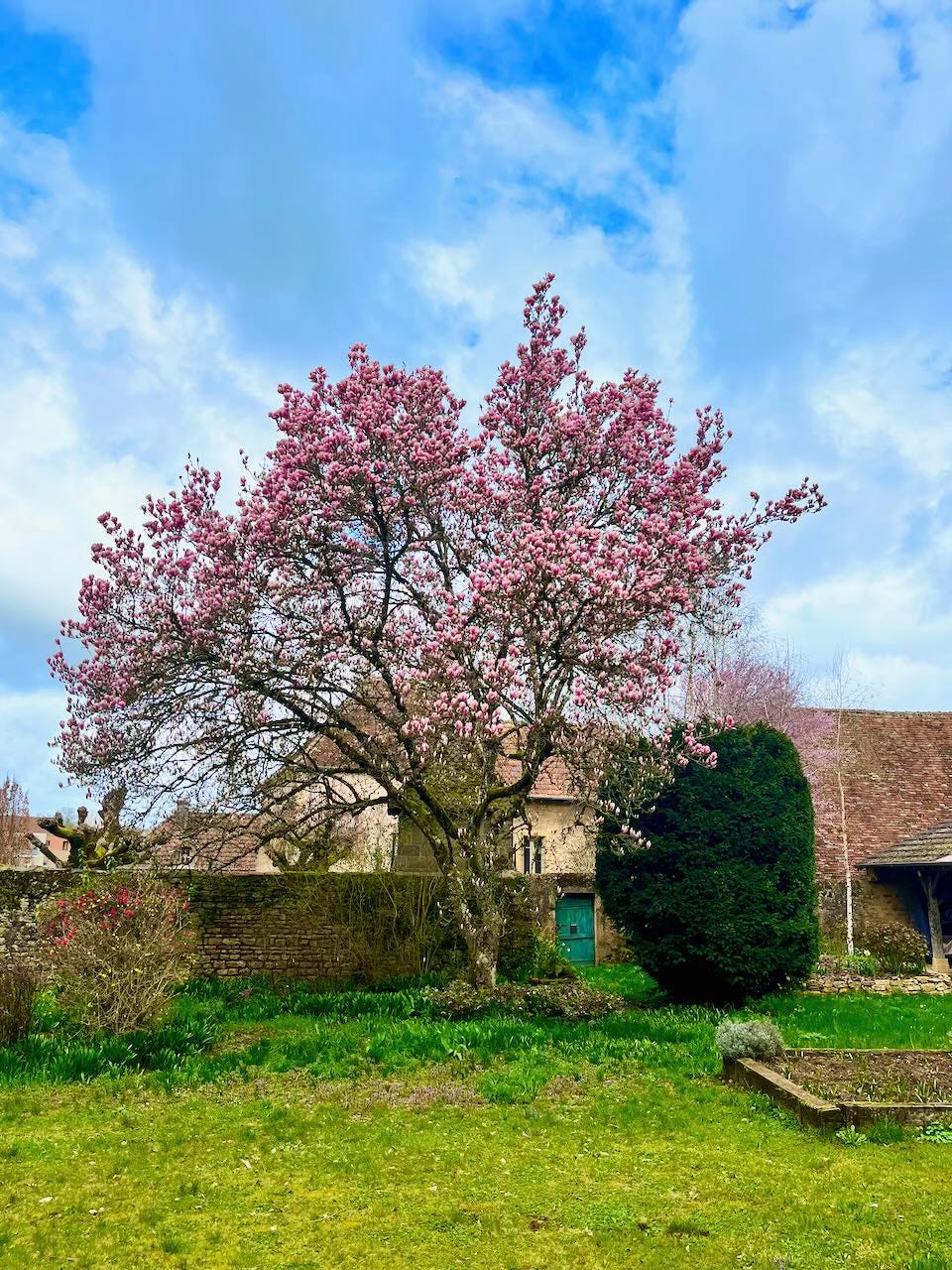
The daffodils are out, as is the forsythia, bright shards of yellow catching the eye as you walk the lanes. We have a grand old magnolia tree in the garden, and it was just breaking into its pinkness when our visitors were here, but today it’s barbie-ing out. In two days it completely opened up, partly as those two days were warm and bright in a way that they should not be, in mid-March. 

As it mentally to me was still winter, we planned the local delicacy, Boeuf Bourguinon. It’s an easy dish to cook in advance, so I would not be faffing around while we were all chatting and enjoying drinks. In such a beef area you simply ask the butcher for ‘Bourguignon’, he then asks how many people and whether you want it ‘gelatinous’ or not? That would not translate well into English, as we have terrible memories of gristly meat, especially from school dinners. I asked for ‘half-and-half’, M. Jardin, the butcher, then cut the chunks off the piece of beef in the right size. If the beef is well browned, and you cook it in the wine for a long slow time, the gelatin dissolves completely to help make the liquor with the onions and mushrooms gloriously unctuous. I had the luxury of cooking it slowly most of the day, then letting it sit for a couple of hours before rewarming to serve. It was to be served with a simple Baker’s Potatoes, ‘Pomme de Terre Boulangère’, another easy comfort food dish that cooks quietly while you do more fun things, like snacking on foie gras on brioche and a glass of 2012 Monbazillac. I did manage to get distracted enough making the starter that I burned the first few slices of brioche in the toaster, even at a setting of 1 it has so much butter in it that it needs a constant eye and attention, not one of my strong suits, especially if talking. I was all for scraping off the burnt bits with a knife, but that was universally rejected as too English, 1960’s post-rationing thinking. 

Eating salad as a starter rather than an accompaniment or later palate cleanser is a very American habit, but in my defense the local Mich 1* place is now serving ‘Salade Hivernale’ as an Entré, so if it’s good enough for Maitre Frederic Doucet, it’s good enough for me. The pears and walnuts are at the end of their season, but they nuzzled companionably with the mid-winter mâche (or Lamb’s Lettuce, as it’s known in England, although I have never seen it in the US on either coast), pea shoots and a local hard goat cheese, Pyramide d’Argolay. I am a massive fan of Alsace Gewurtztraminer wines, when they are dry and balanced they are the perfect accompaniment to this green mix of flavors and textures, the hint of sweetness within the dry backbone of the wine stands up to the Banyuls vinegar in the dressing. We had a cheering 2019 Wolfberger Gewürztraminer Hatschbourg. It’s not particularly expensive or a ‘grand vin’, Wolfberger is the local cooperative wine making organization for the picture-postcard village of Eguisheim in the Alsace, just outside Colmar. We visited in 2022 and picked up half a case of this Gewurtz and a full case of covid while we were there. 

We washed the beef down with Givry Premier Cru. That is the closest, most serious Burgundy to us. I bought this from the winery of J.P. Berthenet, a friendly family winery tucked away on the hillside of the village of Montagny. You could drink his Montagny as an easy-going weekend burgundy, but his Givry is great and has a bit more elegance. This was a 2018, it had a bit of bottle age but was still relatively fruit forward, perfect for the richness of the Bourguinon. We also had a 2020 Clos de la Servoisine, Givry 1e Cru from Deliance Freres, less mature and tighter, but it helped keep the conversation flowing through to the cheese course. We had some local Charolais ‘mi-fraiche’ goat cheese, a local Palet de Vache, a serious Maroilles from Lille that had the fridge stinking for a week and a big hit with the crowd, Shropshire Blue.

The meal ended with a pear tart from the local bakery Boulangerie L’Éclair-cie. Like many of the bakers in town, his bread is very good if uninspiring in its selection, but that is down to local tastes. Where he does stand out is his pie crust, that crunchy butter texture comes from a really hot oven and great technique. We had a smashing time, as you can probably guess.

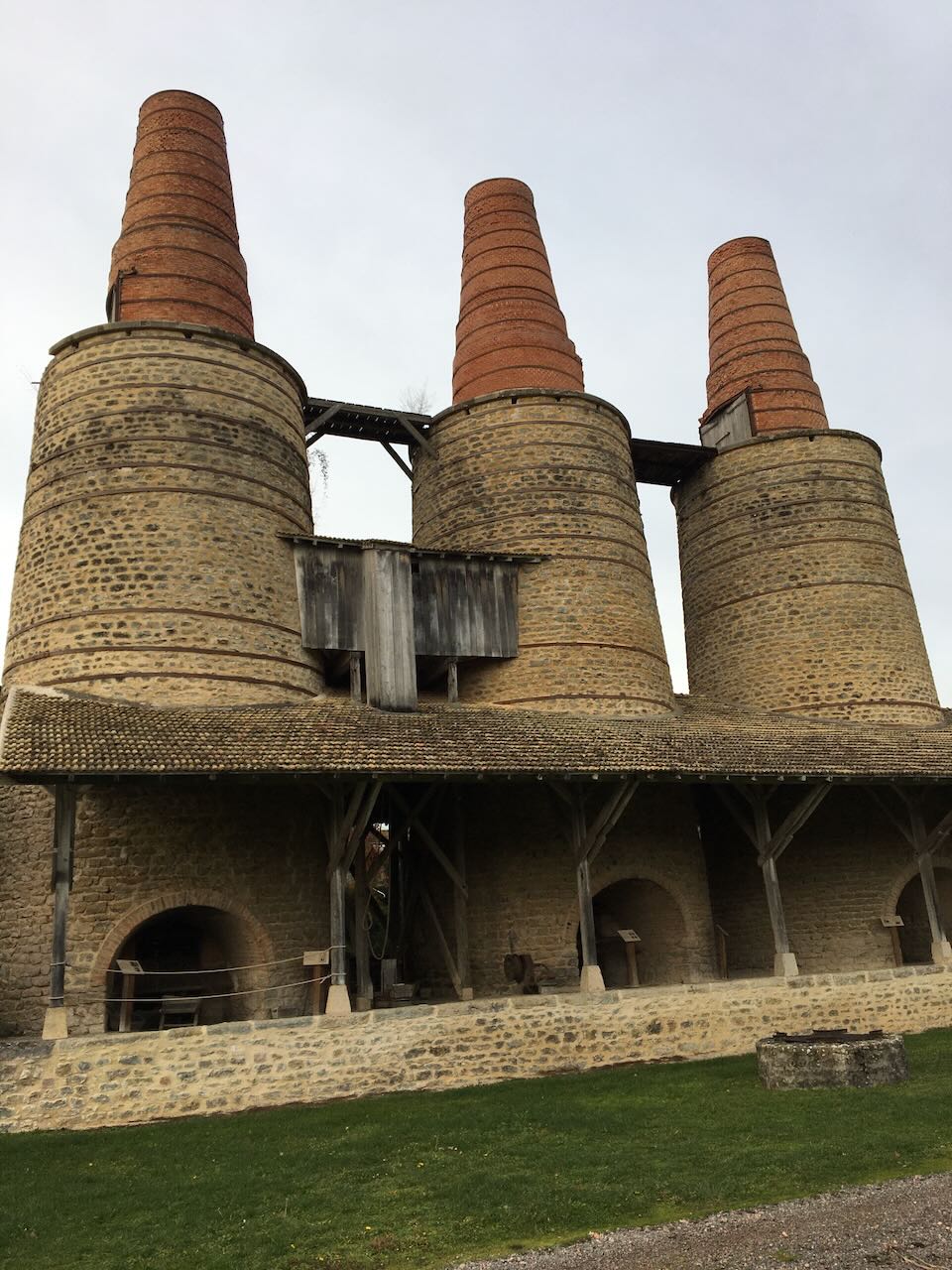
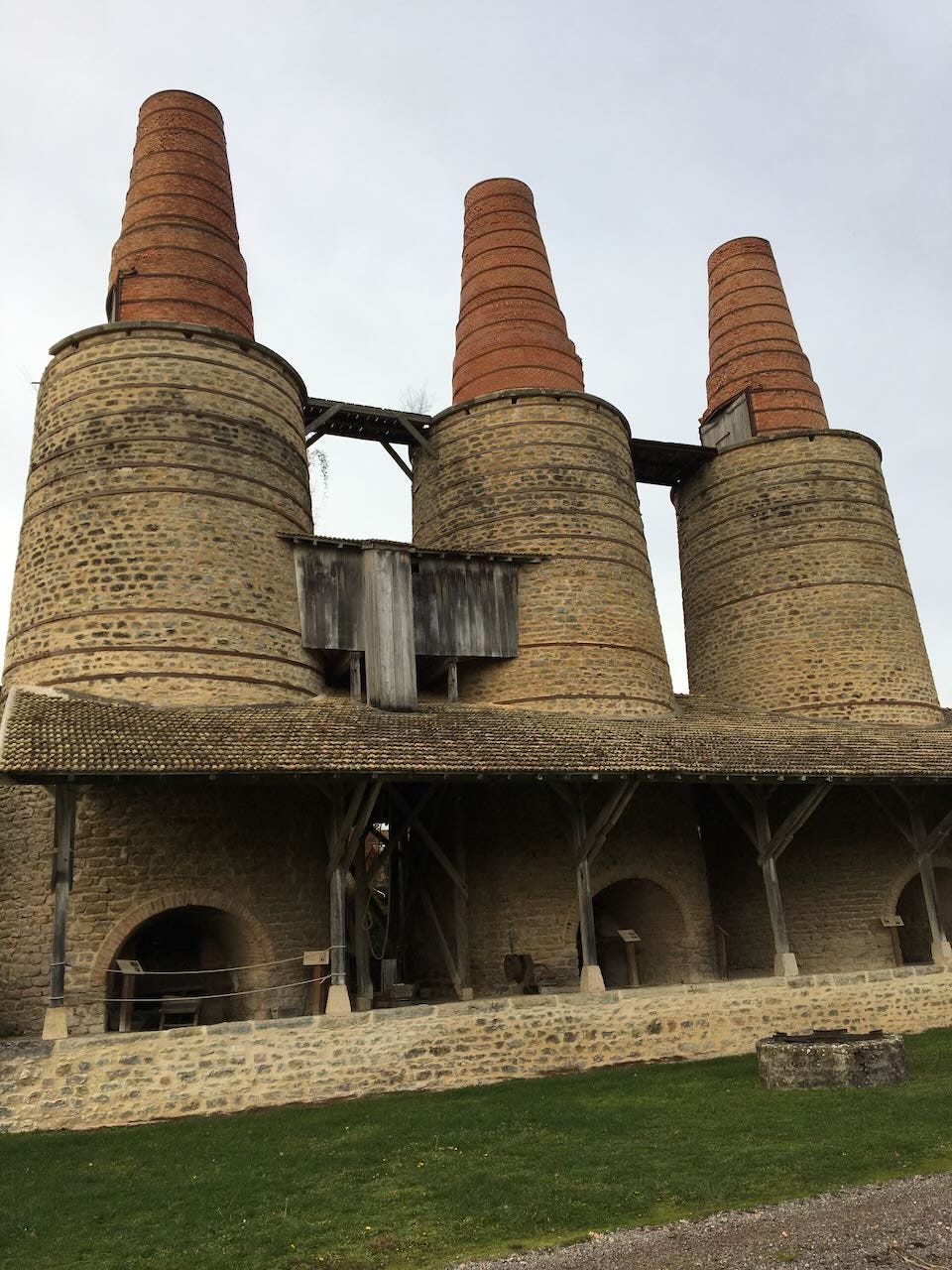
As can be expected, we had a slow, lazy start to the next day and blew out the cobwebs with a walk along the former disused rail line to the local Fours à Chaux, what look like a castle for gnomes but are actually lime kilns. The little white calves of the Charolais which we hoped to find foraging in the fields either side were absent, probably rotated off somewhere else, so the promised close up photo ops were not delivered, but perhaps after indulging in beef the previous evening that was a welcome mental degree of dissociation.

Four à Chaux - Lime Kilns

Gones for good – Episode 5 Running the rules

The French love rules. Love rules. They have a process for everything in public and probably all aspects of private life. They follow the rules, and they really have no respect, time nor affection for those who do not. Everyone is polite, it’s a simple sign of mutual respect. Saying ‘Bonjour’ to every single person in a shop in a small town, saying ‘Bonjour’ before you ask someone a question at the station or on the street, saying ‘Au revoir’ when you leave a place; they all signify that the other people are human like you, and deserve the basic respect. This is the Egalité in action.

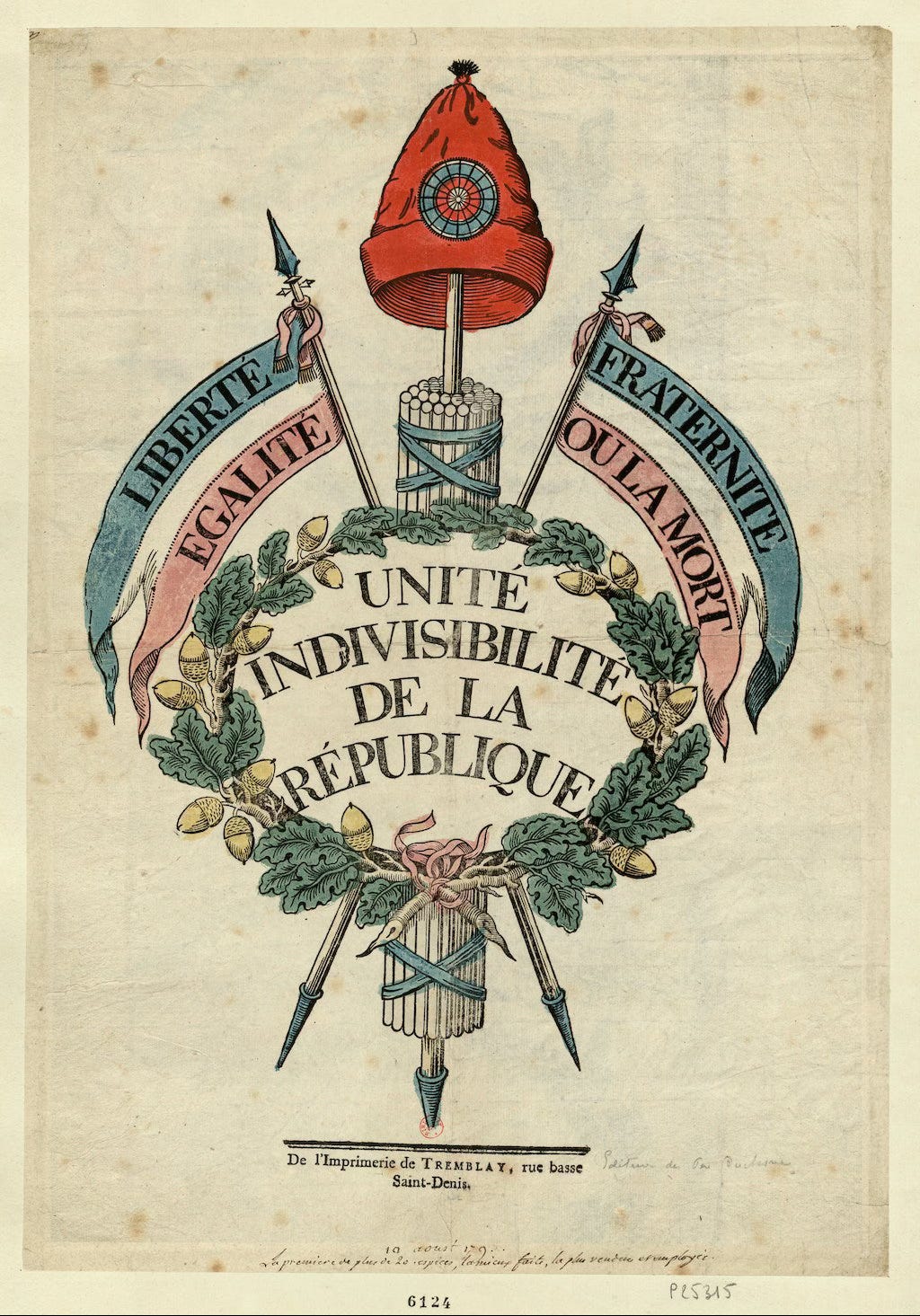
The Liberté is limited in so far as one is free to do what you like, say what you want, as long as it hurts no-one and remember that it is but the first word in the Liberte, Egalite, Fraternite trifecta. The liberty, equality and brotherhood of the motto of the Republic are not taken as separate beliefs but in the power of their combination. So no semi-automatic rifles here; religious freedom does not mean one’s beliefs supersedes those of the state or, as of yesterday, the ability to remove a woman’s inalienable right to decide for herself whether she brings another life into the world.

They also take the small rules seriously. We have the recycling picked up three days a week, today the Music School from the Université de Lyon next door had overstuffed their large recycle bin. The binmen or ‘les ébouers’, took offense and taped over the bursting dumpster lid with red tape, declaring it was non-conforming and left it behind. We have a compost bin on most blocks now, in an effort to get the methane creating organic waste out of the landfills. They distributed to every household a little brown compost bin and a 120-day supply of brown paper bags which get thrown into the larger bin out front. Someone obviously didn’t read the rules and threw something they were not supposed to in it, and we had our compost bin taped shut for 2 weeks, as a punishment for depositing “non-conforming waste”.

They shortened this, taking out the death references after the Terror

I think the French approach to rules is refreshing, especially if your reference points like me are either England, where no one gives a shit for the rules or the US where they have a blind obsession for the rules even if they make no sense (pick your own personal amendment). The French had got sick of the hierarchical aristocratic system overseen by the King and the system of privileges for the guilds and the church. They had themselves a revolution in 1789 and threw all that out over a period of 10 years. They decided that the people were better at ruling themselves than having to listen to someone who happened to be born in a certain place to certain other people and so in 1793 cut off the King’s head to prove, amongst many things, that he most certainly was not divine. The practical difficulties of this degree of self-determination and the struggle for political control was demonstrated over the ensuing further 6 years of chaos starting with the Reign of Terror, under the ironically named National Convention to the Committee of Public Safety. It was not safe for the 16,000 members of the public who were executed in about 9 months. They had two further changes of power, and the Republic which had been so proudly and vehemently celebrated in 1792 gave way to the Directory. The French do love a good bureaucracy and two key the things that struck me reading “Citizens!” by Simon Schama (the best single volume history of the Revolution, even if a bit weighty) was that firstly, during all this 10 years of absolute chaos, France was embroiled in near constant wars, Prussia, Spain, Austria and good old Blighty shit-stirring from the sidelines, all had a go at settling scores with France. Secondly, they tried desperately to have an enlightened democracy and formed one after another of various forms of representations, taking lands and trade monopolies from one part of the society to try and give to others to equalize the country. They formed different lower and upper houses, localized representative assemblies, centralized budget forming bodies and one after another failed to unify the country. So they would start again, a few people would be executed and someone else got to try their idea until that failed, and they found themselves facing the guillotine. Finally, the Directory gave way to the Consulate, one of whom was Napoleon Bonaparte, and the rest as they say is history. As much as Boney gets grief now for restoring slavery and his warmongering, the France of today owes much to his administrative changes and rules which settled France into the 19th century power house that it became. 

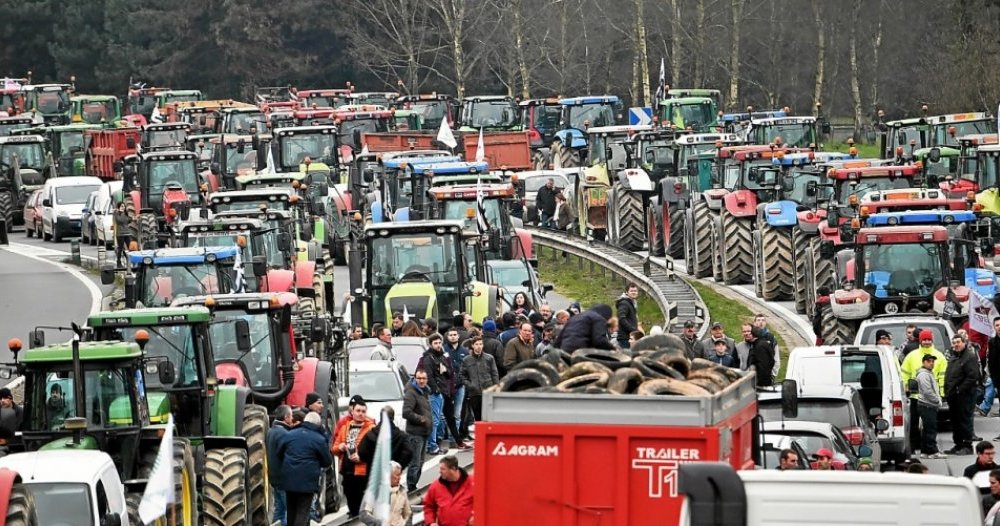
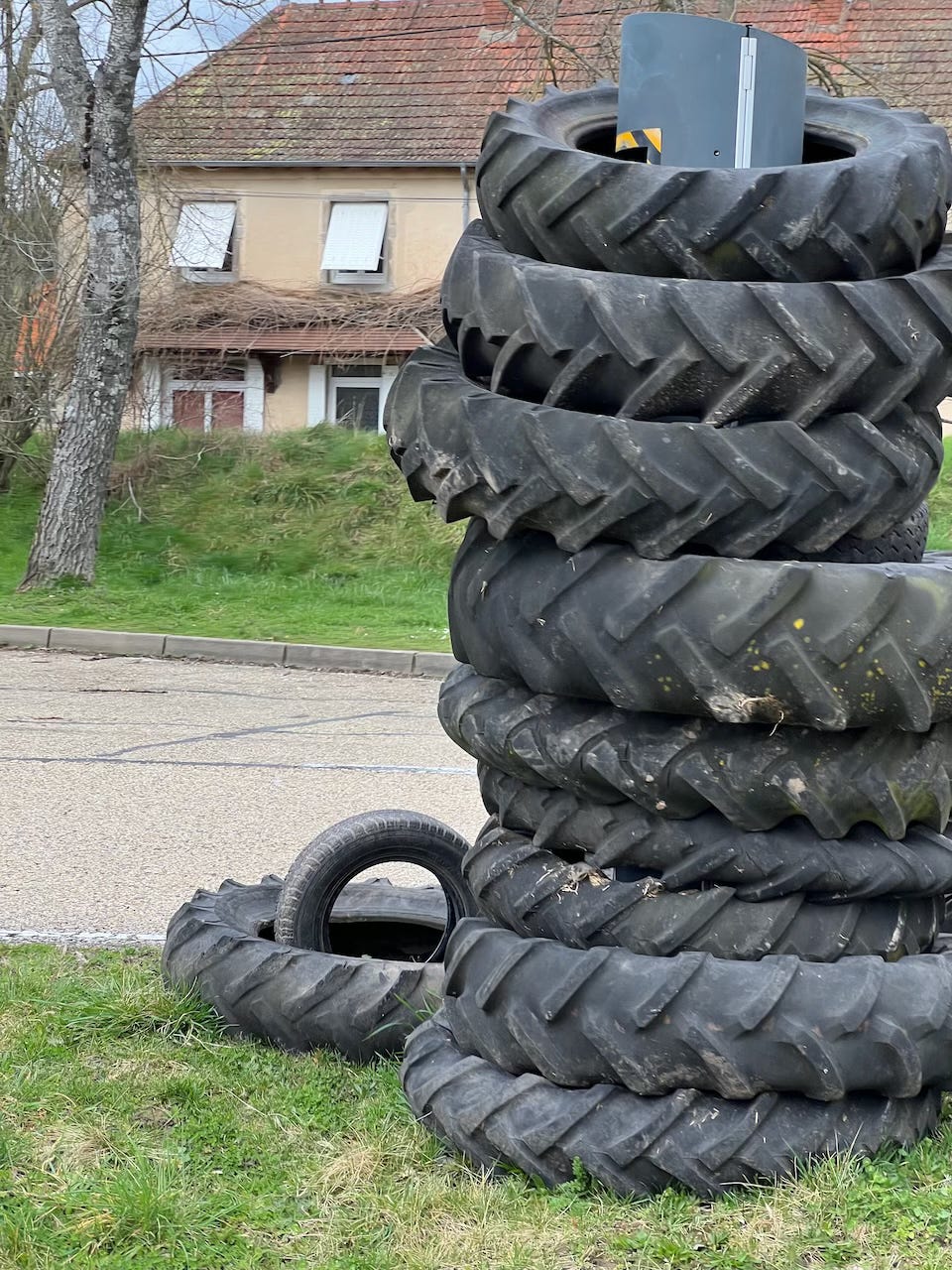
The French follow the rules religiously as long as they are seen as being applied equally and making sense. When they do not, they burn shit down. The spirit of the Revolution definitely lives on in that aspect of life in France. Since we have lived in France full-time we have had the ‘Gilets Jaune’ movement, ignited by protests against changes to rules around car emissions which punished the rural poor. We have had the concerted efforts by the French Unions to block arguably much needed reform of the sprawling pension system, because it punished the working poor. This became more of a fight about modern capitalism, and we enjoyed hearing the smashing of cars, shop windows and the smell of burning trash cans and bus shelters off and on for 3 months just around the corner. We have had the farmers blockading the major freeways and donating supplies of old tires and manure to local government offices. In each case there is a general support for the plight of the victim of the bad rules, the hardworking Everyman, suffering at the hands of an unseen bureaucrat in Paris or Brussels.

Wednesday was the day of St Colette. You may be surprised to read that as much as the French do like the writings of Colette and that she was honored by the state and buried in Père-Lachaise, the Catholic Church found her ‘sulpherous’ and refused her a church burial, so they would be pushed to beatify her. St Colette was a woman born in the late 14th century who found the normal life of a nun in an abbey too comfy and so started a new order that prescribed extreme poverty, going barefoot, and the observance of perpetual fasting and abstinence. The supposed anti-pope at the time in Avignon gave her his blessings and issued papal bulls to support her mission, and she managed to persuade enough other women that this was the life for them that she opened up 18 monasteries under her regime. This probably tells you more about how much fun normal life for women was in the late 15th century in rural France. As much as you may be being introduced to St Colette just now, she is known more widely than you would think as she is the Catholic version of IVF. Her mother gave birth to her at the age of 60, so not unsurprisingly she is patron saint of women seeking to conceive, expectant mothers, and sick children.

Wednesday’s lunch was postponed to Thursday due to what could best be summarized as a phone panic. When you lose a phone with all those great banking apps, business apps and documents accessible that you would not want anyone having access to, it’s not conducive to a relaxing lunch. When your 2-factor auth is only available on that phone which would normally allow you to change passwords, it pisses you off for the rest of your whole day for sure. If you happen to have your American SIM card as an E-SIM in the same phone, and you realize you would have to fly to the US to restart service, on which all your US banking 2-factor auths depend, it would ruin your week.

Hosanna! The Joy of Relocating Previously Lost Phone!

Gones for good: 4 the bissextile episode

Leap Year babies are defined by their birthdays in a way that trumps even astrology. There is a family in Utah who have three leap year Feb 29th-born children. They do have 7 kids in all and the second was induced, so I tend to think they might have worked out how to avoid it if that had wanted to. The French for Leap Year is bissextile which has nothing to do with gender, it is all due to the Romans. They referred to February 23 as the 6th day before the beginning of March, and the extra day inserted on February 24 was called the “second sixth” day, or “bissextile day” in a “bissextile year”. It does not roll off the tongue like Leap Year so we can be forgiven for having forgotten about its origins.

In France, they publish a newspaper every 4 years on the 29th called ‘La Bougie du Sapeur’, it’s a satirical broadsheet that has been published since 1980, so this year was edition 12. I tried to buy one on the 29th, but our local newspaper stand was closed because it was school holidays and ski-week. If you want an illustration of how serious the French take their vacations there it is, the newspaper stand closes, so the guy can have his holiday too.

Who does not get the 29th off is St Auguste. Yes, ‘le jour bissextile’ has a saint and like every other day is a Saint’s Day, so even if you are fated to be born on the 29th you still have your own patron saint; who says the Catholic Church is uncaring for its flock? St Auguste was a priest who was part of the mission to China in the 19th Century who suffered a horrible death in Guangxi province on February 29th, 1856. “He was locked into a small iron cage, which was hung at the gate of the jail. The planks he stood on were gradually removed, placing a strain in the muscles of the neck, and leading to a slow and painful death from suffocation. He had already died when he was decapitated. His head was hung from a tree by his hair. Children were said to have thrown stones at the head until Chapdelaine’s head fell to the ground and was devoured by street dogs and hogs.” The French responded by joining the British in what is unflatteringly called the Second Opium War, as in we and the French, with help from the US, went to war on China to force the Emperor and his government to let us sell opium to the people of China. We used real gun boats in our diplomacy and were successful in our aims, we also took Kowloon and added it to our Hong Kong territories and also insisted upon the legal right to proselytize Christianity, negotiated in the name of Auguste Chapeldain, who had been ‘martyred’ in doing just that. China today looks back on this period with great disdain if not shame, and Xi often mentions the Western efforts to get involved between them and Taiwan as being similarly colonial.

In Guangxi today you can enjoy a life-size diorama showing Saint Auguste kneeling before the magistrate who sentenced him to death. A six-metre bronze mural shows the cage in which he suffocated to death. A poetry contest gives prize money to those who praise “iron-willed” magistrate Zhang. So definitely not a popular figure in China is our Saint Auguste.

Lyon is back to normal today, the kids are in school and Reymond the baker is back in action. While he was off skiing, we were unfaithful in our bread breaking and went to Mado on Rue de la Thibuadiere. Mado made it into the latest edition of the foodie bible, the annual magazine “Fooding”. They do a fabulous Panettone at Christmas and their breads are hearty grained, organic beauties. However, it is their baked goods that have an opium-like hold on our taste buds. Their current offerings include a small brioche stuffed with apple sauce, a pastry-like crusted cake with preserved plums that is probably Italian in origin too called a Pasticcioto, scones, the most glorious lemon flavored brioche bun that has an almost hot-cross-bun like top crust, and a large what I can only describe badly as a large Jammy Dodger with two heart shape openings for the jam which is called Une Spectacles. Leap Year’s Day breakfast comprised of a selection of these, and we were still suffering a sugar coma about 2 hours later.

We have been watching ‘Bear’, the TV show. For those who have not yet had the pleasure, it starts unsettlingly with various Chicagoans shouting at each other in the shitty kitchen of a sandwich shop, while loud 1980s hair metal plays at a volume only just below that of the hammering dialog. It also features as a leading character, Ritchie, one of the shoutiest, and played by the actor who first came to attention as Desi, part of the Desi and Marnie sickly sweet folk duo in Lena Dunham’s ‘Girls’, as played by Ebon Moss-Bachrach. I almost stopped watching the show because Ritchie was so crushingly annoying. However, with affirmation from Holly that it was worth the perseverance I did continue to watch it, and grew to enjoy its unadulterated food porn, its exterior shots which are a love-letter to Chicago and its odd soundscape of a mix of great and grating 80s and 90s songs. Ritchie’s character arc does actually move towards a positive epiphany, and even I started to root for him at the end of the second season. The tension and pressure in delivering such high-end serious cuisine, as portrayed in the show, strikes a balance that just about tilts towards earnest craft and excellence and away from pretentious tosh, but only just.

Little Entrements with the coffee

A million miles away from the restaurant experience at the 3-star place that Ritchie learns to polish forks for 3 days is Bistro B on Rue Dugesclun. A small front room downstairs with yet another Canut-style mezzanine above, holding a combined total of 30 covers decorated with a natural-wood pretend garden fence along the walls. The host/ sommelier/ cocktail maker/ waiter/ table-busser greets you in a long server’s apron with almost too intricate an arrangement of straps on the back. It is relaxed, as is he. The menu is accessed through a QR card, we get waters and a ‘pot’ of Chardonay from the Rhone Valley. They just received their Michelin Guide entry under Bib Gourmand, the great food for under €40 rating, but the food is as serious as it is affordable. I had the Duck main course, which was two ruddy steaks cut across the breast on a bed of celery purée and some assorted small select veggies and bloody delightful: “Magret de canard au vinaigre de poire, sauce gastrique, poire rôtie, pommes grenailles et mousseline de céleri”. Everything was well executed, service was good, amazing really, seeing it was one guy and a small kitchen. Two hours flew by, concluded with perfect little brownies and memorable madeleines with the coffee. 3 courses and wine for just over a hundred Euros, and we meandered our way home, happy bunnies.

Pedestrianized streets in the 3rd


Gones for good: Episode 3- Farm to table

Spraying shit on the town hall has to be the best performative protest against bureaucratic bullshit ever conceived. The French farmers are in round 3 against the government of Gabriel Atal and the bright young thing PM is scrambling to defuse the situation ahead of Macron, never a popular figure in the countryside, making his cow-admiring, cheese tasting appearance at the annual Agricultural Salon in Paris this weekend. France loves a good protest and also love their farmers. The food and wine of France are at the heart of its self-image of being paradise on earth, the very essence of the good life. They parade their local produce as part of the ‘patrimoine’ and have been fierce in the protection of the various ‘pays’ and ‘produits’. There are 114 different protected types of agricultural produce under the AOP scheme in France, plus 363 registered protected wine designations. The obvious problem is that all of the protections mean nothing if the supermarkets are doing their best to drive price down and the incredible concentration of their purchasing power – the top 6 supermarkets are French owned and have revenues of €180 billion. Milk is bought at a marginal price that keeps farmer’s in penury and forced to use whatever production enhancers they can to keep alive, regardless of the long term damage to the cows. Several publicized suicides of farmers has reinforced the public support for the farmers and even with their protests blocking roads with what the Spanish are calling ‘tractorados’, as the protests spread to Spain, Czechia and Greece against what are seen as overly bureaucratic and complicated oversight and rules emanating from Brussels. 

What is putting a hair up the ass of the farmers is that these rules which are costly and frustrating do not apply elsewhere. So the target for their ire is the import of foods from outside of EU, milk from New Zealand seems a ridiculous example yet finds its way into European dairy products. French farmers did an inspired version of a trolley run this week by going into French major supermarkets, loading up in front of the cameras with products either masquerading as ‘French’ produce, or imported where the local version cannot be made for similar pricing; walking through the doors, without paying, and then donating it to the food banks that are a part of everyday life for many people in the rural farming dominant communities.

Attal and other officials were supposedly surprised by “the scale and fury of the protests” . I was impressed. We had tractors ambling along the major freeways in and out of Paris, Lyon, Bordeaux and most major cities, 3 abreast, at 5km an hour. Dumping of manure, hay bales and that staple of farm equipment, the old car tire, outside local offices of the government that are involved in any way with administering the EU’s farm policy. There is a speed camera on the way to Macon in a rural part of the department, and it often gets spray-painted but it got tired two weeks ago, and they have either not bothered to remove them or they keep them topped up. Surveys in France showed 90% plus support for the farmers, after all in principle they only want French produce as it’s the best and anything that threatens that gets an easy thumbs down.

Speed cameras looking tired

In a familiar routine now this has been going on now for 4 weeks, protests, disruption, and widespread support, Attal and other ministers urgently travel hither and nither meeting with the local Farmer’s Union guys. Every time one is interviewed on TV we get yet another example of regional dialects living on, I can barely understand them and I think the urbane Gabriel struggles too. Having survived his brush with the blue-overalled ‘Bobs’ with tractors and wellies, he dashes back to Paris and prepares another round of concessions. One early give was the repeal of the 16, yes 16, different regimes involved with preserving and controlling hedgerows. This week brought increased checks on food producers claiming their products are made in France and heightened legal action taken against those that did not conform. Attal promised there would be “product by product” checks on foods produced outside the EU containing pesticides banned across the continent to ensure they were stopped. Which is all well and good, but you cannot help but wonder why did it take 4 weeks of mass protest to get that to happen? The original protests were about the byzantine pension rules for Farmers and the pending removal of the agricultural fuel subsidiaries. Those got rolled back, but the issue is less about which little ‘give’ the government acquiesces to next but the ongoing fight underneath across the European Union.

We have an existential threat to European peace and harmony sitting in his bunker under Moscow at the end of a 30’ long table, probably at this very moment lecturing some poor lackey on the history of the Kievan Rus, or at least his own personal take on it. His Ukraine adventure cranked up energy prices to the point that inflation took off. Everyone got squeezed. Everyone was supposed to make sacrifices, but it seems the large corporations, especially the supermarkets, didn’t get that memo. While they record soaring profits, paying dividends and obscene bonuses to each other for ‘job well done’ the farmers and the ordinary person struggles with higher costs for fuel, food and rent. At the same time we have very lofty and admirable goals to right the years of ecological wrongs with rules to reduce loss of hedgerows, biodiversity, over dependence on monocultures and overuse of pesticides. However, no-one wants to price that in and so as the pithy adage goes, the shit flows downhill and the farmer is supposed to deal with the consequences, but the supermarkets can still make their profits and the ordinary person does not want to pay €0.20 more for a liter of milk or butter to keep the farmer from bankruptcy or in extremis, suicide. So yes, I guess I understand why they are spraying shit at government offices.

Lyon this week has been mild again and although the schools are off for ski week the only snow is at high elevations and the smaller, low level elevation places in the Jura and the Alps Maritime are fields of unwelcoming brown rather than glistening pristine white snow. It is the snow season so the restaurants and media are talking up the winter dishes like Choux Croute, Fondu, Tartiflette and other various holy alliances of cheese, pork and potatoes. 

Lenten Roses right on time

Saturday was St Modeste’s feast day but again no special dish in his honor. St Modeste is, it transpires, one of those fortunate chaps who was considered a generally good sort as Bishop of Trier and was rewarded with sainthood for being a best in class confessor. So he actually died in his bed in 489, no miracles, visions of the bleeding pumping heart or public beheading following several days torture for him. He got the honor as more of a local nomination process that people put forward their local martyrs and their very best confessors. After being canonized locally, all it took was some local big wig to persuade the Pope to support it, perhaps while on pilgrimage to Rome, or Avignon. Having a local saint was always good for tourism and trade with people coming to see whatever relics remained at the patron church, so the big-wig would return happy, some fiscal lubrication of the process may have been necessary, but it seemed to work for these what are called Pre-Congregational Saints. All good things come to an end, and Rome and the Pope stopped the local ‘Vote for your local Saint’ efforts in the 11th century. By that point I think they were afraid the title of Saint was being devalued as there were mushrooming cases of miracles, no shortage of martyrs and by that time there were confessors nearly everywhere. So St. Modeste is really an old style saint, and in full Lent no real feasting to be had anyway.

Friday night we went to “Le Cochon Qui Boit” tucked away in the narrow streets between the hillside below Croix-Rousse, ‘Les Pentes’ and the Saone. The Drinking Pig is a bright small space in a typical Lyonnais Canut-style building run by two guys who trained at Tetedoie, the expensive Mich one star up on the hill of Fourviere.  The food was very veggie led, a fabulous Jerusalem Artichoke bisque as an amuse-bouche signalled their intent. The wines are all natural as is the trend now. Natural wines all have labels that are bright-colored, and the names pun their way to taking what was traditionally very cheap wine from non-fashionable appellations into something cool and sells at 3 times the price of their traditional neighbors. The first white I tried was a Gros Plant Nantais which was crisp with a hint of the fruit from the Melon de Bourgogne grape it was partly blended from. More succesful than the Jura white that followed, a grassy yellow Chardonnay which only just made it on to the side of pleasurable. The Carignan from Languedoc was lighter than I expected but a great compliment to the Pigeonneau fermier de Bresse, petit épeautre et blettes. Filleted breast of roast pigeon, served with spelt, chard and a cabbage parcel stuffed with all the inside bits of the bird made into a deep red rich sausage. The dessert was insanely good. Describing it as butternut squash three ways does it a disservice, one caramelized round of roast squash sat in a nutty foam and was topped with a quenelle of butternut ice-cream wrapped in a stripe of chestnut puree. I always feel a bit uneasy taking pictures of plates as it is so clichéd, but here is the pigeon dish. In conclusion, this particular pig was well-fed and did his best to join in the drinking.