
For those who may have noticed, I have a passion for cheese, a ‘Cleese in the Cheeseshop’ sketch long-list fascination with all matters to do with the fermented curd. I read somewhere that in fact they mention 43 cheeses in that sketch, and to this day I can probably recite all of them. I will assume, dear reader, that you are familiar with this staple of the Monty Python cannon, but for those who have been locked in a time vault since the 1940’s and are only now catching up, here is the original TV show version. The origin of the sketch is worth retelling. John Cleese was seasick while filming on the south coast, on the drive back to London Graham Chapman suggested he eat something to feel better; Cleese replied that he fancied a piece of cheese. Upon seeing a chemist’s (a pharmacy for those on the left bank of the Atlantic), Cleese wondered aloud whether the shop would sell cheese, to which Graham responded that if they did, it would be medicinal cheese and that he would need a prescription to buy some. Based on this insight, they decided to write a sketch based on this conceit. However, once they started writing it, they concluded asking for cheese in a chemist’s shop was too unrealistic without requiring an elaborate set up. So instead of someone attempting to buy cheese somewhere other than a cheese shop, Cleese thought that they should write a sketch about someone attempting to buy cheese in a cheese shop that had no cheese whatsoever, so they did. John did not initially find it funny. When Chapman insisted that it was funny, they presented it at a reading for the other Python members, who also thought it didn’t work, except for Michael Palin, who collapsed with laughter. So they persevered, the bouzouki players and dancing bankers were added, and the rest is history.
What has kept me from consuming too much cheese was the whole health impact around dairy produce in general. I drink skimmed milk and have for years to the point where even semi-skimmed, demi écremé or 2% milk in my tea tastes like I have added a dollop of cream. I switched to oat milk for cereal and coffee. The health concerns about dairy and specifically dairy fats became such a common understanding that they have been accepted without question and have brought forward a whole industry of vegetable alternatives and margarine catering to the avoidance of the dangers of dairy products. My first job out of college was working for the kings of trans fatty acids, Unilever. My parents under the same misguided instructions from the media and medical establishment switched from butter to some chemically enabled stabilization of mixed vegetable oils, branded and marketed as healthful, weight management enabling and smart choices: “Flora”, “I Can’t Believe It’s Not Butter” and Olivio. It now seems that the actual evidence behind the health advice that we have all been blindly following was not as robust as originally trumpeted, in fact “….sparse and few data for the effects of dairy consumption on health are available”. Au contraire, of late, there has been extensive and serious research on the long term impacts of choices in the diet, in terms of following large groups of people over long periods of time. The result of these studies have shown that not only is dairy produce not bad for the long term health outcomes but in fact the converse, consumption of dairy is actually beneficial.
In a study published in the Lancet for example, called Prospective Urban Rural Epidemiology or PURE, the researchers followed 136,000 adults from 21 countries for nine years. They found that, during the study period, those who consumed two or more servings of dairy per day were 22 percent less likely to develop cardiovascular disease and 17 percent less likely to die than those who consumed no dairy at all. Notably, those who consumed higher levels of saturated fat from dairy were not more likely to develop heart disease or die. Another one, from 16 studies involving more than 63,000 adults, found that, across an average of nine years, those who had higher levels of dairy fats in their blood were 29 percent less likely than those with lower levels to develop Type 2 diabetes. So in fact there seems to be a benefit to consuming dairy fat rather than avoiding it. As soon as I read that, I was relieved, happy that my cheese obsessions were now part of a healthy lifestyle, but I was saddened that so many people have been confused and misinformed. That they have been actively encouraged to avoid foods that now they believe are beneficial. Milk fat, it transpires, is naturally packaged in a unique structure called the milk fat globule membrane, which they now think can help bind cholesterol in the digestive tract, as well as the fermented dairy choices like yogurt and cheese containing microbes which are good for gut heath and vitamin K, which is good for the heart. The crap we were told to replace it with made a lot of people money, but trans-fats and all the other binders and fillers needed to make vegetable oil look like butter or fat-free cheese actually does and will kill you.
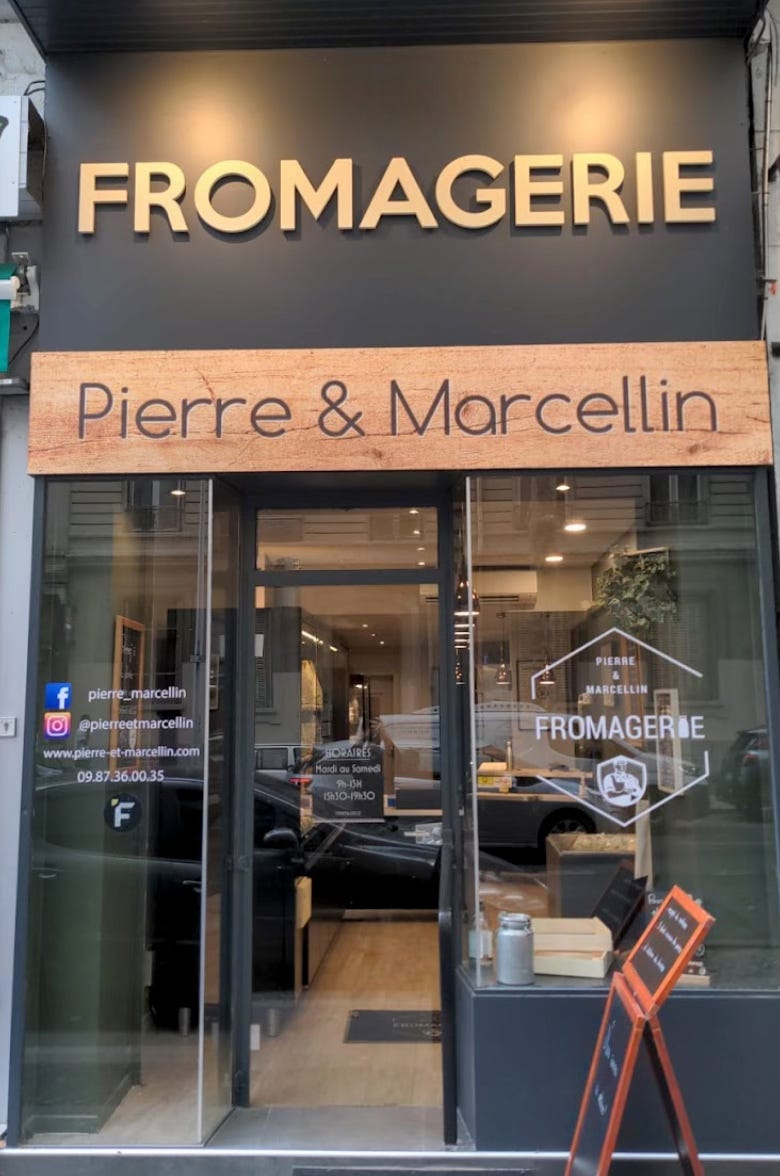
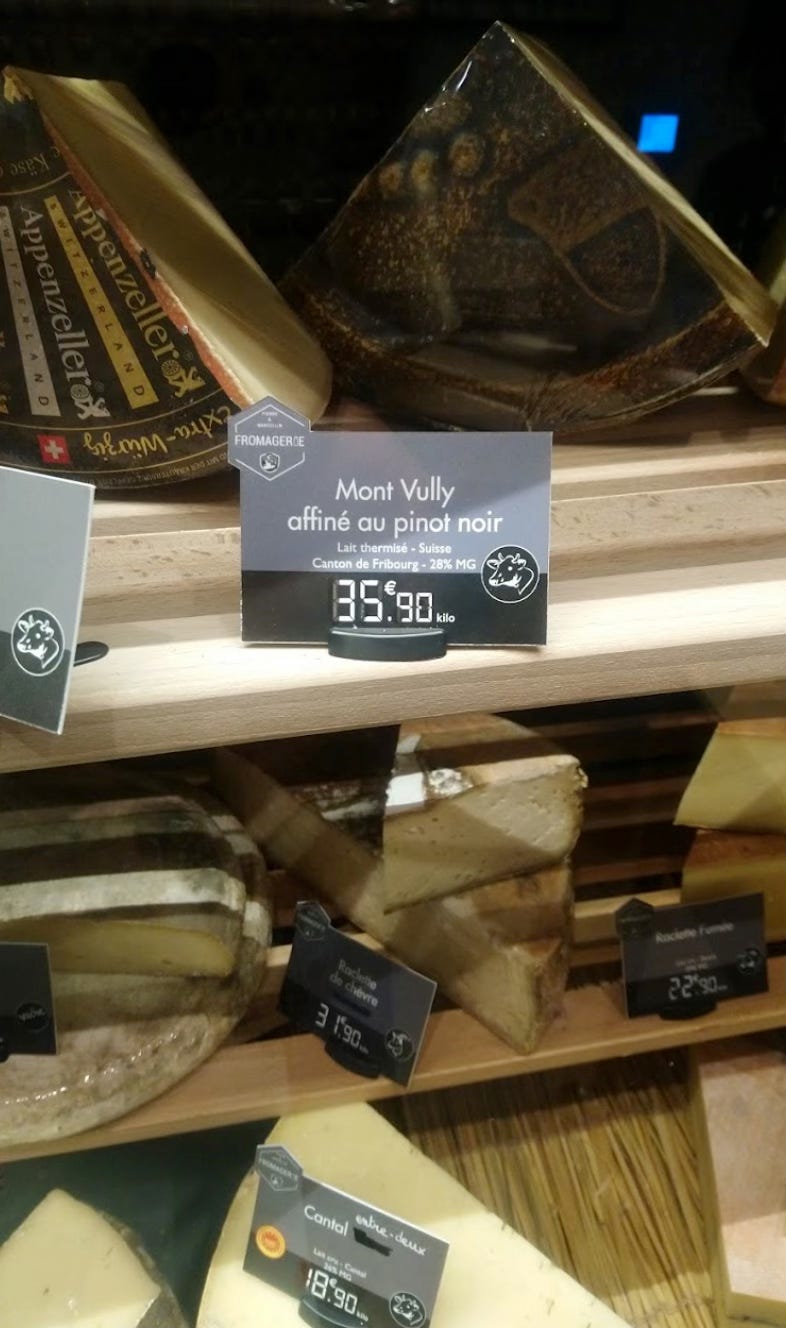
Anyway, now that is behind us, we can concentrate, as the French have always done, on good butter, yogurt, milk and cheese, together with the myriad other products that you will find in the dairy aisle here but are unknown in the US or UK: faisselles, fromage blanc, fromage frais, calin, petits Suisses. I immediately went out to our local cheese shop in Lyon, Pierre et Marcellin on Felix Faure to indulge my new-found healthy life choices, luckily it was free of bouzouki and other manifestations of the Terpsichorean muse. Some Mont Vully, Epoisse and St Timothé in hand, mission accomplished. It’s not difficult as Lyon is well served with specialist cheese shops plus most supermarkets and grocers have a reasonable selection, cut to choice, not just pre-packaged and trapped in plastic.
For my weekly saintly exploration the obvious choice was Tuesday with St George however that is a reasonably well known story, no spoilers, but he is neither English not originally had anything to do with dragon slaying. Thursday the 25th was St Marc’s day, but that is complicated as Mark the Evangelist, as he is known in the protestant lands, is firstly a major hitter, which hardly fits my desire to shine a light on some of the odd saints who are feted each day in our local bakers. Most people will have heard of him, he is the Chelsea of saints, popular with the wrong type, a bit gauche and like the mess that is the boys from Walham Green, he has some dirty laundry in his meteoric rise to the big leagues. No Russian oligarch or bumbling American hedge fund yokels, rather that is it commonly acknowledged that he didn’t actually write his eponymous gospel. Not only that, but it seems that the majority of his popular life story details are actually filched from another Mark, the interestingly dubbed “Cousin of Barabas” or John Mark. Maybe this is the origin story of the expression “to be wide of the mark”?
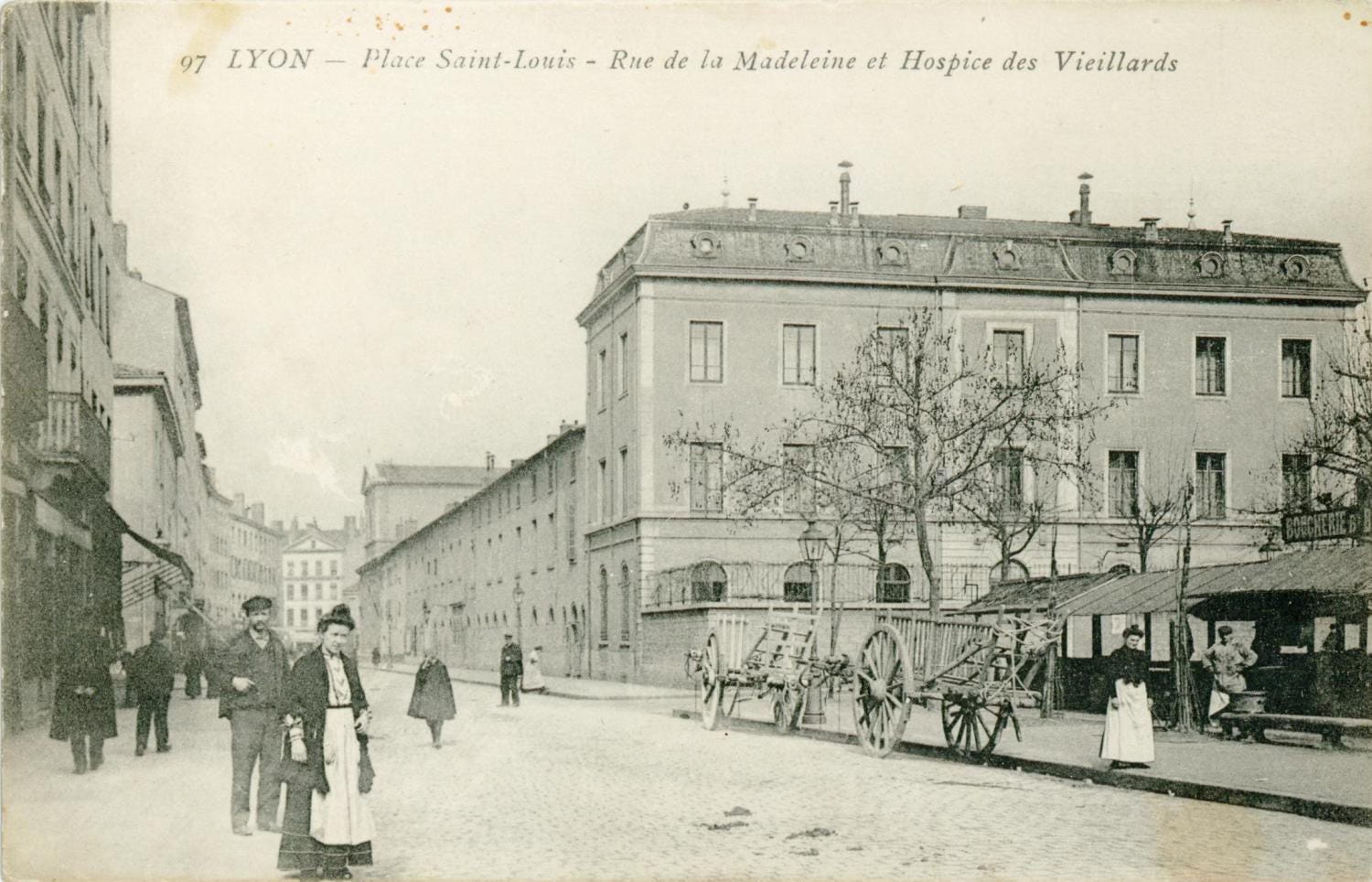
We braved the torrential rains that have engulfed most of Northern Europe to go to the farmer’s market at Place St Louis in the 7th arrondissement of Lyon. It is the typical market with a majority of stalls selling fruit and vegetables, some are actual farmers, some are more classic green-grocers who buy their produce at the wholesale market. Some are specialists, there is for example one guy who sells predominantly Italian citrus; Sicilian lemons, blood oranges (which are confusingly sold in France by their varietal name more often than not, so you will see Moro, Maltaise or Sanguinello) and occasionally in season bergamots. The fish stall is excellent and the two brothers who run it always have a smile, even in today’s monsoon, often they check with me what the English word for the variety of fish that I am buying. We had an odd exchange due to the confusion over Monkfish, which they misheard as Monkeyfish so I was desperately explaining that is what was not a poisson de singe, but indeed a poisson des moines. There is an awesome poultry butcher, they farm about 50 minutes outside of Lyon and draw the crowds by having a rotisserie with glistening, golden, fat-dripping chickens rotating and scenting the air. The other end of the stall is the greatest variety of poultry cuts, roasts, legs, thighs, sausages, patés imaginable, and of course eggs. The delight that is a paupiette, is one of their specialities. A small parcel of joy encased in a boned, flattened leg of chicken, guinea fowl or turkey; the middle will be chopped meat and flavoring – mushrooms, peppers, herbs and the French chile of choice, piment d’espelette. There is a cake and bread stall who also sell great pies and tarts, all baked in their wood burning oven so that their crust has that flaky crispness that is tough to get from a traditional electric or gas oven. There is a good cheese stall with an excellent separate section just to contain their selection of goat cheeses and a butcher’s van with more traditional sausages, offal and cold cuts. In summer there are seasonal vendors with honey, baked goods, re-caning of wicker furniture and that staple of French markets, the guys selling mattresses. Luckily, as it is mainly locals rather than tourists we miss the rip-offs like the Pyrenees cheese guys, proffering free tastes and selling their large wheels of Brebis at the very reasonable price of €45 a kilo, which you can get from the supermarket for half the price. If someone is giving food away there is usually a compensatory mechanism, beware men bearing sun dried tomato hummus samples!
 Anecdotes and Antidotes in Burgundy