
Gones for a cuppa: Episode 19 – The British invasion

I left Lyon airport on Friday morning for a quick trains, planes and automobiles jaunt to rural Somerset. A green and bucolic land despite its association with the Herman Hess of the Tory Party, Jacob Rees-Mogg. I am not sure whether young Jacob endured an attempted suicide, a spell in a mental institution and direct guidance by a theologian, but he certainly acted in Parliament like he did. No-one I met in Frome, North Somerset, could actually identify which part of North Somerset he represented in the house, but everyone denied it was where they lived. I was in Frome for that very American of institutions, the high school reunion. It was my first time back in four years and only my 4th time back in 30 years or so. It has changed a lot, and yet again it has not. Most of the streets and the grand old buildings are there, many have changed their purpose in life. There is a bypass, a ring road, roundabouts and many places to drink coffee, so many I expected a jittery level of attention to be everywhere, but instead it is just as sleepy as it was when most of us left. For that, you can blame the chai. It has a slightly boho, aging hippy vibe with overly frequent appearance of home knitted clothing, man buns, yoga mats and far too many crocs for my personal taste. In a counter culture sign of accord they seem to have driven the banks out of business, the 3 major banks that flanked the old Market Cross are reduced to one, and it has a sign in the window announcing its imminent closure. Nat West, as was, is a tattoo parlor, is this Frome or is this Brooklyn?

I made the rookie error of getting a train to Frome on a Friday afternoon in the summer. I got the Heathrow Express to Paddington and then waited for my train to Weymouth. Finally, the platform was announced and then what can only be described as a stampede took place to get through the ticket barriers and on the train. It was if there was free money hidden in the seats the degree of commitment to breach the barriers, finally the Great Western Railways staff, fearing for the life of their colleagues opened up two luggage gates and gave up scanning tickets. I was swept along in that flood and luckily found myself ahead of most of the crowd, still slowly scanning tickets. I found a place for my overly large suitcase and sat down in a seat. The train then filled and filled some more and then the aisles were filled, and we left almost on time. The Great Western Railways Train Manager then spent the next few minutes apologizing for the crush, blaming the powers-that-be for having allocated too small a train, a very British complaint. They must go through intensive empathy training or something, as his constant apologies became as much background noise as the rattle of the rail. Finally, after 25 minutes we arrive in our first stop Reading where I had assumed folks would get off and the pressure would be relieved but of course there is a link now from Heathrow and there were more not less people on the platform with large suitcases desperately trying to go west. This was the breaking point for the beleaguered Train Manager and on our behalf he decided that enough was enough, and he was cancelling the train and let those above him, who caused the problem, to have to address its solution. What the fuck? I was alright, Jack, I had a seat and my bag was safely stowed. But no I now had to find another train as if this was full every train following on a Friday afternoon would be full plus our train load. The local knowledge did help and I just got on the next train to Bath where I was sure I could get a train to Frome. Or so I thought as I am standing waiting for the Frome train at Bath Spa, and they announce my Frome train is cancelled, so I should get on the Warminster train to Westbury where they will either bus or taxi us to Frome. We get to Westbury and no-one has any idea about buses or taxis, they do have a Frome train though, arriving in 25 minutes. This is turns out is the train that was cancelled and now mysteriously uncanceled. Waiting at Westbury, what should arrive but the train that I had originally left Paddington on 4 hours earlier, hopefully with either a new Train Manager or the same one on sedatives. So based on my limited experience, GWR may go west, but its rails are used sparingly and the service is anything but great. I completed my transportation trifecta with a taxi to the George Hotel which was our base for the weekend.
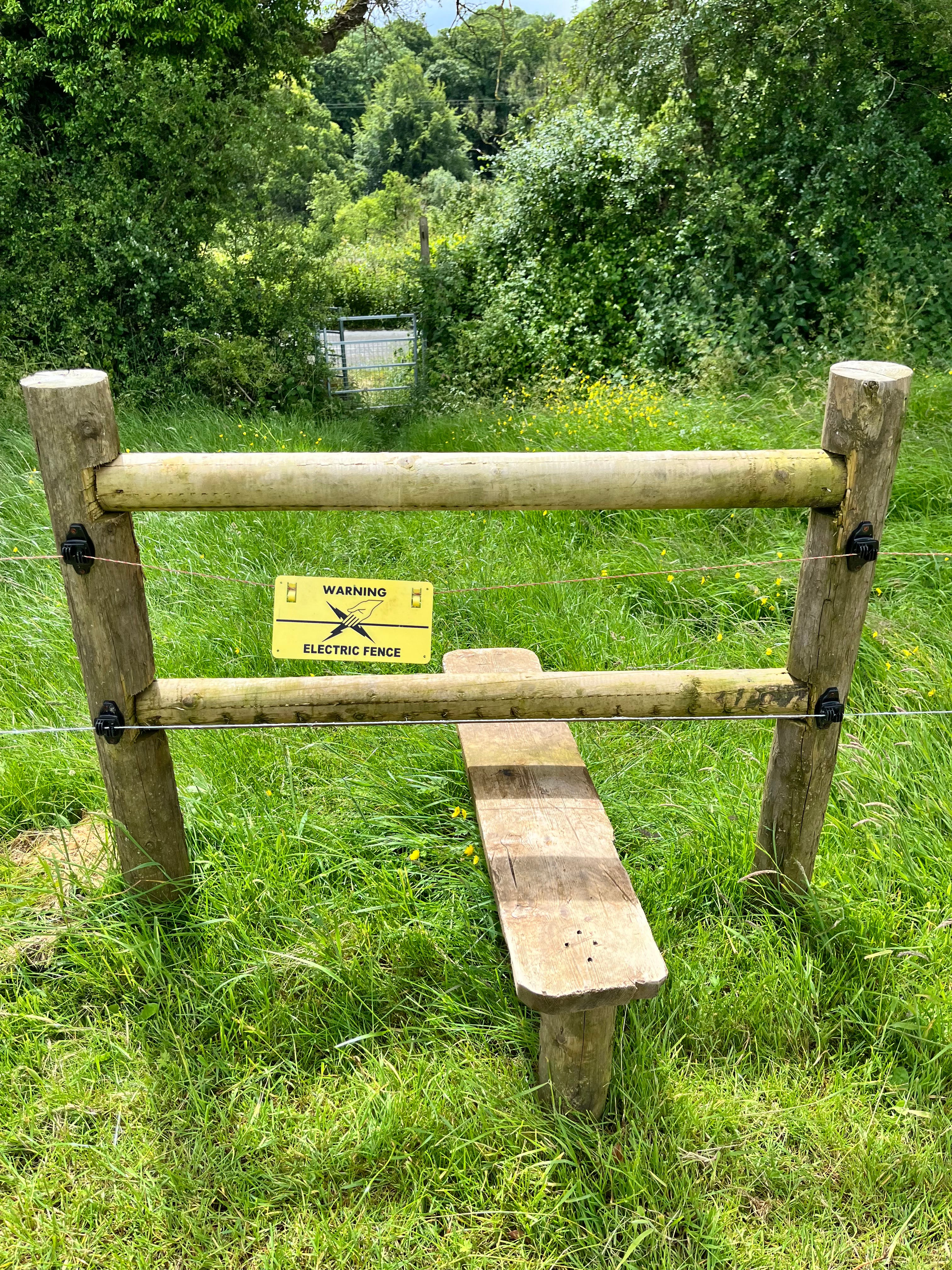
We had a fun weekend with lots of memorializing and appropriately named the WhatsApp group for the event sharing of photos, the “Whatever happened to What’s-his-name” group. Four of us got covered in mud hiking a great 8km circular trail around the villages of Mells and Great Elm on the Saturday morning. We ate well, and we drank modest rather than outrageous amounts of beer, including at the celebrated Griffin, home of Milk Street Brewery, opposite our elementary school which is still a functioning place of learning for the little tykes of Frome. It’s in a part of town that when we would walk the 3/4 of a mile to school each day was very run down. Referred to as Chinatown by the locals, it was full of the small old working class cottages of the 19th Century when the town’s weaving and industrial past was at its height, now all restored or gone completely many were derelict in our time. The Georgian nature of the town is still there, with many narrow streets and pathways spread over the hillside. The old printing works is now apartments and the industry that remains is banished to the peripheral trading estates. Frome had an odd atmosphere partly because until its relative recent resurgence it always had an air of former glory, the old large buildings and the many houses were for workers needed in the 19th century not needed again until after the 1980s when it rose for the first time in over 100 years. Frome originally in the 19th century heyday had 52 pubs, one for every week of the year, now many, including our former stomping grounds are gone, some as homes, some as stores and some sad, boarded up and falling apart.

If I had been in France on Saturday, I would have seen the unusual name of a saint to celebrate, that of St Germaine Cousin. Weak and ill, the girl had been born with a right hand that was deformed and paralyzed. Germaine was born near Toulouse in 1579 in a village called Pibrac and her relics are still revered there. She has a Cinderella element to her tale due to the appearance of an evil stepmother. She developed scrofula as a child, and her stepmother used it as an excuse for her to be banished from the family home. Abused by her stepmother, she lived a simple life as a shepherdess but was very pious and there were stories told of her parting waters of flooded rivers and other minor miracles before her untimely death at 21. The real magic started when her body was buried in the parish church of Pibrac in front of the pulpit. In 1644, when the grave was opened to receive one of her relatives, her body was found to be perfectly preserved so as this was in the era before Netflix and other diversions they decided to have it on public view near the pulpit. A noblewoman donated a lead casket to hold the body, and the first of several miraculous cures happened due to her relics. The casket was displayed in the church and opened in 1660 and again in 1700 and the body still it refused to rot, the local Archbishop of Toulouse testified there was no embalming. Some strange guy had an issue with this during the Revolution, and he and some mates took the body out of the casket, dug a grave and threw the body in with quick lime. It was rescued and still shown to be in good condition other than where the quick lime had attacked it. All the while miracles keep occurring, cures of blindness, of congenital disease, of hip and spinal disease and a miraculous mystery multiplication of food for the distressed community of the Good Shepherd at Bourges in 1845. The plea for beatitude attested more than 400 miracles in total and thirty fan letters from archbishops and bishops in France. Pius XI granted their wish in 1854. Her name has nothing to do with German Cousin, which I will admit to being slightly disappointed to discover.
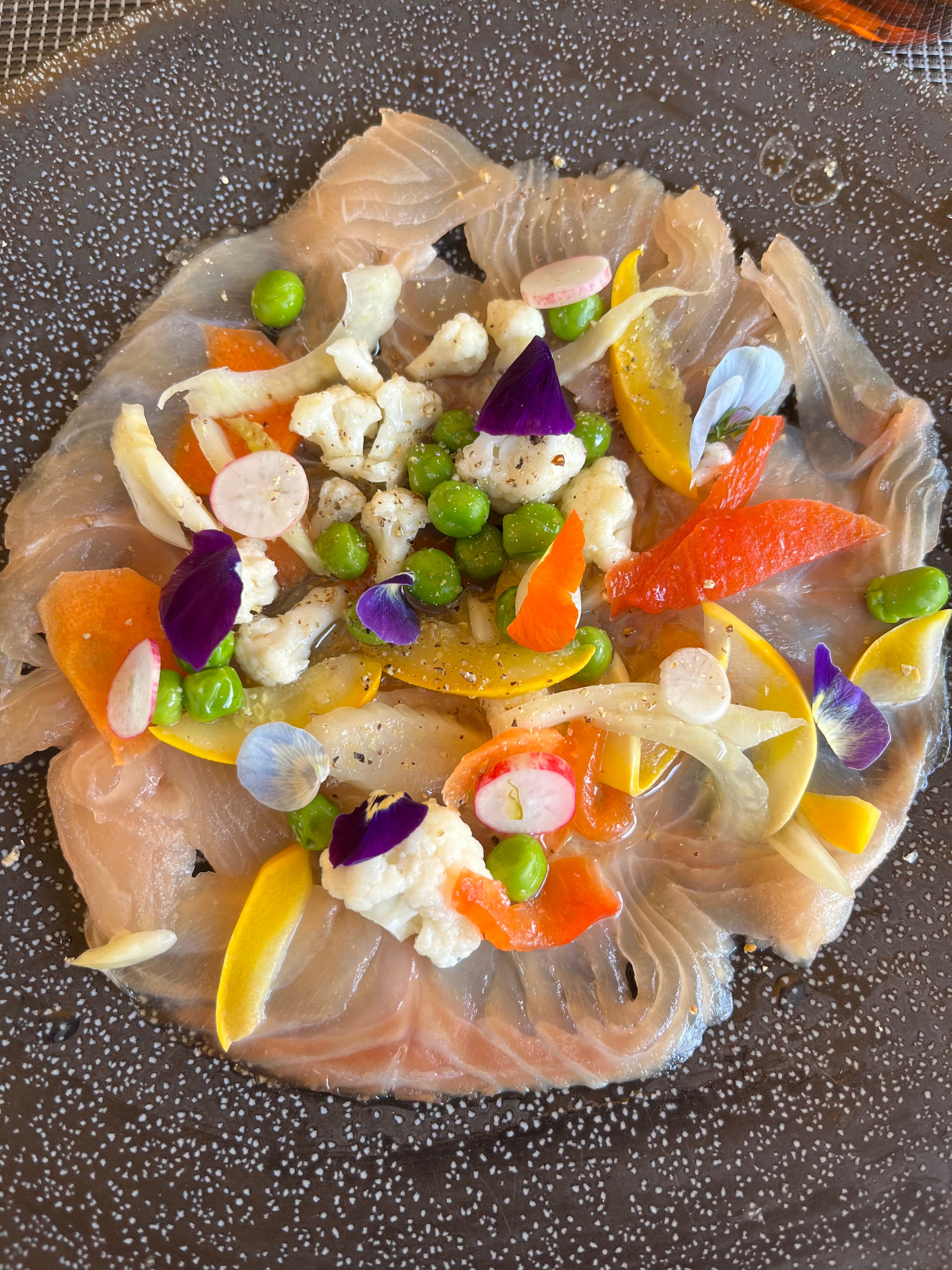
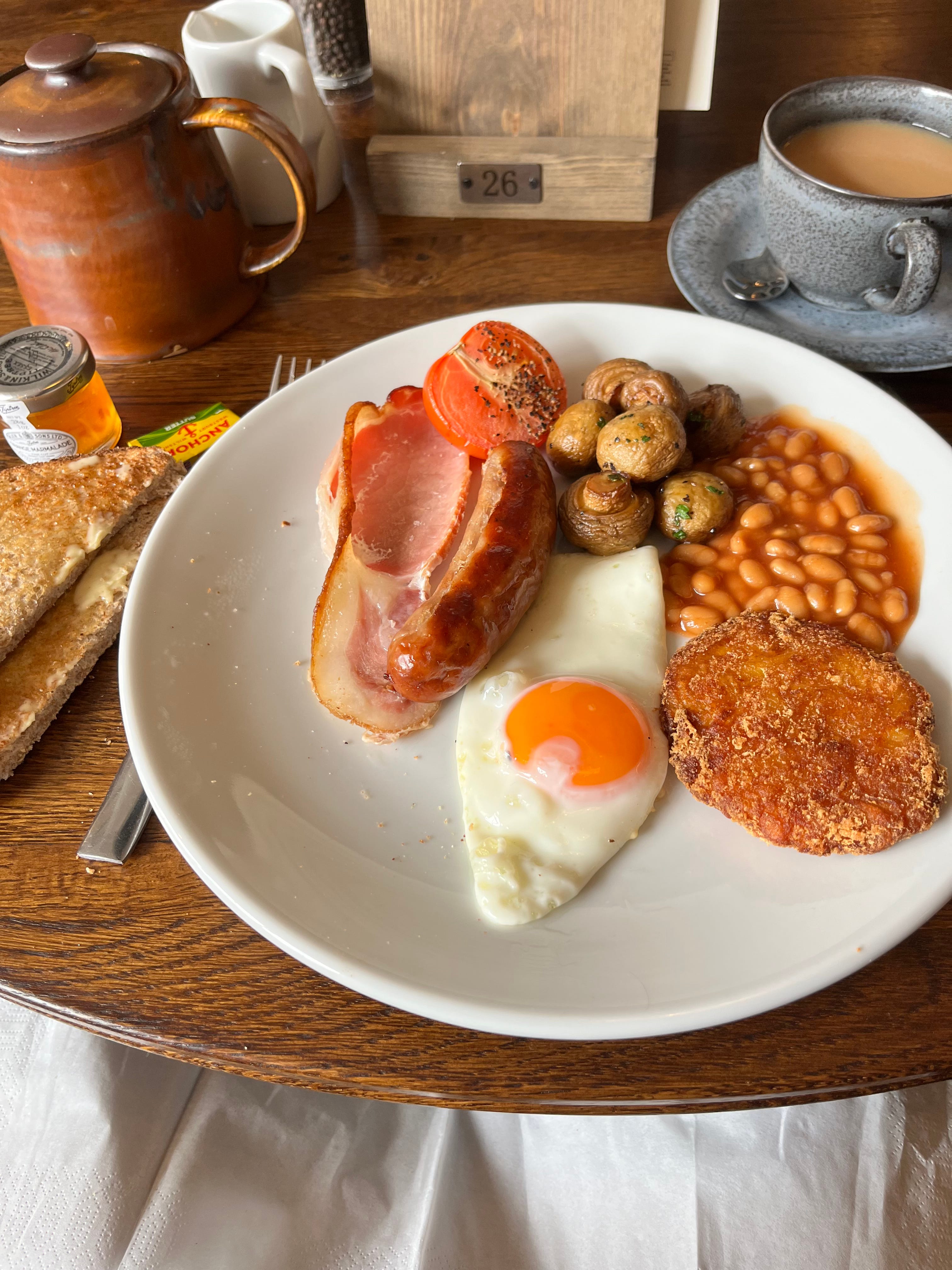
On the food front this week, we celebrated our escape to the countryside of Soane et Loire with dinner at Doucet’s Bistro Quai. It is such a well run and efficient place to have in your backyard. His Michelin one-star restaurant is across the road, but the simple yet perfectly executed fare of Quai reflects the fact that the star chef is at the helm. Doucet himself came through and greeted every table and we, being locals I suppose, got the more personal handshake and smile. I had trout carpaccio followed by a Charollais steak with beef-fat french fries which were as decadent as they sound. Back in England I could not resist the ‘full monty’, it is one of the treats of staying at a hotel. Not sure which is more deleterious to the health, this or the beef-fat chips.
Je bosse

I think being the eldest child teaches you to be bossy. My brother Bob arrived home from the hospital with my mother when I was 3 and a half, already precocious I immediately enquired when he would be able to play cars with me. He duly became the dastardly Jerries to my plucky Tommy hero, the noble Indian to my brave cowboy, the dastardly Japanese to my Chindit. He was my goalkeeper when I later decided to be a footballer, so I could fire my dream shots into the top corner, or at least into the garage door and annoy my long suffering grandfather whose workshop was behind the goal. As our games outgrew just the two of us I recruited the Twohig brothers from across the road to our gang, then the Cornish brothers moved in around the corner and we had two opposing armies to work through our wars, raiding parties and bloodthirsty campaigns which were played out through the wooded world that was Tardis-like enfolded into our back garden.

I was the major general in charge of the maneuvers, the head coach making the tough calls and the CEO responsible for the division of labour. I was the oldest by one year from Kim Twohig and Neil Cornish but it was less a function of the height giving authority rather than desire for taking the authority, giving direction and leading the group off on our adventures. Whether foraging a path through the jungle of the bamboo thicket in our garden or trekking down the back lane of Webbs Hill to Vallis Vale and the overgrown former quarries that regularly became more strange lands to be explored and conquered.

My first formal interaction with a superior, other than dealing with my teachers, parents, grandparents and a much older sister, was Mr Wells of Wells Coaches. He ran the school bus services in the mornings and afternoons and day trips to Weston-Super-Mare, Bournemouth, Weymouth and Longleat. Children, sweet eating old ladies, smoking pub groups, travel sick as often as not, all his regular clients kept his coaches filthy. Myself and an everchanging cast of characters emptied the ashtrays on the back of every seat, swept and mopped the floors. We also got to clean the outside of the coach with a brush and a hose, I got to clean the outside until Mr Wells caught me cleaning my colleague with the hose and was told to clear off and never come back.

My next boss was a little more understanding but in her own way a little more intimidating. Barb Roberts was a bespectacled Yorkshirewoman adrift with her portly little husband in our little Somerset market town. She and George were friends of my parents and drank together at the Royal Oak, next door, every Friday evening. My mother and Barb did most of the talking, working through their packs of Silk Cut while my Dad and George punctuated with nods, chortles and knowing looks. My Dad’s pipe fulls of Condor tobacco completing the recreation of the great smogs of the 19th century while George, the non-smoker of the group, sipped his half of bitter. Barb was the manager of the Spar supermarket on the corner of Gore Hedge and Keyford. I worked for the going rate of 3 shillings an hour Friday after school and Saturdays stacking shelves and packing groceries. I moved on to other jobs that paid more or fitted around my school and, latterly, my sporting commitments better but I would see Barb and George with Mum and Dad on their Friday evening socials as they came back to our place for a night cap. This was the era of dressing up for an evening out so both the men wore suits, and the women in full make up, jewelry and dresses. George developed an increasingly large swelling in his groin that was never discussed, even as it became the size of a small football, more and more visible in his suit pants. He died suddenly of testicular cancer and it was still never disucssed. Barb went grey completely over the next few months and then died herself of a broken heart within a year. I looked to see on Google StreetView if the Spar was still there in some form but it has also disappeared under what is now a small housing development.

Bill Lewis was another outsider in Frome. He had been in the army but was a cockney who married a local woman. He had started a small cleaning business from scratch. He drove around town in his little van with ladders on the roof, hustling window cleaning when larger jobs were scarce. He managed to get a couple of contract cleaning jobs and then needed help and with my coach cleaning experience I was a shoe in to help him sustain his growing enterprise. I cleaned the floors of the large supermarket in the new West Way Centre every morning at 7.00am using a new fangled wet-vac. I balanced atop his highest ladders cleaning office windows. We cleaned  windows of the houses on the new estates. We cleaned PVC storage silos during the factory shutdown at Wallington Weston, where my sister and her husband had worked before setting off to darkest Essex for him to be a programmer. We also cleaned the canteen at the Express Dairy in Oldford, I did the cleaning and then Bill would help himself to chocolate bars and sweets which he smuggled out in the wet vac. Oldford is full of odd memories, the Vaughn family farm at Park Farm, home of first serious girlfriend Jude, The Ship pub where I ended up working as bar man and outside of which myself and a friend spent an afternoon mooning cars as they drove by. The Express Dairy is now owned by Bonne Maman for some reason and in the early 2000’s my brother Bob ended up in charge of HR for whoever was the owner at the time.

Time moved on and I stacked more supermarket shelves, I was a White Hunter at the Lions of Longleat for 3 summers, worked bar, was a cook in a Good Food Guide listed restaurant, did shift work in a carpet factory running looms, was a fitter’s mate in a factory in Newport South Wales where I broke my toe, as Zappa would have been happy to see I wound up “working in a gas station” and before leaving for France after my final summer after graduation, before starting a real job, I worked in an early waste recycling project at a cement factory in Westbury, where I broke my little finger on my left hand while rebricking the immense kiln. So much for health and safety.

My first few months with Unilever were typical of the ‘graduate trainee’ scheme. Weeks of training in the SPD’s head offices in Watford interspersed with weeks in branch operations. My attempt at getting into the shipping part of Unilever failed and I ended up in their distribution business appropriately named Speedy Prompt Delivery. There were various companies all in one way or another moving raw materials into or finished goods out of Unilever businesses in the UK. Romantic intentions of being in a global world of shipping and exotic ports in foreign climes were dashed by the day to day reality of managing warehouses and delivery trucks in Warrington, Eastleigh, Doncaster and other lifeless towns in England enduring strikes and power cuts of the 3 day week and the famous ‘winter of discontent’. So when I was offered a market research project in the Potteries for a newly established international freight subsidiary I had little sense of what path I was headed down. I arrived on the train in Stoke late on a cold Monday morning in February and was picked up by the General Manager’s secretary, Carole. A woman, it saddens me to say, that having worked with her for 3 years my enduring memory is that she was prone to severe constipation and had to be reminded by her father to do something about it when she was starting to look ‘peaky’. She was engaged to a milkman, who because he got up at 3.30 every morning was not exactly the life and sole of the party, she referred to him as Bert, even though his name was David, it was if she had decided remembering boyfriend’s names was too much like hard work so for short hand they all became Bert.

I was asked to wait as my new boss, the GM, was not yet in. At about 12.05 he exploded through the office door rummaged through his in-tray and then came back out, all without taking off his mackintosh. “Lets go and grab lunch!” he said and off we went, me trailing him in an attempt to make small talk, as we jumped into his brand new gold Ford Capri 2.0 GLS and headed off to a pub. As this was late 70’s England pub lunch was a sandwich and a couple of pints of bitter consumed while my new boss, Pete Meyrick, in his broad Swansea accent, explained that there was no project but if I was interested they needed a salesman to cover Britain, the Benelux and France. If I did that for him I would get a company car and he would fight the political battles to make it a long term job. So with a very used maroon Ford Cortina complete with 8 track player and the promise of international travel I was bought. I became the Marketing Development Manager for the Powder Tank Division of Unispeed Intermodal. Meyrick was a hard driving pugilistic manager. I am not sure I learned that much from him as communications were not his forte; he was a team builder in so far as he put effort into the group socializing after long hours. He developed an esprit de corps by belittling the other two sister divisions, their efforts, their GMs especially came in for his withering disregard and the support staff who we shared the offices with in Newcastle Under Lyme. He ultimately left two years later to set up his own operation and became rich by stealing the core contracts from under the nose of the Unilever business. He took two of my colleagues with him and the fact that he didn’t invite me to join him ultimately showed how little he thought of me. I, meanwhile, was sent to another sinking ship of a division in Southampton, whose whole management team upped and set up in business to replicate what they had been doing for the by now embattled Unispeed group.

I have had 14 jobs since then, some were a lot of fun, some less so. Some I am embarrassed about in hindsight.  I did learn something from each of them, even if the lessons were simply to never do something again. Some were very financially rewarding and some I spent more money than I earned. I have managed or lead teams as large as 300 and at times as small as me on my own, some of the those colleagues have become life long friends. I have a couple of times joined a completely different industry with differing mores and ways of doing business, that is tough and ultimately not easy to do successfully. So the one conclusion is that you probably need to be thoughtful about making a commitment to a job when you are young, as it tends to direct you down a path that guides or constrains the future career options. I always wanted to work internationally and escape the rainy little island of home so on balance when I sold my soul for the used maroon Cortina that was the bargain that I made and I am happy I did.

On the 8-track this shoulda/coulda been playing.