
Gones to the city: Episode 21 Mrs Harris’ Grandson Goes to Paris

Having failed miserably to get tickets for ‘Les Nuits de Fourvierres’, for the second year running, I had more success getting tickets for Anohni and the Johnsons at the Paris Philharmonic Hall. Off we went for a couple of hot and sweaty days amongst the Emily fans and families on their ‘Europe in 5 days’ itineraries. As is our custom, we managed 3 days in Paris without a single visit to a museum or gallery. We walked all over the 10th and the 11th, ventured fleetingly into the 20th on the hill up to Ménilmontant and got the metro up to the Philharmonie de Paris, which is a glorious building in a music themed park, tucked hard against the Périphérique in the 19th. 

Credit to Rachel for the picture

The campus includes the Cite de Musique, a collection of music spaces including large performing halls, practice space and children’s resources. The Philharmonie itself is modern and shiny and only relatively recently completed, it is covered in aluminium bird shapes straight out of one of Escher’s notebooks. We arrived for our show in the Grand Salle Pierre Boulez at 8.15 and thought it eerily quiet, maybe she had been too optimistic playing two nights at such a large space? We opened the second of the acoustic isolating entrance doors into the auditorium to be met by an usher and a full house and then the lights dimmed, and the show started before we had even begun to follow him to the seats. Having narrowly avoided falling over the low rail in the dark and into the crowd below, we found ourselves in the center of the balcony front row and settled into the performance. A French audience is a joy to behold, attentive, enthusiastic and cheery, and they watch the fucking show, not a phone to be seen. Seriously, I looked over at the packed stall seats and not a single phone, no one filming, no one taking selfies, no one checking Insta, no one doing a quick work email. When the show finally finished, a couple of hours later and the band took its bows, then the phones came out, and they took a respectful shot of the performers. So a word for the wise, if it says 8.00 PM it’s not doors 8.00, show 9.00, it will start no later than 8.15 and do not even think about getting your phone out until the show is done.
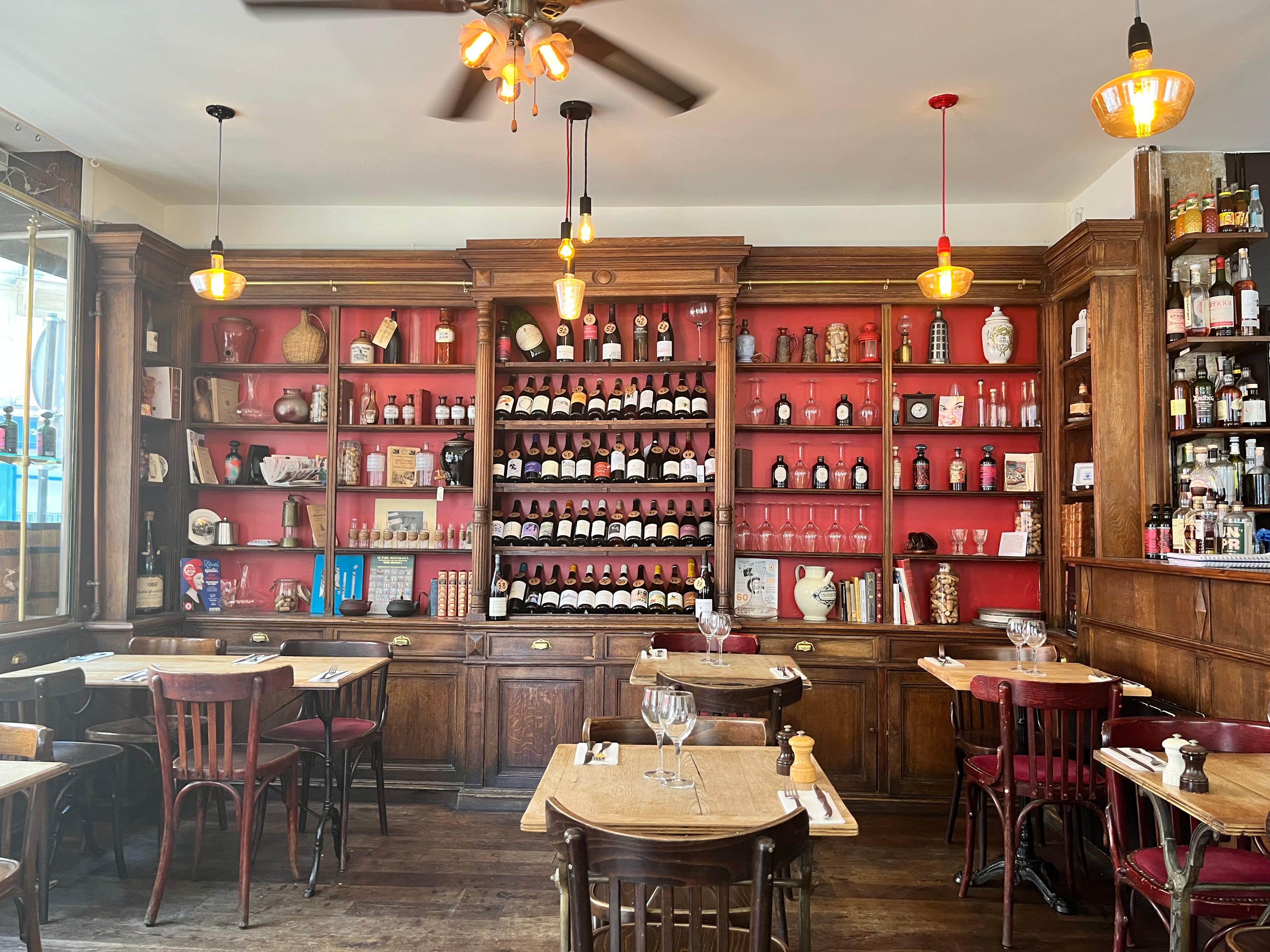
The summer is finally here, and a city is not necessarily the best place to enjoy the heat and humidity. Few cafés and bars have air-conditioning, some restaurants do and our hotel, like most now, did have pretty good AC, but it was a sticky couple of days. We had a couple of great meals, an insanely good one and one that could generously be described as ‘average’ but that’s what you get when you eat at the unthinkable hour, at least for a Parisian, of 6.30 PM. Breakfast at the hotel was good, but it was spoiled by a tech bro who thought it would be cool to share his thoughts on coding protocols to the wider world. You get used to the laptops at breakfast, but it seems that the crass self worship that seems to come with working in tech in the US is hard-wired, you can take the asshole out of Silicon Valley, but you cannot take the Silicon Valley out of the asshole, even in Paris.
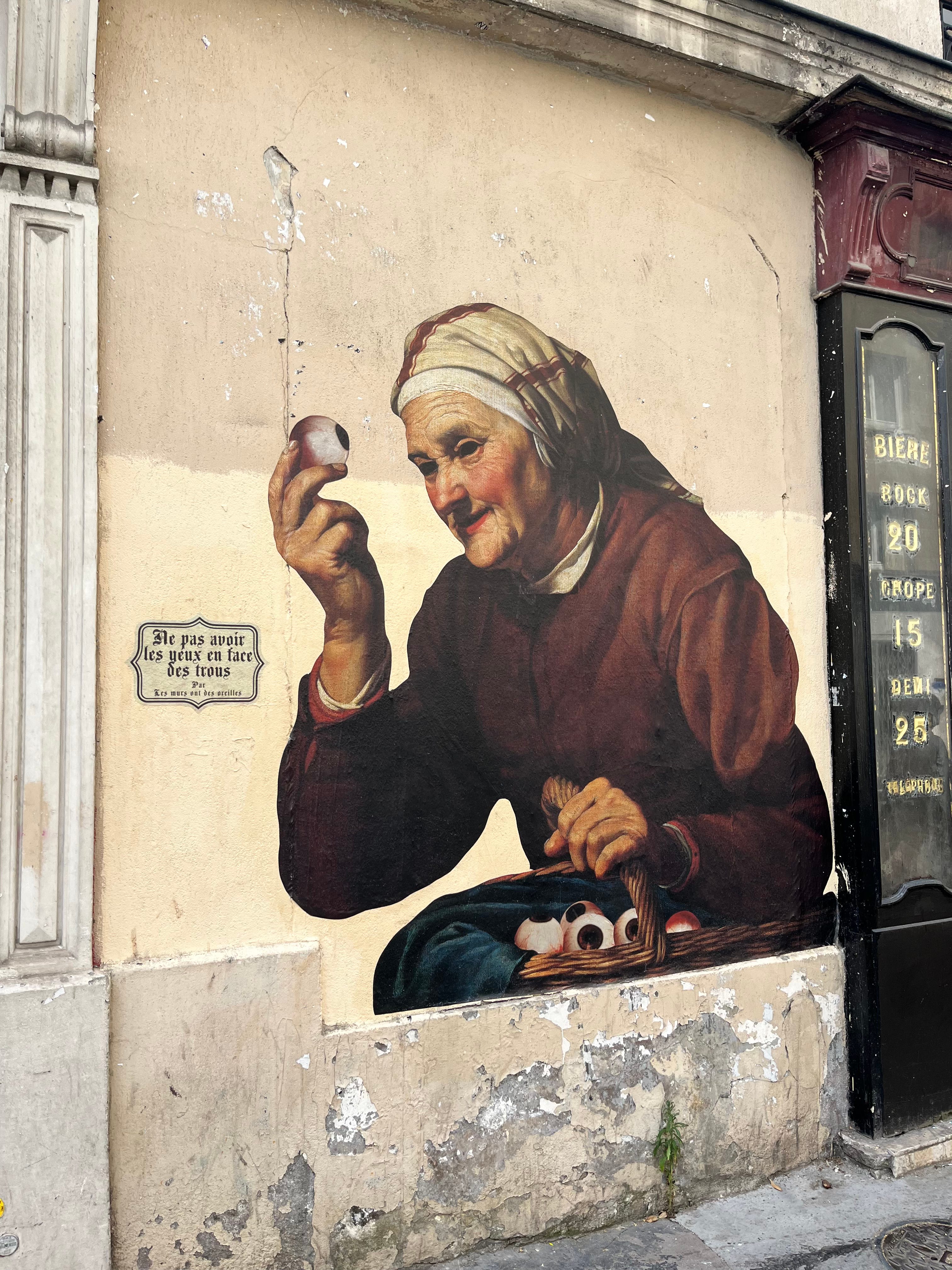
Tuesday was the feast day of Saint Eleanor or Éléonore, as she appears locally. Originally from Provence, she arrived at the ripe old age of 12 years old at Canterbury Cathedral to marry King Henry III, who was 28 at the time of her wedding, the first time she had laid eyes upon him. She was not completely unprepared for this life, coming from an overachieving family with her three sisters all marrying kings – Margaret was the Queen of France, Sanchia Queen of Germany and Beatrice Queen of Sicily. Eleanor was a loving and dutiful wife, attractive and a bit of a fashion icon, certainly compared to the barely civilized Brits. She had her clothes shipped over from France and was responsible for the introduction of a new and daring whimple, not an item of clothing with many followers nowadays but at the time was quite the thing. Unsurprisingly, as a well-educated and erudite woman who provided advice and counsel to her husband the king, his Barons got their noses out of joint. This was particularly the case when Henry went off to Gascony in 1253, and she was made Regent in his stead. She held the post of Lord Chancellor, the only woman to do so until the great Liz Truss was appointed in 2016. She had a major beef with London, she hated the Londoners, who seemed to have returned her disdain. She took her revenge by taxing her cockney citizens, and they didn’t take it well. Eleanor demanded from the city all the back payments due on the monetary tribute known as queen-gold, by which she received a tenth of all fines which came to the Crown. On a barge sailing up the Thames on the 13 July 1263 she was attacked and was pelted with stones, loose pieces of paving, dried mud, rotten eggs and vegetables, Eleanor was rescued by the then Mayor of London and had to hide out at the nearby bishop of London’s home.

She had 5 children who survived and another 4 who we are not sure about as they are not recorded officially. The first son became Edward I of England. Margaret who became Queen of Scotland, Beatrice who married John II, Duke of Brittany. The younger son Edmund Crouchback, (that’s a catchy name, not sure if it was used to his face though), who became an important ally of Edward later as Duke of Lancaster, ended up establishing the House of Lancaster that was one side of the War of the Roses a hundred and fifty years later. The youngest daughter Katherine died at the age of 3 and both parents were shattered. She survived her husband and both her daughters and spent her later years as a typical royal grandma of the age, finally living at the Amesbury Priory, where she died and was buried. Her heart was taken to London where it was buried at the Franciscan priory of Greyfriars. Henry VIII dissolved the Greyfriars and the remaining buildings were destroyed in the Great Fire of London. Quite depressingly, the building on its site is now the Merrill Lynch’s London office. The physical site of Eleanor’s grave is unknown, making her the only English queen without a marked grave. She has been beatified but not technically canonized, but her feast day is June 26th, the day she died in 1291.

On our last day before catching the train home from Gare De Lyon, we went to a small, modest restaurant called Magma near the hotel. It is the home of Ryuya Ono (no relation to the sack-dwelling keening contributor to “Sometime In New York City”). He and his Japanese team create precise Japanese influenced versions of French classic cuisine. We had a fun amuse bouche of leek soup with a Japanese custard, followed by a white tuna sashimi with a salad of aubergine and cucumber. It had fresh coriander seeds as a seasoning and the whole dish was exquisite. The main course was the collar of Guernard, which I have never eaten before and will now happily seek out at the fish market. The fish was grilled so it had a smoky flavor, but the flesh was sweet and easily fell off the decorative bones. I swilled this down with a couple of glasses of a sublime Chenin Blanc, a ‘Chenin De Ligne – 2023’ from Pinot Bar, the negotiants and garage winery of Chris Laurent and Fanny Caignard, sold as a Vin De France as it’s made in Brittany from Anjou grapes. Desert was equally divine with chocolate, ice-cream and a galette crumb. The skill on display here is already acknowledged by Michelin and worth every penny of the €39 set lunch. 

Gones for good – Episode 5 Running the rules

The French love rules. Love rules. They have a process for everything in public and probably all aspects of private life. They follow the rules, and they really have no respect, time nor affection for those who do not. Everyone is polite, it’s a simple sign of mutual respect. Saying ‘Bonjour’ to every single person in a shop in a small town, saying ‘Bonjour’ before you ask someone a question at the station or on the street, saying ‘Au revoir’ when you leave a place; they all signify that the other people are human like you, and deserve the basic respect. This is the Egalité in action.

The Liberté is limited in so far as one is free to do what you like, say what you want, as long as it hurts no-one and remember that it is but the first word in the Liberte, Egalite, Fraternite trifecta. The liberty, equality and brotherhood of the motto of the Republic are not taken as separate beliefs but in the power of their combination. So no semi-automatic rifles here; religious freedom does not mean one’s beliefs supersedes those of the state or, as of yesterday, the ability to remove a woman’s inalienable right to decide for herself whether she brings another life into the world.

They also take the small rules seriously. We have the recycling picked up three days a week, today the Music School from the Université de Lyon next door had overstuffed their large recycle bin. The binmen or ‘les ébouers’, took offense and taped over the bursting dumpster lid with red tape, declaring it was non-conforming and left it behind. We have a compost bin on most blocks now, in an effort to get the methane creating organic waste out of the landfills. They distributed to every household a little brown compost bin and a 120-day supply of brown paper bags which get thrown into the larger bin out front. Someone obviously didn’t read the rules and threw something they were not supposed to in it, and we had our compost bin taped shut for 2 weeks, as a punishment for depositing “non-conforming waste”.

They shortened this, taking out the death references after the Terror

I think the French approach to rules is refreshing, especially if your reference points like me are either England, where no one gives a shit for the rules or the US where they have a blind obsession for the rules even if they make no sense (pick your own personal amendment). The French had got sick of the hierarchical aristocratic system overseen by the King and the system of privileges for the guilds and the church. They had themselves a revolution in 1789 and threw all that out over a period of 10 years. They decided that the people were better at ruling themselves than having to listen to someone who happened to be born in a certain place to certain other people and so in 1793 cut off the King’s head to prove, amongst many things, that he most certainly was not divine. The practical difficulties of this degree of self-determination and the struggle for political control was demonstrated over the ensuing further 6 years of chaos starting with the Reign of Terror, under the ironically named National Convention to the Committee of Public Safety. It was not safe for the 16,000 members of the public who were executed in about 9 months. They had two further changes of power, and the Republic which had been so proudly and vehemently celebrated in 1792 gave way to the Directory. The French do love a good bureaucracy and two key the things that struck me reading “Citizens!” by Simon Schama (the best single volume history of the Revolution, even if a bit weighty) was that firstly, during all this 10 years of absolute chaos, France was embroiled in near constant wars, Prussia, Spain, Austria and good old Blighty shit-stirring from the sidelines, all had a go at settling scores with France. Secondly, they tried desperately to have an enlightened democracy and formed one after another of various forms of representations, taking lands and trade monopolies from one part of the society to try and give to others to equalize the country. They formed different lower and upper houses, localized representative assemblies, centralized budget forming bodies and one after another failed to unify the country. So they would start again, a few people would be executed and someone else got to try their idea until that failed, and they found themselves facing the guillotine. Finally, the Directory gave way to the Consulate, one of whom was Napoleon Bonaparte, and the rest as they say is history. As much as Boney gets grief now for restoring slavery and his warmongering, the France of today owes much to his administrative changes and rules which settled France into the 19th century power house that it became. 

The French follow the rules religiously as long as they are seen as being applied equally and making sense. When they do not, they burn shit down. The spirit of the Revolution definitely lives on in that aspect of life in France. Since we have lived in France full-time we have had the ‘Gilets Jaune’ movement, ignited by protests against changes to rules around car emissions which punished the rural poor. We have had the concerted efforts by the French Unions to block arguably much needed reform of the sprawling pension system, because it punished the working poor. This became more of a fight about modern capitalism, and we enjoyed hearing the smashing of cars, shop windows and the smell of burning trash cans and bus shelters off and on for 3 months just around the corner. We have had the farmers blockading the major freeways and donating supplies of old tires and manure to local government offices. In each case there is a general support for the plight of the victim of the bad rules, the hardworking Everyman, suffering at the hands of an unseen bureaucrat in Paris or Brussels.

Wednesday was the day of St Colette. You may be surprised to read that as much as the French do like the writings of Colette and that she was honored by the state and buried in Père-Lachaise, the Catholic Church found her ‘sulpherous’ and refused her a church burial, so they would be pushed to beatify her. St Colette was a woman born in the late 14th century who found the normal life of a nun in an abbey too comfy and so started a new order that prescribed extreme poverty, going barefoot, and the observance of perpetual fasting and abstinence. The supposed anti-pope at the time in Avignon gave her his blessings and issued papal bulls to support her mission, and she managed to persuade enough other women that this was the life for them that she opened up 18 monasteries under her regime. This probably tells you more about how much fun normal life for women was in the late 15th century in rural France. As much as you may be being introduced to St Colette just now, she is known more widely than you would think as she is the Catholic version of IVF. Her mother gave birth to her at the age of 60, so not unsurprisingly she is patron saint of women seeking to conceive, expectant mothers, and sick children.

Wednesday’s lunch was postponed to Thursday due to what could best be summarized as a phone panic. When you lose a phone with all those great banking apps, business apps and documents accessible that you would not want anyone having access to, it’s not conducive to a relaxing lunch. When your 2-factor auth is only available on that phone which would normally allow you to change passwords, it pisses you off for the rest of your whole day for sure. If you happen to have your American SIM card as an E-SIM in the same phone, and you realize you would have to fly to the US to restart service, on which all your US banking 2-factor auths depend, it would ruin your week.

Hosanna! The Joy of Relocating Previously Lost Phone!