Busy days. A late celebrated anniversary due to me being back in the Bay Area on the actual day (that was worth its own blog, but it would be like falling on a bruise, I’ve done that before, which if you didn’t read it can be found here), Shrove Tuesday and Mardi Gras, the fête de St Valentin.
France is on one hand religious, as late as 2011 over 50% of the population believed in God if asked, although it’s now down to 44% but 35 million Frenchmen and Frenchwomen self identify as Christian. On the other, it is constitutionally not religious, your Church wedding means nothing. There is no ‘And so help me God’ in courts, no invoking of His blessing when they sing the national anthem. No opening the Senate with a pithy prayer, and no place legally for any religious symbols at school. As much as people would point to the enforcement of the latter having become more a casus belli of the right and their fear of what they see as the visible signs of the march of radical Islam across the fatherland. Crucifixes around necks and yarmulke had been quietly ignored for decades, but the hijab and more recently the full body cover abaya have drawn the ire and attention. Macron is courting the center right or more pointedly not allowing the far right under Le Pen to profit from the cry for some casual cultural bullying. So religious, except when it’s mainly not.
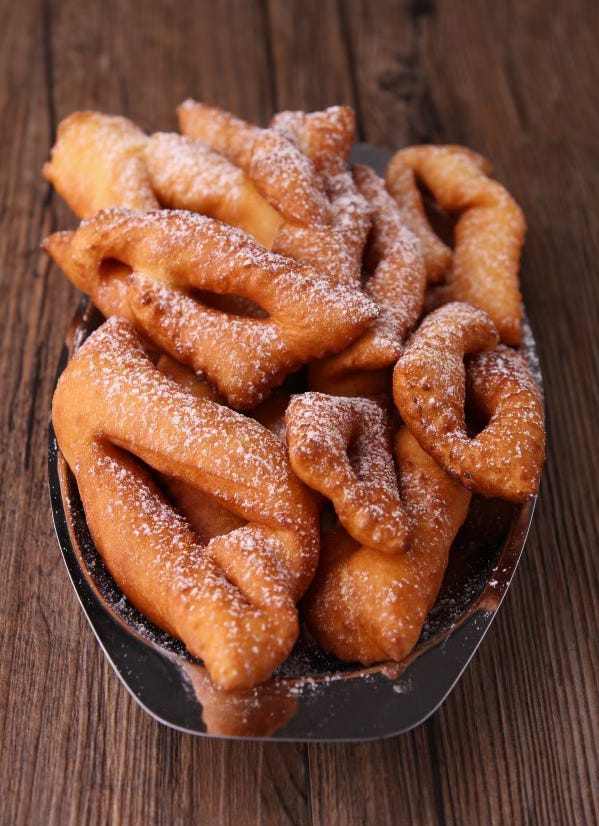
Every day in the bakers they write on a chalk board the Saint for the day. When they finish the weather forecast on France 2, they give the sunrise and sunset, phase of the moon and the Saint’s Day. Tomorrow is St Julienne for example. I am unaware if St Julienne has any particular pastry or treat but we are still technically in the season of the Bugne. This is a Lyonnaise doughnut, very light version of a doughnut and light years from a Crispy Creme or the English jam doughnut. Traditionally a Mardi Gras treat as it has ‘gras’, grease or fat; it is a small shape of dough fried in fat ahead of lent’s lean days. Dusted with sugar, it’s a sticky-fingered treat for the ‘gouter’. It is the English who are feted for their afternoon tea but ironically other than the legions of the retirees who, having strided the green and sadly now fetid land, retire to a local tea shop for tea and scones, most Brits do not have afternoon tea. Yet in France, every child returns from school between 4 and 5 to have the treat of the gouter, the local version of afternoon tea. A drink with a sweet something, bugne, chocolate bars, pain au chocolat or bread with lashings of Nutella. The adults partake with tea, sadly usually without the addition of milk and many, many bizarre herbal offerings masquerading as bringing some healthy side benefit. I am not a massive fan of bugne Lyonnaise, but neither am I a fan of doughnuts regardless of which side of the Atlantic they originate from. I do, however, really like the ‘ears’ style doughnut, called Elephant Ears or if you are from the South West ‘Bear’s Ears’. Les Oreilles d’Ours are flat layers of flaky pastry, fried of course, but flavored with orange water, fleur d’oranger. They are dangerously good, bought by the 100g and needing to be eaten within minutes to be fully appreciated.
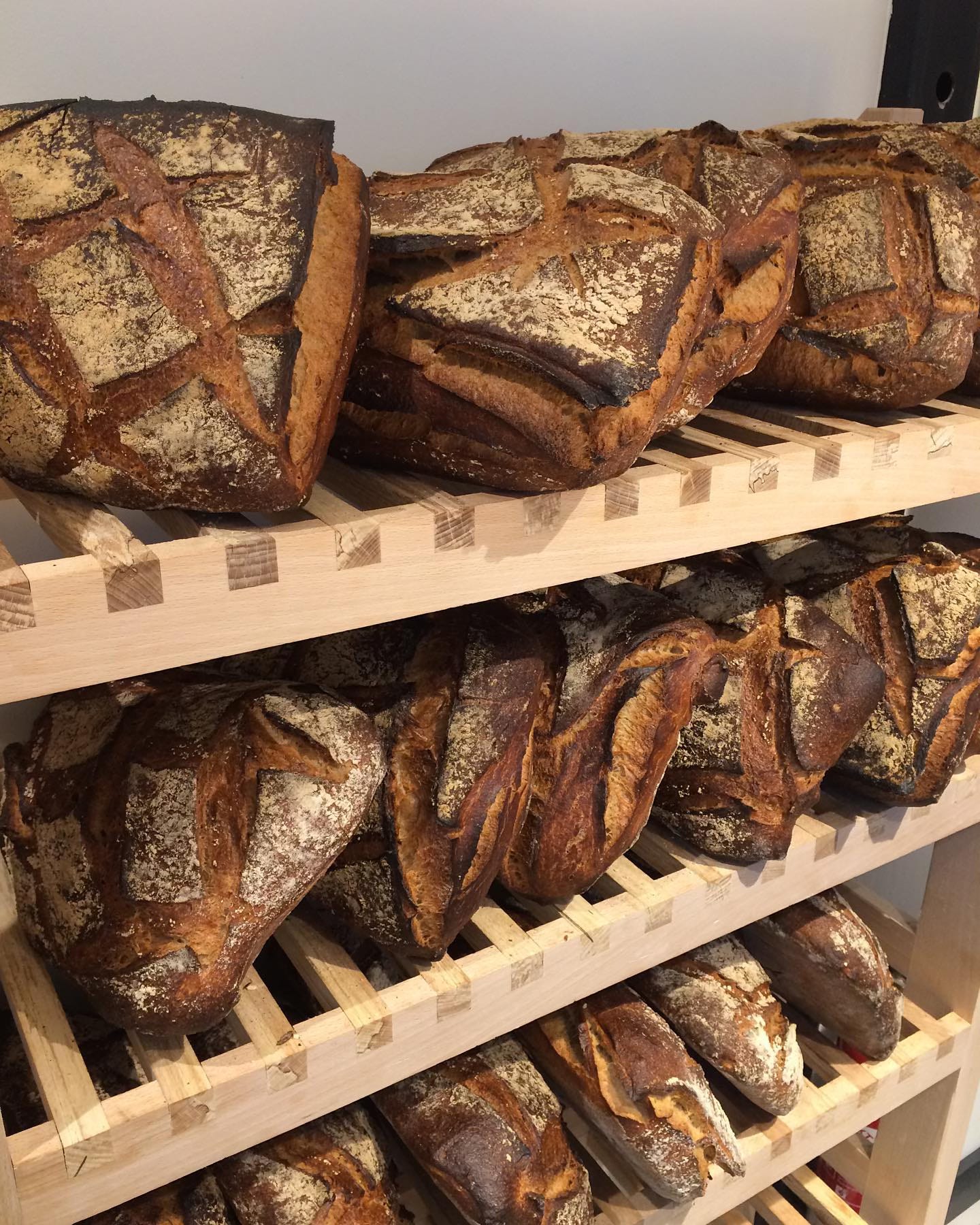
The French are zealously religious about bread. Their church is the Boulangerie. We are blessed in our Burgundy town of 3,400 souls with 6 bakers, with rotating days of closure fresh bread is available 7 days a week, 6 days a week with two bread bakings, morning and afternoon. The supermarkets also sell bread, but you really must have given up on life to buy your bread there. The bakery scene is further slightly subdivided into Boulangeries, places that sell only breads, Boulangerie- Pattisseries, places that sell Bread and cakes and Patisseries that sell only cakes. There is a further odd distinction with Banettes, which are bakers who sell pre-prepared sandwiches, small individual deserts and cold drinks which serves the lunch crowd and school kids; most have some seating as its uncool in France to eat on the run. There are 35,000 boulangeries, according to the Confédération Nationale de la Boulangerie Pâtisserie Française, about the same number of communes in France. The distribution is not that straightforward as the major towns have more and the villages have lost their bakers over the years. Paris has 1360 bakeries, Lyon 286. In 1960 there were 50,000 in France but from then until around 2010 they declined steadily with many disappearing from rural villages, as the population moved into the towns and old retiring bakers were not replaced. They flat lined for a few years but since 2017 there has been a resurgence, from 2017 to 2023 the number of boulangerie-pattiseries grew by 9% as a new generation of scratch bakers has joined the profession.
A boulangerie has to sell the basic baguette ‘traditionelle’, which is price controlled and currently €1.30 and 250 grammes. Generally avoid this and get the next one up, in Burgundy we get the Charolais which is €0.40 more expensive but sour dough rather than a commerical yeast. In France overall they bake and sell 6 billion baguettes per year, equivalent to half a baguette per person per day so yet the french like their daily bread. 82% admit to eating bread every day and an old expression to describe something as taking a painfully long time is “longue comme un jour sans pain”, as long as a day without bread. In Lyon, we have an embarrassment of riches bread wise and part of the fun exploring around where you live is working out who has the best bread, the best croissant and sorting out when your first choice is open – Reymond in our case, open only Monday to Friday and closed (congé) for August and for ‘ski week’ next week. Local knowledge like knowing who is closed when, who is open on Sunday is a result of some worthwhile exploration. At some point I will have a deep dive on Reymond as they have amazing breads and other treats. The initial frustration of moving to France from the US and not having every shop open whenever you want it soon fades as you realize that the people who work in shops and restaurants have families too, they need time off to play with their kids, they need to get a proper meal at lunchtime and if you need some more mulch for the garden remember to get it Saturday as everywhere is closed on Sundays. I like that the service is professional without ass-kissingly desperate for the tip, I like that the wait staff get benefits and vacation, I like that I am never hustled for a tip when getting a coffee or buying a sandwich. Is it frustrating that Reymond is closed for two weeks in February? Yes, but really, what the fuck? Other breads are available. The guy has kids, and he is up at 4.00am every day of the week creating some of the best bread in the world, so if the kids are off school for Ski-Week I am happy he is with them and then comes back to bake, happy and content to put his love into his dough and not put the love for the other dough above all else, like in some places we could mention.
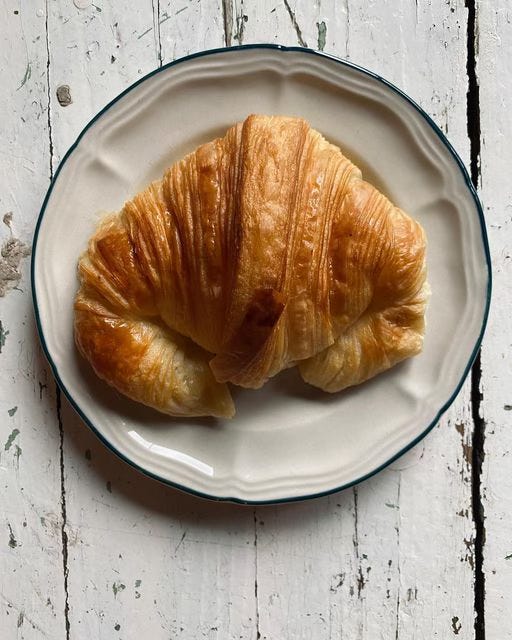
Croissants and their fellow breakfast treats like Pain au Chocolat (which for some reason my kids and I always have to pronounce in a New Jersey accent as “Panna Shock-a-latt” ) are grouped as Viennese pastries, ‘Viennoisseries’. The supposed story is that they were originally created in Vienna in the crescent shape as symbol of the victory of the Holy Roman Empire over the crescent-bannered army of the previously unstoppable Ottoman Empire on September 12th 1683. You will see Viennoisseries as the offering engraved on many Boulangerie windows and store fronts. Sometimes the baker will specify which butter they use, Reymond for example uses only butter from Charentes, French butter generally has a higher fat content than US butter which helps give that nutty mouth feel.
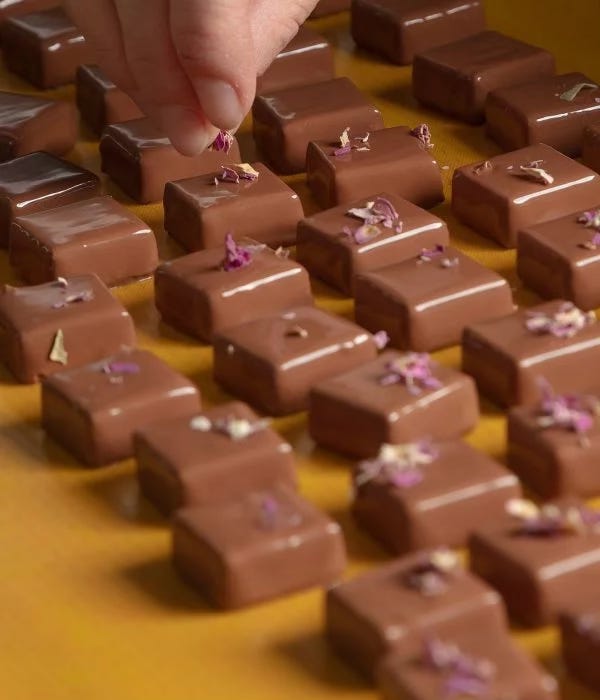
The French do not seem to get the same press as the Belgians or Swiss for their chocolates, but my experience has been that there is an insane level of quality of chocolates to be found everywhere. There are specialists that have retail outlets in all major towns, Charolles is the home of Maison Dufoux who has 6 retail outlets including one in the bustle of Presqu’isle in Lyon. The real surprise is the artisanal chocolates available in the Boulanger-patissiers who quite often make their own chocolates alongside the cakes and tarts. The French rarely visit each other empty-handed, so florists do well all year, and you understand why the baker, who has done his work by 7.00 am, spends his days baking cakes and making chocolates, which are boxed in small gift-sized presentations. Unlike in commercial chocolates you get to choose what goes in your selection, but that means there is no cheat sheet telling you what each one is, this is not your Cadbury’s or Sees Candies. It was the fête du St Valentin on Wednesday, so artisanal chocolates were getting a lot of love.
The dozen roses gift seems to be an imperial hangover. In France, roses are sold metrically, in 10s or 5s. Like most of the western world the French have adopted the Hallmark-enhanced saint’s day with love commercially celebrated correctly with chocolates, champagne and a choice of roses, pink, yellow, white or red. Restaurants do well, wine shops do well, and flower shops have to hire extra staff and do very well. The 14th was also Ash Wednesday, so there was an odd mix of people hustling around Garibaldi at lunchtime, some with bunches of flowers, some with a charcoal smudged cross on the foreheads, some with surprise lover’s picnics and some with all three, love and devotion was in the air.
If you need some love in your ears, start here.
 Anecdotes and Antidotes in Burgundy