

Lyon made an unscheduled and unflattering appearance on France 2 a few weeks ago. France 2’s news programming is the most watched, like BBC’s or NBC’s nightly news, it is more generally watched than other populist or entertainment-focused options. They have a serious approach to the news, slightly undercut by the female news anchors still tottering around in 5-inch heels; they may be occasionally allowed to be in jeans to show they are not overly buttoned up, but the jeans are ferociously tailored, and the heels are sharp. The men always and without exception appear in blue suits, white shirts and often with blue ties. The royal blue suit, a fashion item not seen in the anglophone world since the 80’s, regularly makes an appearance. Lyon’s appearance was on a 45-minute special ‘exposé’ featuring an undercover examination of the urban drug trafficking in one of Lyon’s suburbs, the Tonkin public housing complex in Villeurbanne. The hidden cameras were concealed among the efforts of a group of citizens who formed a collective effort called Tonkin-Paix-able, looking to ensure a peaceful Tonkin. The group rock up regularly in the middle of the major drug exchange with white t-shirts, rubber gloves and trash bags and ostensibly remove the detritus of the marketplace, ironically less used needles and more fast food packaging and beer cans thrown down by the dealers as they sit, hoodied and bored, on make-shift cardboard seats on the steps of the large public building opposite the tram stop. The collective tries to engage with the dealers to keep things as civilized as possible for the neighbourhood.
The story is common across France, not just the large banlieues that ring the major cities. Banlieue means suburb in a strictly etymological sense, but in France it is more synonymous with what Americans refer to as ‘the projects’. Public housing is a key part of the French social contract. The majority of French people rent rather than own houses and long term rental contracts, ample legal protections for tenants and local government rent controls mean it’s a simple long term choice for many working class people in the large towns and cities. Much of the rental housing is state owned, usually by the local council, some are private or charity but most is truly public housing. Through a natural process of selection recent immigrants get concentrated into the less well positioned cités, as in the movie images of ‘les banlieues’ in Marseilles or the Paris suburbs, isolated for many years without access to good public transport. In these areas, poverty and lack of opportunity follow declining standards in the schools and those who can do, move away, further concentrating the young poorly educated boys, not really men, into a process of boredom and finally relief through working for drug trading gangs. Selling ‘stups’ as in ‘stupifiants’, is a way and for many the only way for kids to make a living, other than riding scooters and bikes delivering food to the richer areas. The biggest trade is in weed or hash, with coke and crack some way behind. It’s a cash business and profits flow upwards, so at the sharp end the kids are not covered in gold chains, nor driving Mercedes SUVs in some wannabe rap video lifestyle. They all wear the same drab outfit, black Adidas jog pants, black Nike ‘baskets’, black zip hoodie, black baseball-cap and the one sign of affected affluence, a faux Gucci man-bag strapped across the chest.
France still gets shocked when the turf wars escalate into deadly violence, and even a single death will usually make the nightly news. Macron, in one of his studied efforts to deprive the far right of its rallying points, recently dropped into one of the major banlieues of Marseilles, La Castellane. On camera, he told residents that his newly announced campaign will “try to destroy the networks and the traffickers.” Macron said 82 people have already been detained, with 60 of them remanded in custody for further questioning. “Drug trafficking is a growing scourge” and “the situation is very difficult” in Marseille and other cities, he said, adding France was in the throes of a “battle” against the dealers. One of the ‘difficulties’ is that if the dealers are under 16, and most are, they cannot usually be arrested. The other glaring problem is the obvious demand for weed and an almost blind denial of the simplest thing to do would be to regulate the sale and take the clandestine market public. The wine lobby is dead set against legalizing weed as it watches Gen Z drink more IPA than vin de table. The French are happy to regulate the crap out of tobacco and vapes, but not marijuana. Go in a tabac today, and you are confronted by pack after pack of cigarettes with no visible branding and statutory stipulated 2.3rds of the packaging displaying pictures of cancers and post-mortem lungs. There was a story this week, continuing the theme of the “national effort” to save the tabacs. With some 23,300 shops across France, 41 percent of which are located in towns with fewer than 3,500 inhabitants, tabacs are an important part of French life, even for non-smokers. We regularly get parcels delivered to our local tabac as it’s often the free or cheaper option. This week’s new effort was paying the expanding no-touch automatic freeway toll charging. Last Fall, it was them selling ammunition for hunters. Why not allow them to sell weed? Solve all the small town angst and big city crime in one joint.
Saturday was the saint’s day of independent record stores, Disquaire Day or Record Store Day. Fuelled by special one off releases or collector’s items in the making, April 20th is a celebration of small and large record shops and Lyon is blessed with lots of them, most within walking distance spread around the narrow streets at the foot of les Pentes de Croix Rousse, a short walk from the Hotel De Ville. We made our way through the weekly pro-Palestine rally and the now regularly red stained fountains symbolizing the daily death in Gaza to my favorite, Sofa Records. They have an insane collection of West African and Hi-Life music and always something intriguing playing. They have good rock and pop stocks as well, and the shelves are well organized and easy to browse. Maybe it is completely unlikely that I would find a real gem of a discovery as those are now only found in charity shops, but it’s still a pleasurable way to while away some time. There was an interesting article in last Friday’s Grauniad about record collecting, ahead of RSD. In the UK even the charity shops have worked out that a quick look on Discogs will turn a €4 bargain into a €25 special display.
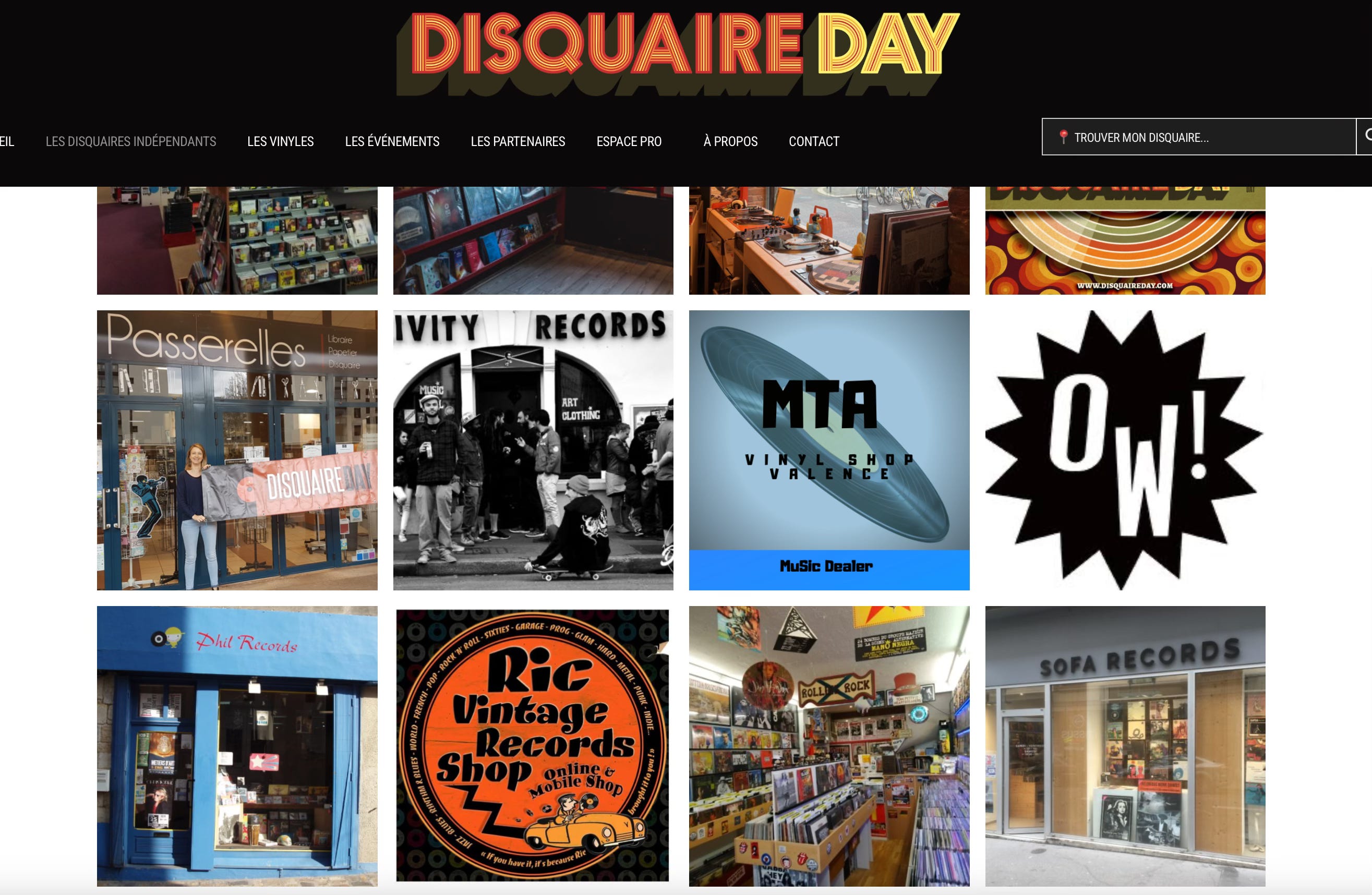
I didn’t need a Rumours picture disk or a “réédition splatter” of Sabbath’s ‘Paranoid’, so my shopping was less focused on the ‘special RSD releases’. I found the following treats:
“Lets Make Up and Be Friends” – The Bonzo Dog Band’s last album before Stanshall’s death (but featuring the first appearance of Sir Henry Rawlinson).
“TANGK” – Idles – independent record store version, new album from the best men in dresses.
“Desolation Boulevard” – The Sweet. The vainglorious effort by the Ballroom Blitzers to shake off their Glam-Pop reputation with a hard rock record.
“Flock” – Jane Weaver – a bargain pink vinyl version of her 2021 album which features vibes and who can resist a good vibraphone sound.
“Actual Life” – fred again – The first of the ‘Life’ trilogy, silver vinyl.
“Pretty Hate Machine” – Nine Inch Nails. A gift for Rachel, who is currently inspired by Reznor and tough to find on vinyl.
“Live Montreal 1971” – Frank Zappa. A semi-official bootleg from a radio broadcast. Its the ‘vaudeville’ band with Flo and Eddie on vocals, so all Fillmore 71 favorites plus one of the songs from the eponymous Phlorescent Leach and Eddie album from 72, which I have never seen on any official release.
If you would like to sample these treats, listen here.
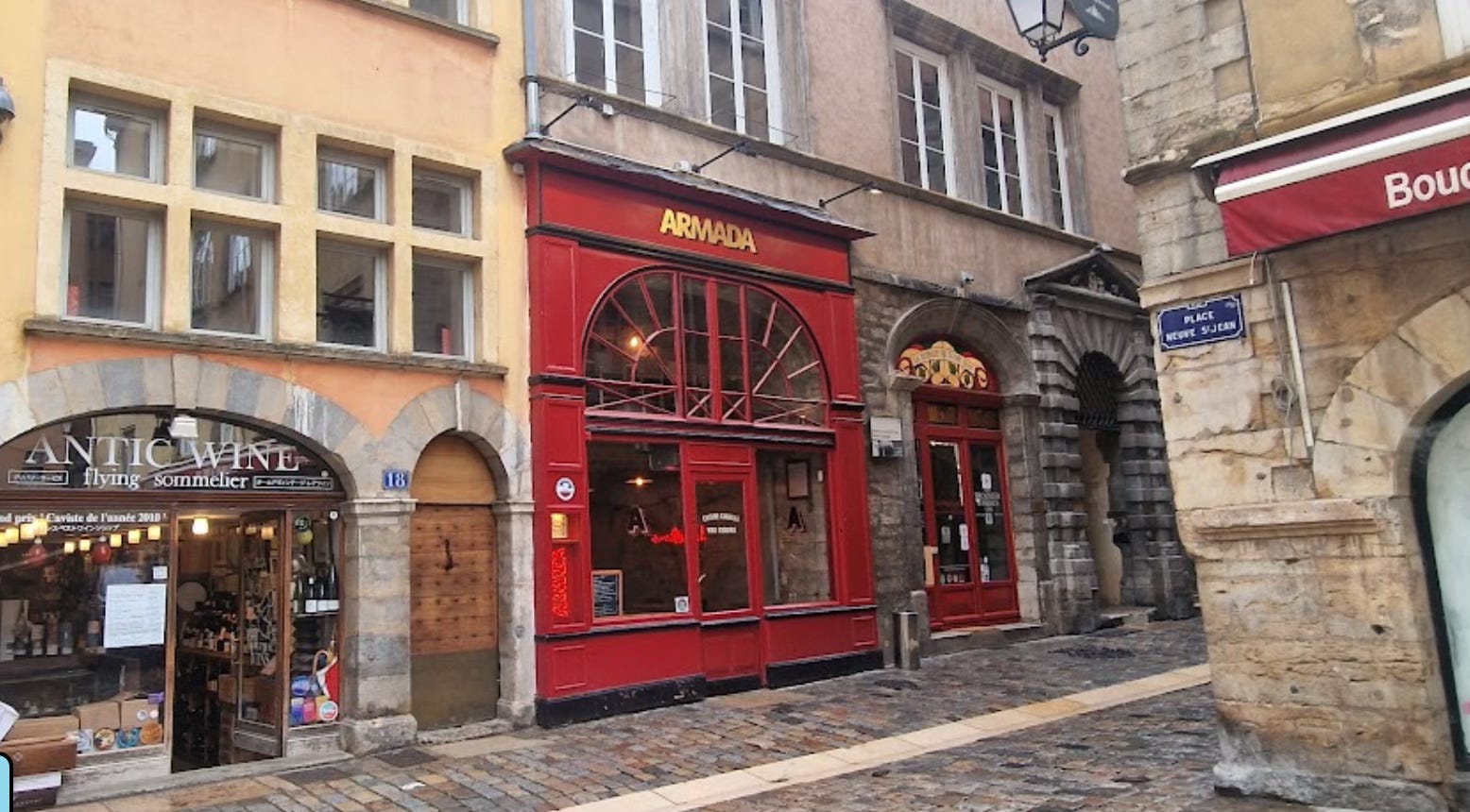
After a week in the mountains living on cheese and ham, it was good to get back to proper nosh. Friday night we went back to Armada on Rue de Boeuf in the old town. The first time we went there was by coincidence when they publicly made Le Fooding Guide, so it was interesting to see how they had adapted to their new fame in the intervening couple of months. They are still super friendly and faithful to the original vision of fun food. A modest space, sharing plates but not twee, tiny portions that you end up ordering 3–4 dishes a head. All very very good, the veggie driven starters were spring encapsulated, which was welcome after the winter of Tuesday and Wednesday in the shadow of Mont Blanc. Next door is Antic Wine, so they occasionally have specials from the neighboring cellar, and we had an amazing 2013 Montlouis followed by a 2011 St Amour. Some Loire whites are known to age and Chenin is a good grape to do that but a 13-year-old Cru Beaujolais is not common outside of Morgon, so we were blown away how good this was. The best dish of the evening was a lamb spring festival on a server, lamb from the Ardeche 3 ways, the fatty belly end grilled, the main rump chop served ruddy and the sweet breads done quickly on the griddle. All served over peas, pea pods and asparagus. The chef proudly delivered the two deserts and happy to chat about what made them special to him and ultimately to us. Among a ton of tourist traps, the modern Francis Drake would be happy to stumble into this Armada.
If you would prefer to receive this via Substack stroll over here: https://open.substack.com/pub/anecdotesandantidotes/p/gones-for-good-465?r=tnn6j&utm_campaign=post&utm_medium=web
 Anecdotes and Antidotes in Burgundy