Casual abuse of snowboarders
As I mentioned last week, Buttons Junior and I escaped to the Portes de Soleil and continued this week, defying gravity and the limits of our ability to digest cheese. We were with old friends les Poireaux and Poireaux Junior for the first part of the trip then in a WWE tag team hand-off, my brother Buttons Minor, hot-bedded into the basement of the chalet, and we continued without missing a beat.
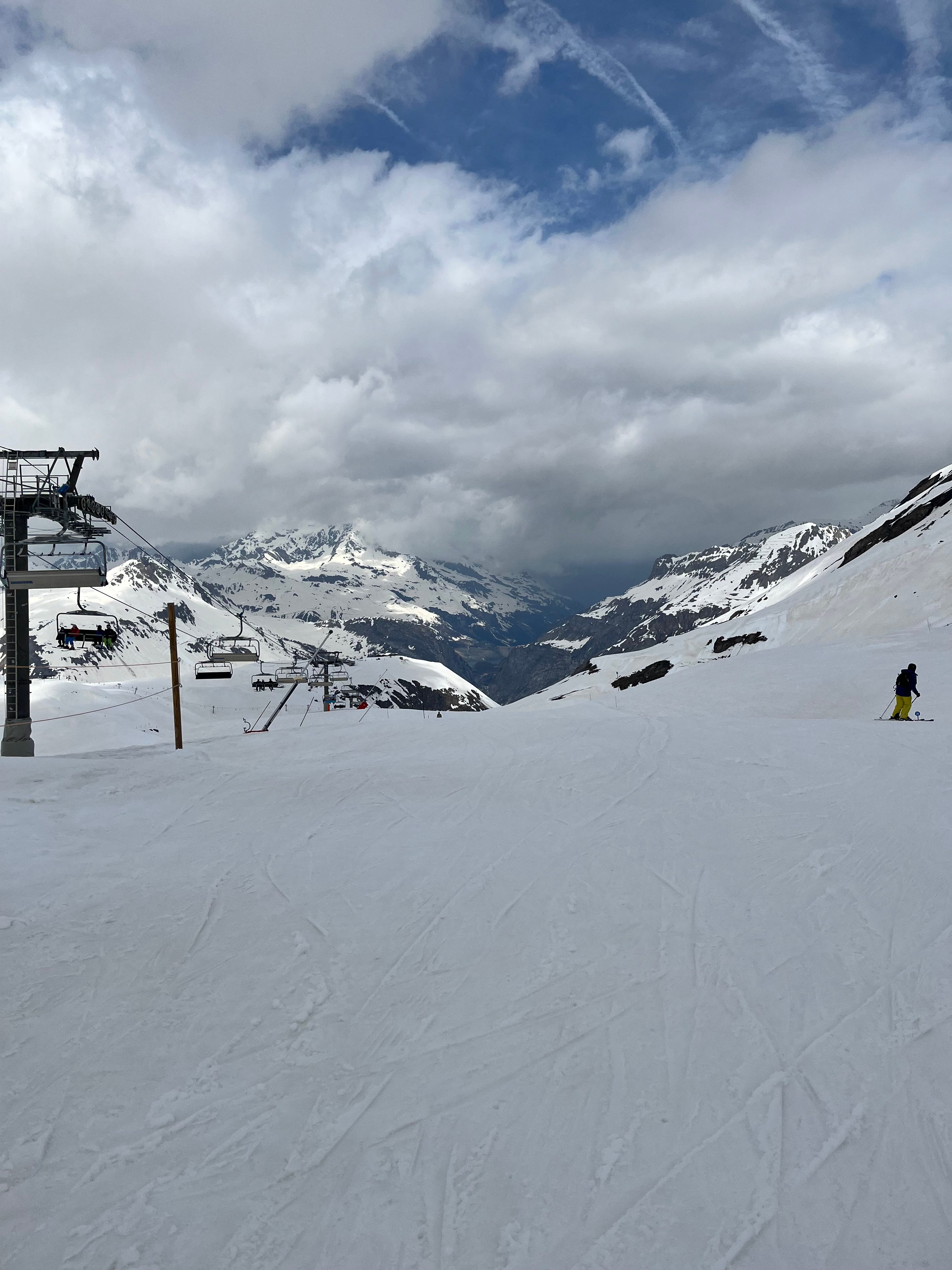
As a reformed ski-boarder, I think I am qualified to throw the odd judgment about our friends on planks or trays, as the less injurious parts of their more commonly used epithets describe them. The first thing to notice in Europe is that unlike in North American ski resorts, where the blight of the slope scraper is at epidemic levels, in Europe the ratio is much lower with boarders in the French part of the trip at 25% of the folks on the mountain and in Italy they were outnumbered by old ladies walking up from the gondola to get lunch with their grandchildren. The other odd thing is that when you do see a boarder in a bar or restaurant, they more often than not turn out to be a Brit or an American. The current younger generation of French hipsters may still smoke, they like their ‘Mac-do’, they may have taken to drinking IPA rather than red wine to the frustration of their elders, but they have stuck to skiing and not embraced the schlubby chic of the boarder. The terrain park that we watched the crews build at Avoriaz ahead of the weekend was hit by trick skiers when it opened, far more than by boarders. Therein probably lies the reason, terrain in the Alps is set up for skiers; lots of pistes, steeps get chopped and mogalled and valley floors have long run-ins and narrow, flat road tracks to get from one Valley to another. That is not great snowboard territory. Flats are a nightmare and when the sun warms it all up early afternoon to primordial soup texture that is soul destroyingly slow for the poor sap on a snowboard so as we use whatever slope and ski speed to avoid getting caught on the flats we whistle by frustrated boarders as they lumber or walk their weary way along.
We finished the week in Courmayeur, through the Mon Blanc tunnel and into Italy. There were plenty of road signs and places with very French names, but everyone is Italian through and through and the crowd shifted from urbane French and noisy Brits to trendy Italians of all ages up from Milan and Turin, and a smattering of Brits, less noisy and more adventurous than their thronging kin an hour and half away. The Italians, as I mentioned last week, are generally the more stylish visitors to the mountains, always good for some random fur collar trim or leather pants. They also seem to be quite fond of hi-vis neon pink and purples, an odd mix for disco wear and even more disconcerting on ski jackets. They have brands which do not make it through the Mont Blanc tunnel. We were stopped by French customs on exiting the tunnel into France on our return, they asked us whether we had any cigarettes, large amounts of cash and probably would have asked us about any garish Italian ski-wear if they had time.
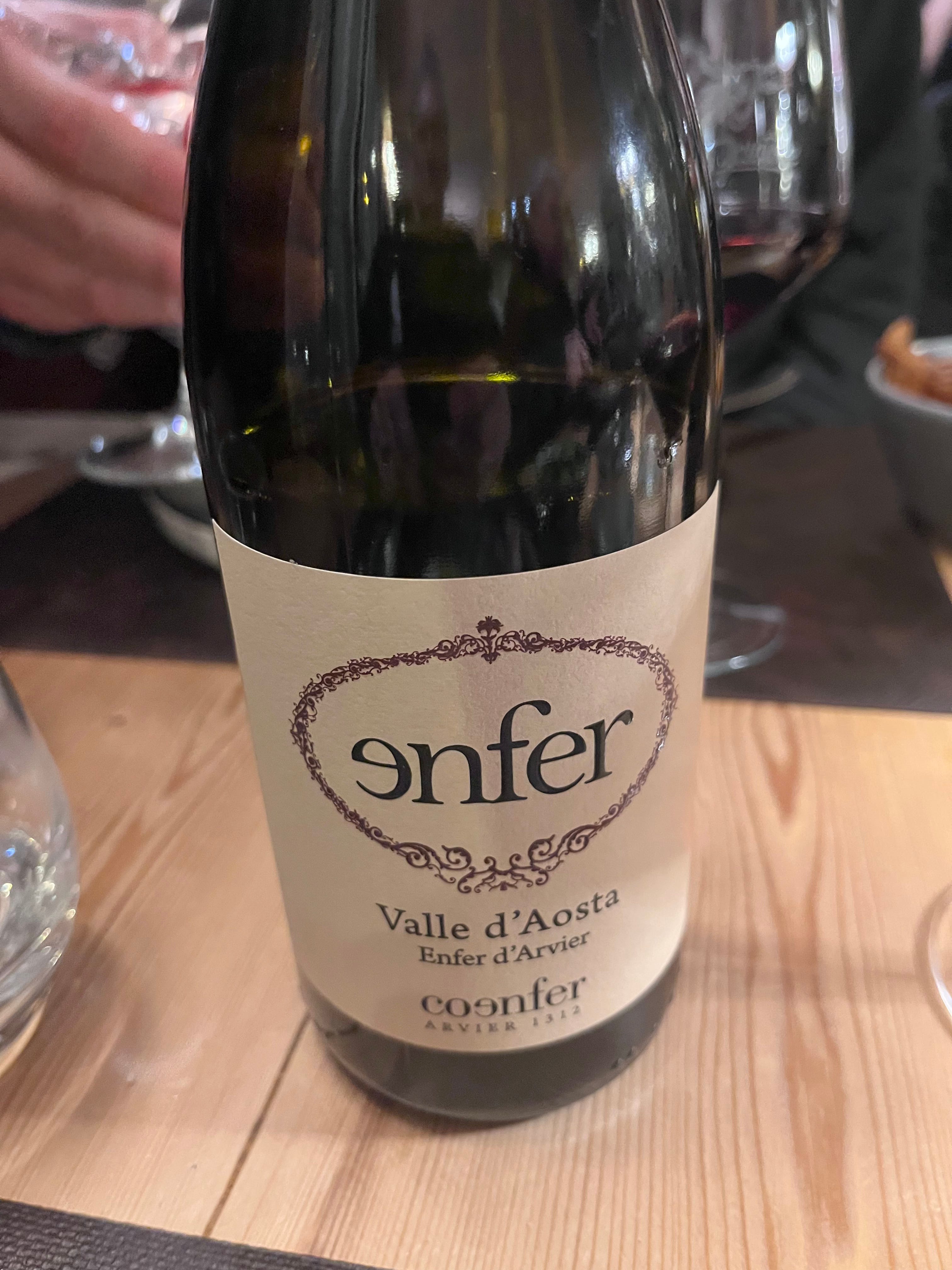
One does not ski in Italy for the fashion, one goes for the great food and large selection of Amare, the herbal digestifs which are great with that last espresso at the end of the day. One lunch we had a risotto, a salad and a pizza to share amongst the three of us and ended up leaving a third of the risotto and one slice of pizza, we also had to lie down before continuing the day, it was that rich. Glorious, but not exactly exercise food. Courmayeur is steep, not exactly a beginners hill and again not great for our boarder friends, tight steep runs with random cliff edge warnings. For those who do like a fast booming run though it is a treat, we were denied by weather on the last day as what could have been lovely new snow overnight ended up being warm rain in the morning and the guy at reception at the small hotel we stayed at in Dollone, very matter-of-factly said “Not a day for skiing” so we bailed and headed home. As well as local herbal ‘Amaro’ Génépi, not to be confused with the French version, we discovered that the Aoste Valley produces some fascinating wines, Nebiollos and Enfer, which even the barman at the hotel was unaware of. Very gluggable.
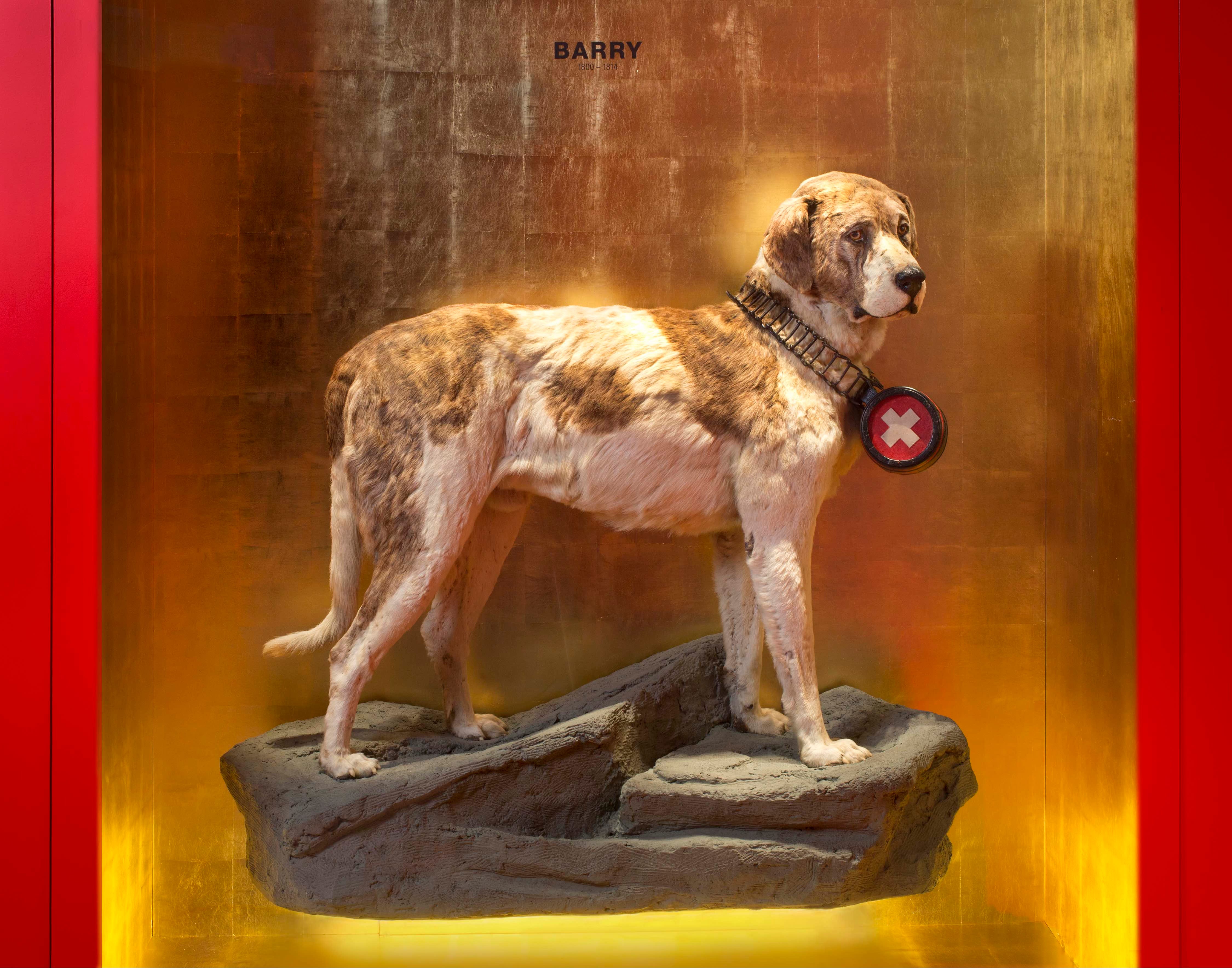
The patron saint of skiers and snow-boarders is Saint Bernard of Menthon, he also looks after hiking, backpacking, and mountaineering and thanks to Pope Pius XI the patron saint of the Alps since the early 1920s. St Bernard was another son of a rich French noble who decided to abandon his familial duties and follow the churching path. He refused an honorable marriage proposed by his father and supposedly had to sneak out of the castle on the night before the arranged nuptials, he threw himself from the window, “only to be caught by angels and lowered gently to the ground 12 meters below”. Desperate to avoid that poor woman he rocked up in Aoste 400 miles to the south, where over time he became Arch-Deacon of the passes and Valleys around Courmayeur, including the two passes over into Switzerland. These today are known as the Great or Little St Bernardino passes. Bernard set up hostels at the peak of the passes, to care for the travelers, many of them pilgrims on their way to or from Rome from France or Germany. The monks over the years continued their work of caring for travelers and in the 17th century started using the local Vallais cattle dogs to help them find the lost or those trapped in falls or avalanches. The dogs became famous and synonymous with the hospices, and like them, they were named St Bernards. The most famous St. Bernard to save people at the pass was a famous dog called Barry, who reportedly saved somewhere between 40 and 100 lives. Barry was so famous that he is commemorated by a statue welcoming visitors at the “Cimetière des Chiens et Autres Animaux Domestiques” a Cemetery of Dogs and Other Domestic Animals in Paris, the most French Dog Ossuary. This elaborate pet cemetery also contains cats, horses, monkeys, lions and even fish. Barry’s actual body is preserved in the Natural History Museum in Bern. Young Barry looks different from the St. Bernard of today because of crossbreeding. The dogs never received any special training from the monks at the hospice, younger dogs would learn how to perform search and rescue operations from older dogs. The dogs only became known as St. Bernards from the middle of the 19th century. Prior to that the ever observant British travelers referred to them as Alpine Spaniels, and generally the dogs were called “Saint Dogs”, “Noble Steeds”, or “Barry Dogs”. Severe winters from 1816 to 1818 led to a catastrophic increase in numbers of avalanches, killing many of the dogs used for breeding while they were performing rescues. In an attempt to preserve the breed, the remaining St. Bernards were crossed with Newfoundlands from Canada in the 1850s, as well as with other breeds which made the breed bigger but not much better for rescue work, regardless of the caricature of the dog with its barrel of brandy around its neck. The long fur they inherited would freeze in the snowy climate of the Alps, weighing them down and reducing their effectiveness as rescue dogs. With the tunnels and helicopters changing the crossing traffic and the dangers for pilgrims being a thing of the past, the Hospice put the remaining dogs up for sale in 2004.
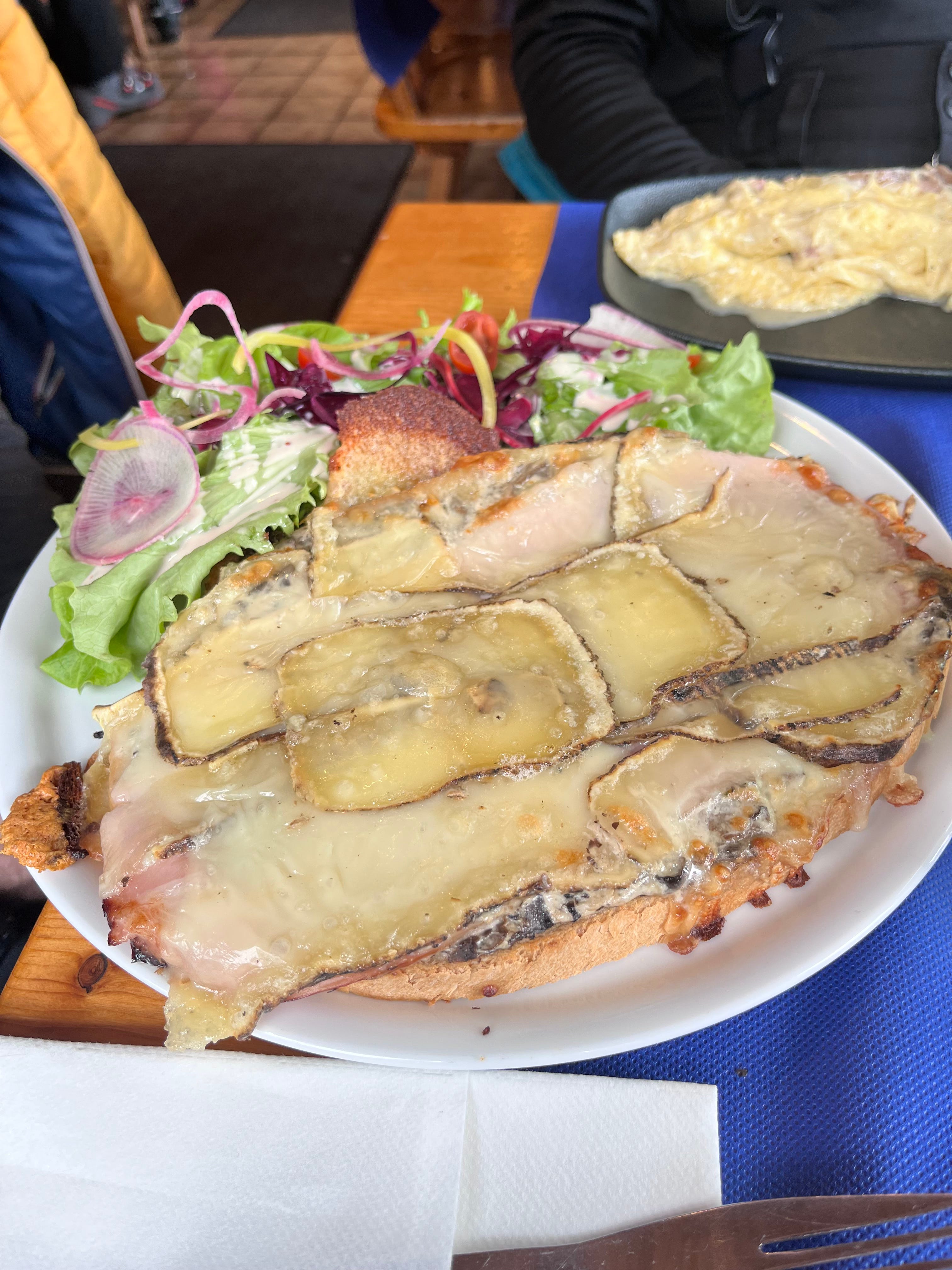
In terms of eating this week we had much cheese, potatoes and ham in the Savoyard places in Avoriaz, Montriond and Morzine, including a spectacular Tartiflette in the village at Abricotines. Buttons Junior had what was loosely described as une croute or toasted sandwich, which ended up being a slice of bread fit for the Flintstones, a large amount of a ham and then several kilos of cheese melted over the top; unsurprisingly he finished the whole thing. There were the normal temptations of Raclette and various fondues, but at lunchtime when skiing it seems both decadent and self-defeating. We did try out various of the Mont Blanc brewery beers, the Ambrée or red, the normal lager or Blonde, their IPA and Poireaux Junior bravely selected the Myrtille which we all agreed tasted like Ribena. I did one of the Green or Genepi variants and that was palatable, a taste of juniper without it tasting completely like cough medicine. We also managed to get a visit in to ‘Ibex’, the microbrewery in Montriond, the beer was great even if the setting in an industrial estate was not the most picturesque, it was full of the local ski workers, which showed it was good value. Italy was a shift in tone food wise. More pasta and of course every restaurant must offer pizza, just in case it misses out on the tourist’s slavery to the dish. The food seemed typical Italian rather than mountain specific offers, but I will be honest the sample size was small. What we did enjoy was the early evening drinks in the center of the old town of Courmayeur, everyone people watching the “passegiata”, and you get a thoughtful selection of foccacia, cheese and ham with your drinks.
 Anecdotes and Antidotes in Burgundy